This Nigerian Beef Stew Recipe is more than just a meal; it is a vibrant, soul-warming experience that defines West African comfort food. If you have been searching for that signature deep crimson color and the perfect glistening red oil layer that characterizes a truly authentic stew, you are in the right place. From the very first bite of tender, slow-cooked beef chunks submerged in a rich, concentrated pepper base, you will understand why this dish is a staple on every Nigerian table.
The beauty of a Nigerian Beef Stew Recipe lies in its texture and depth. Unlike thin Western stews, this version features a slightly grainy, concentrated texture derived from meticulously blended and fried peppers. Whether you are serving it over a steaming mound of long-grain white rice or pairing it with your favorite swallow, the balance of heat from scotch bonnets and the sweetness of red bell peppers creates a flavor profile that is unmatched in global cuisine.
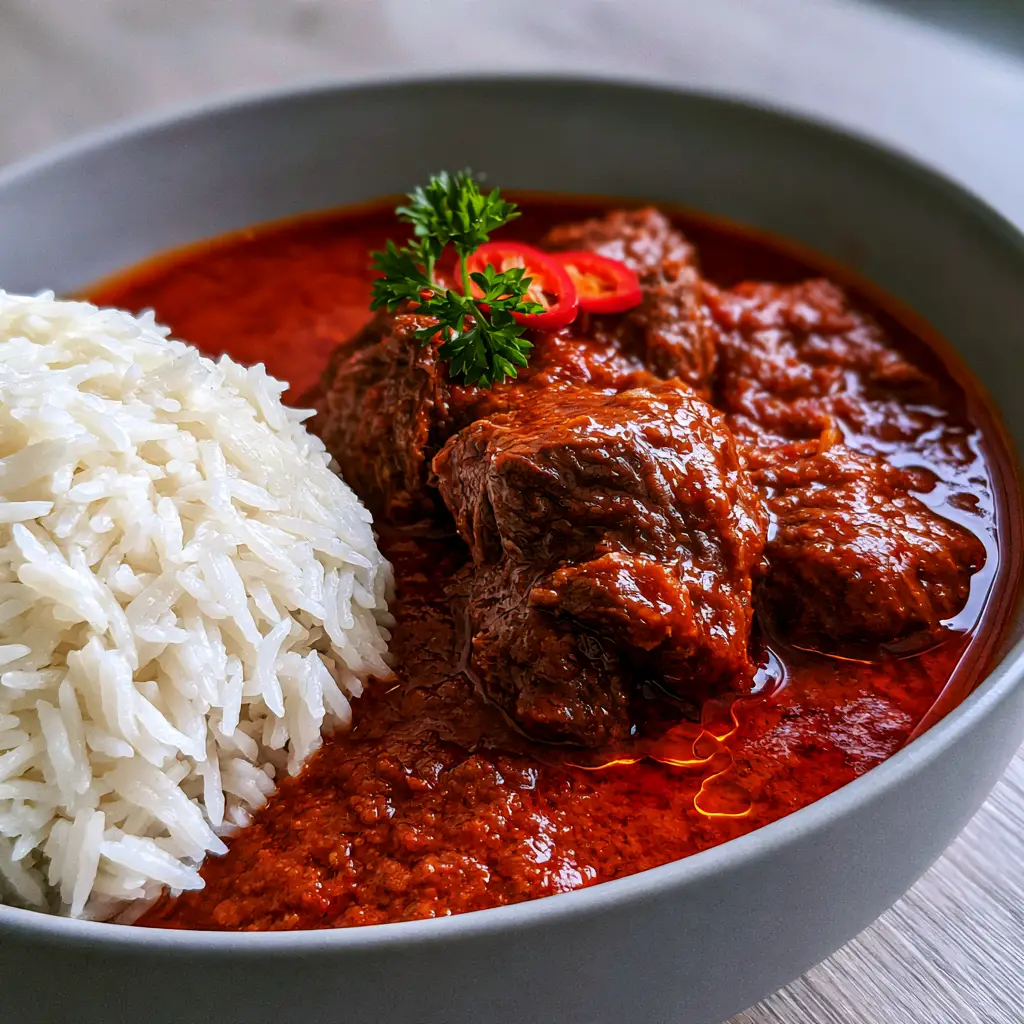
Why This Deep Crimson Nigerian Beef Stew Works
- Visual Masterpiece: The deep crimson red sauce is achieved through a specific frying technique that caramelizes the natural sugars in the tomatoes.
- Texture Contrast: You get the perfect bite from large, tender chunks of slow-cooked beef against the glistening red oil sheen.
- Aromatic Foundation: We use a traditional blend of “Tatashe” (red bell peppers) and onions to create a base that is both sweet and spicy.
- Versatility: While traditional, this stew follows similar comfort-food logic to a hearty classic homemade chilli or a robust warm lasagna soup.
Essential Ingredients for the Ultimate Nigerian Pepper Base
Creating an authentic Nigerian Beef Stew Recipe requires specific ingredients to achieve that “Obe Ata” (pepper soup) essence. Here is what you need and why each element matters for the final result.
The Beef: Use 2 lbs (900g) of beef chuck or stewing beef. This cut is ideal for slow-cooking until it becomes tender and partially submerged in the sauce, soaking up every ounce of flavor.
Red Bell Peppers (Tatashe): 4 large peppers provide the bulk of the deep crimson fried tomato and pepper base. They offer a mild sweetness and the essential red pigment.
Scotch Bonnet Peppers (Atarodo): 2-3 peppers (adjust to your heat tolerance). These provide the signature West African “zing” that cuts through the richness of the oil.
Plum Tomatoes: 5-6 medium tomatoes. Tomatoes add acidity and moisture, helping the sauce reach its slightly grainy, concentrated texture during the reduction process.
Onions: 2 large red onions. One is blended into the base, and the other is sliced and fried to create a savory, aromatic foundation in the oil.
Vegetable Oil: 1.5 cups (350ml). Do not be alarmed by the amount of oil! The oil is necessary to “fry” the sauce, and it creates that iconic glistening red oil sheen on the surface that preserves the stew.
Tomato Paste: 6 oz (170g). This intensifies the color to a thick, deep crimson red and helps thicken the consistency without using flour or starches.
Seasoning Trio: 2 tsp (10g) Curry powder, 1 tsp (5g) dried thyme, and 3-4 bouillon cubes (Maggi or Knorr). These are the non-negotiables for that authentic “mamma’s kitchen” flavor.
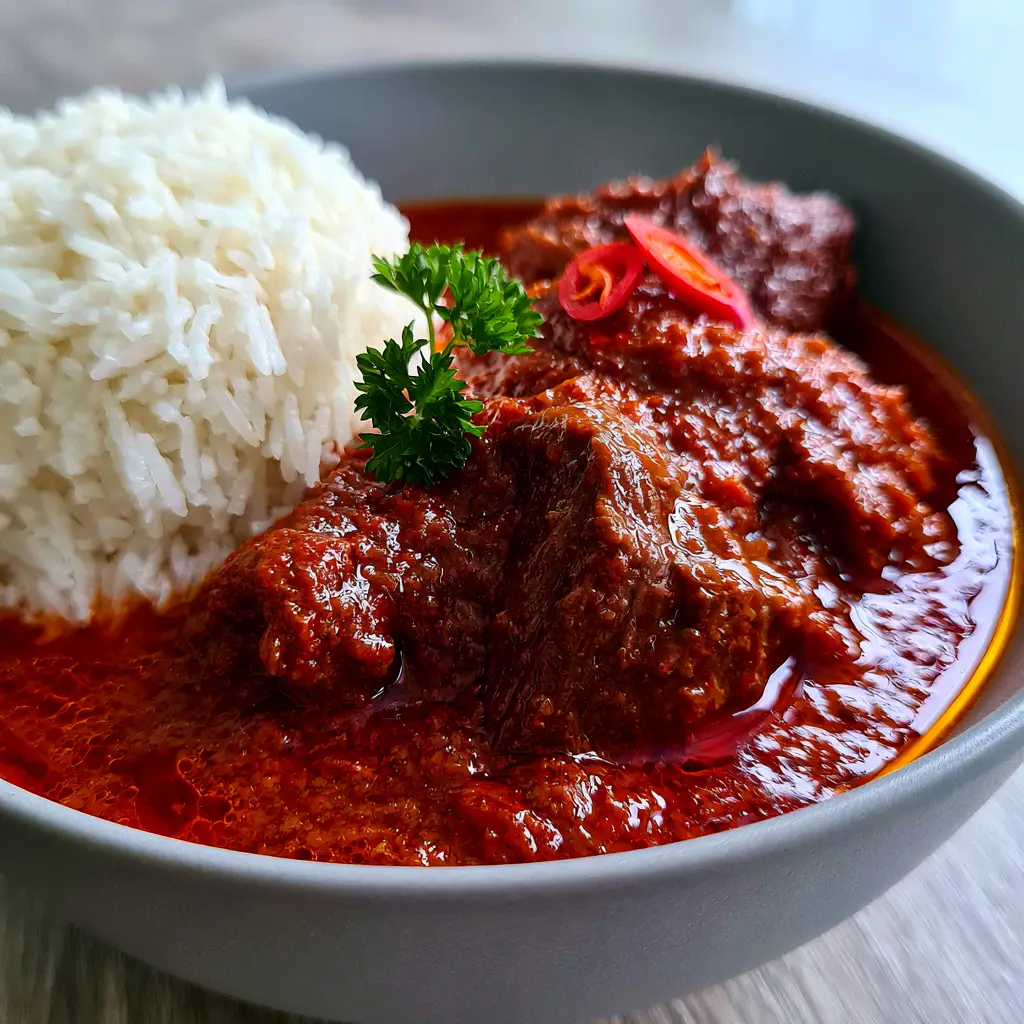
Mastering the Art of the Slow-Cooked Pepper Reduction
The secret to a world-class Nigerian Beef Stew Recipe is patience. You aren’t just boiling a sauce; you are frying it. This process removes the raw “slapped” taste of the tomatoes and replaces it with a rich, savory depth.
Step 1: Prepping the Beef for Maximum Tenderness
In a large pot, combine your beef chunks with half a sliced onion, 2 bouillon cubes, and a pinch of salt. Add just enough water to cover the meat. Bring to a boil, then simmer for 30-45 minutes. You want the meat to be tender but not falling apart yet, as it will finish cooking in the stew.
Step 2: The Perfect Pepper Blend
While the beef simmers, blend your red bell peppers, scotch bonnets, plum tomatoes, and one onion until smooth. Expert Tip: Pour this blend into a separate pot and boil it down until most of the water has evaporated. This leaves you with a thick paste that will fry much faster and achieve that slightly grainy, concentrated texture we see in the photos.
Step 3: Frying the Base and Aromatics
In a heavy-bottomed pot or Dutch oven, heat the 1.5 cups (350ml) of oil over medium heat. Add the remaining sliced onions and fry until they are translucent and fragrant. Carefully stir in the tomato paste. Fry the paste for 3-5 minutes, stirring constantly, until it turns a shade darker. This is the first step to achieving that deep crimson red sauce.
Step 4: The Long Reduction
Add your boiled-down pepper blend to the oil and tomato paste. This is where the magic happens. Fry the sauce on medium-low heat, stirring occasionally. You will know it is ready when the glistening red oil layer begins to separate from the sauce and float to the top. This can take 20-30 minutes.
Step 5: Marrying the Flavors
Add the cooked beef chunks and about 1 cup (240ml) of the beef stock (the liquid from boiling the meat). Season with curry powder, thyme, and more bouillon if needed. Let the Nigerian Beef Stew Recipe simmer for another 15-20 minutes on low heat. The beef should become partially submerged in the darkening sauce, glistening with a thin, golden-red oil sheen.
Pro-Tips for a Pinterest-Worthy Presentation
- The Oil Separation: If the oil hasn’t risen to the top, you haven’t fried it long enough. That glistening red oil layer is a sign of a well-cooked stew that won’t taste sour.
- Color Contrast: For the most beautiful bowl, serve next to perfectly fluffy, steamed long-grain white rice. The white-on-red contrast is stunning.
- Fresh Garnishes: Add a single, small sprig of fresh green parsley and two thin slices of red bird eye chili on top. These provide a pop of color that makes the deep crimson stew look vibrant and fresh.
- Texture Check: The sauce should be thick enough to coat a spoon heavily, showing that slightly grainy, concentrated texture from the blended vegetables.
What to Serve with Your Nigerian Beef Stew
While steamed long-grain white rice is the classic choice, this Nigerian Beef Stew Recipe is incredibly versatile. You can serve it with Fried Plantains (Dodo) for a sweet contrast, or even use it as a base for Jollof Rice. If you’re in the mood for more international comfort, it pairs surprisingly well with the same sides you’d serve with a hearty Moroccan split pea soup or even a bowl of fresh herb chicken noodle soup for a multi-cultural feast.
Storage and Reheating Instructions
One of the best things about a Nigerian Beef Stew Recipe is that it tastes even better the next day. The flavors continue to meld and deepen overnight.
Refrigeration: Store in an airtight container for up to 5 days. The glistening red oil layer will solidify on top; simply stir it back in as you reheat.
Freezing: This stew freezes beautifully for up to 3 months. Thaw in the fridge overnight before reheating on the stovetop over low heat.
Reheating: If the sauce is too thick after refrigeration, add a splash of water or beef broth to loosen it back to its thick, deep crimson red glory.
Frequently Asked Questions
Absolutely. The heat comes from the Scotch Bonnet peppers. Simply reduce the number of peppers or remove the seeds to lower the spice level while keeping the flavor.
Yes, the oil is essential for ‘frying’ the pepper base, which develops the flavor and creates the signature glistening red oil layer. You can always spoon off excess oil before serving.
The deep color comes from using plenty of red bell peppers (Tatashe) and frying the tomato paste in oil before adding the blended pepper mix.
Beef chuck or any well-marbled stewing beef is best. These cuts become incredibly tender during the slow-cooking process and don’t dry out in the rich sauce.
A sour taste usually means the tomatoes haven’t been fried long enough. To fix this, ensure you boil down the pepper blend first and then fry it in oil until the oil separates and floats to the top.
The Ultimate Nigerian Beef Stew Recipe
Nigerian Beef Stew Recipe: The Secret to Deep Crimson, Authentic Flavor
Ingredients
Equipment
Method
- Place beef chunks in a pot with half a sliced onion and bouillon. Cover with water and simmer for 45 minutes until tender.
- Blend bell peppers, tomatoes, scotch bonnets, and one onion. Boil in a pot until the liquid reduces and a thick paste forms.
- Heat oil in a Dutch oven. Fry sliced onions and tomato paste for 5 minutes until darkened.
- Add the pepper paste to the oil. Fry until the red oil separates. Add beef and stock, then simmer for 20 minutes until a glistening red oil layer forms.
Notes
The red oil on top is natural and acts as a preservative; don't discard it!
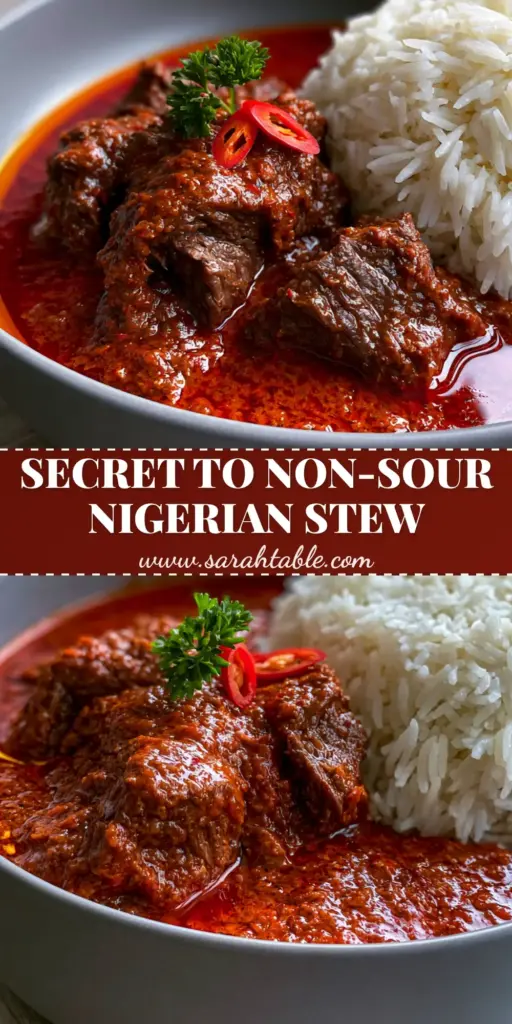
Join the Community & Save for Later!
Did this Nigerian Beef Stew Recipe bring a taste of West Africa to your kitchen? We want to see your results! Please save this recipe to your Pinterest boards so you never lose it, and follow sarah_table for more authentic global recipes. If you made this, leave a 5-star rating below and upload a photo of your stew in the comments—we love seeing those glistening red oil layers and tender beef chunks! For more cozy dinner ideas, check out our creamy Zuppa Toscana.