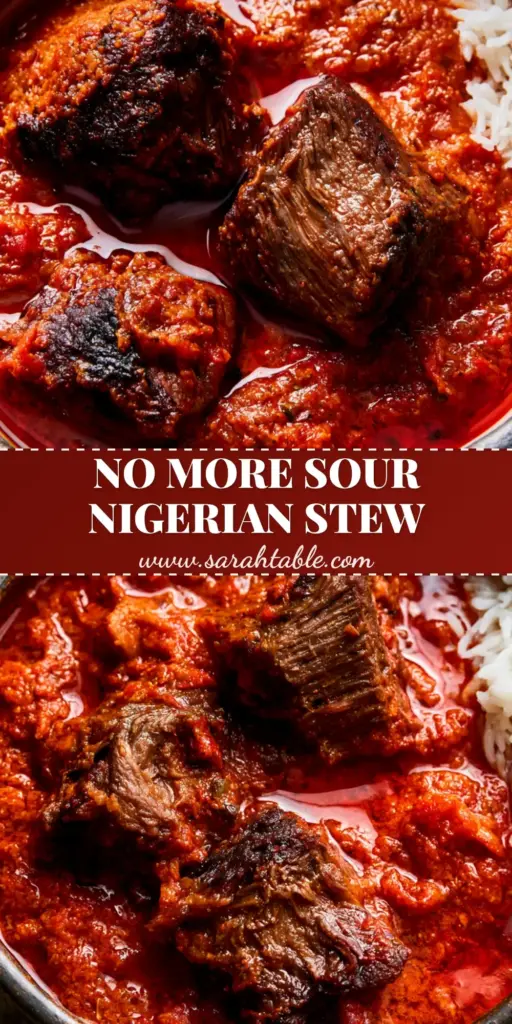
There is nothing quite like a bowl of Nigerian beef stew. The vibrant, deep-red color, the thick, textured consistency of the fried peppers, and those succulent chunks of slow-cooked beef make it the crowning jewel of West African cuisine. When you see that thin, shimmering layer of clear red-tinted oil sitting on the surface, you know you’re in for a treat.
This recipe focuses on the traditional “Buka” style. It’s all about the Visual Recipe Blueprint: tender beef fibers, a base of fried bell peppers and tomatoes, and that signature savory aroma that fills the entire house. Whether you are serving it over fluffy white jasmine rice or dipping in crusty bread, this stew is a masterclass in flavor depth.
If you love comforting, slow-cooked meals, you might also enjoy our hearty soup recipes or our classic beef chili. But today, we are diving deep into the heart of Nigerian soul food.
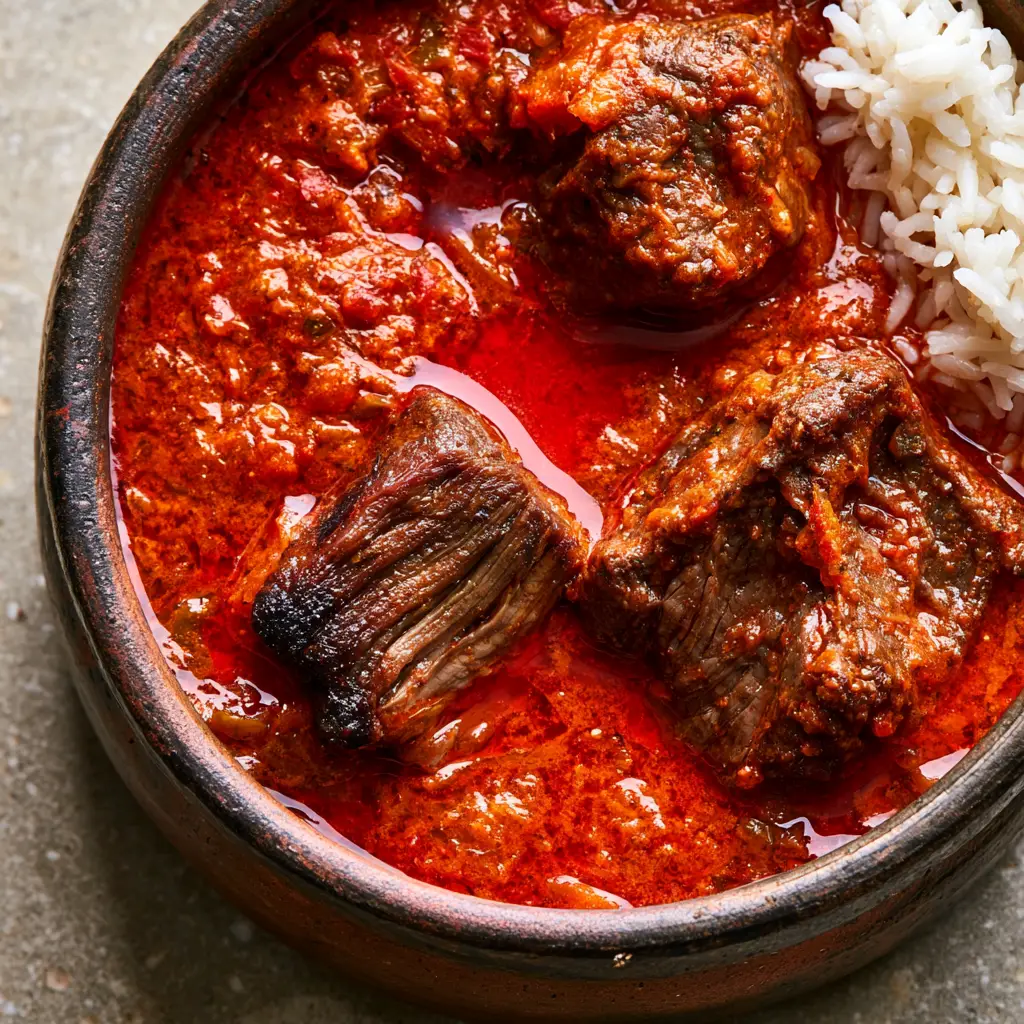
Why This Authentic Nigerian Beef Stew Works
- Unmatched Texture: We use a specific ratio of red bell peppers to tomatoes to ensure a thick, textured consistency that clings to the meat.
- Tender Beef Chunks: By slow-cooking the beef until the muscle fibers are ready to melt, we achieve that professional “Buka” mouthfeel.
- Shimmering Finish: The secret is in the palm oil filtration and frying process, creating that iconic glistening surface seen in high-end food photography.
- Visual Appeal: The deep-red sauce contrasted against fluffy white jasmine rice makes this a Pinterest-viral sensation.
The Essential Ingredients for Buka-Style Stew
To achieve the forensic visual accuracy of this dish, every ingredient serves a culinary purpose. Do not skip the red palm oil if you want that authentic shimmering finish!
The Beef: Use 2 lbs (900g) of beef chuck or brisket. These cuts have the connective tissue necessary to become succulent during the slow-cooking process. You want large chunks that show tender muscle fibers.
The Pepper Base (Tatashe & Atarodo): You will need 4 large red bell peppers (Tatashe) for the vibrant red color and 3-5 scotch bonnets (Atarodo) for heat. This creates the “fried pepper” texture that defines a true Nigerian beef stew.
Red Palm Oil: 1.5 cups (350ml) of authentic palm oil. This provides the distinct earthy flavor and the “shimmering red oil” visual cue. If you prefer a lighter taste, you can blend it with vegetable oil.
Aromatics: Two large red onions, sliced thinly. Half will be blended into the base, and half will be fried to caramelize the sauce.
Seasoning: Beef bouillon cubes (like Maggi or Knorr), dried thyme, curry powder, and salt. These are the “invisible ingredients” that build the savory foundation.
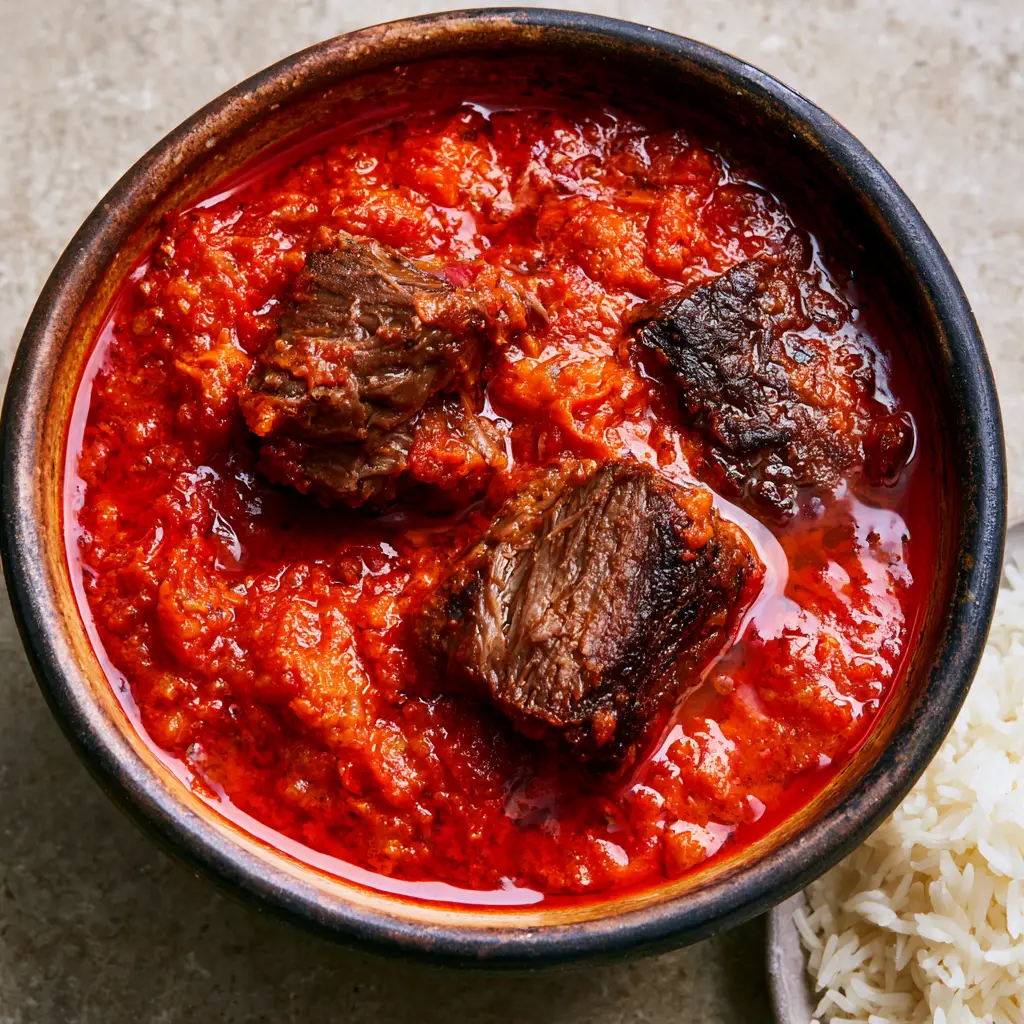
Step-by-Step: Mastering the Deep Red Base
Phase 1: Preparing the Succulent Beef
In a large pot, combine your beef chunks with sliced onions, two bouillon cubes, and a pinch of salt. Add just enough water to cover the meat. Bring to a boil, then reduce to a simmer.
Cook for 45-60 minutes until the beef is tender but not falling apart. Visual Cue: The beef should show clear muscle fibers and be dark and rich. Remove the beef and reserve the stock—never throw away that liquid gold!
Phase 2: Blending the Vibrant Pepper Base
Roughly chop your bell peppers, scotch bonnets, and one onion. Blend them until they are mostly smooth but still have a slight grit. In Nigerian cooking, we don’t want a watery puree; we want a textured pepper base.
Pour the mixture into a pot and boil it over medium-high heat until the water evaporates. This step is critical! You are looking for a thick paste. This ensures your Nigerian beef stew isn’t runny.
Phase 3: The Art of Frying in Palm Oil
Heat the red palm oil in a heavy-bottomed pot. You may choose to “bleach” the oil slightly by heating it until it turns a lighter translucent red, but be careful not to burn it. Add the remaining sliced onions and fry until translucent.
Carefully pour in your boiled pepper paste. Fry the mixture in the oil for 15-20 minutes, stirring frequently. Sensory Cue: You will know it is ready when the oil begins to separate from the peppers and floats to the top in a shimmering red layer.
Phase 4: The Final Simmer
Add your seared beef chunks and the reserved beef stock to the fried pepper base. Stir gently to coat every piece of meat in the savory red sauce. Let it simmer on low heat for another 15-20 minutes.
This allows the flavors to penetrate the tender muscle fibers of the beef. If the stew looks too thick, add a splash more stock. If you want more shimmer, add a tablespoon of fresh oil at the end.
Expert Tips for the Perfect Nigerian Beef Stew
- Don’t Rush the Pepper Reduction: The biggest mistake is frying a “wet” pepper mix. Boil the water out first to concentrate the sugars and the color.
- The Oil Separation: If you don’t see the shimmering red oil on top, you haven’t fried the peppers long enough. This oil is also a natural preservative!
- Beef Searing: For an extra layer of flavor, quickly sear the boiled beef in a pan with a little oil before adding it to the stew. This gives those “slightly seared, dark edges” mentioned in our blueprint.
- Pairing: Always serve with fluffy white jasmine rice. The steam vapor rising from the rice against the dark ceramic bowl makes for a perfect presentation.
For more comforting dinner ideas, check out our White Chicken Chili or our homemade chicken soup.
Storage, Reheating & Freezing
Storage: This stew actually tastes better the next day! Store it in an airtight container in the fridge for up to 5 days.
Freezing: Nigerian beef stew freezes beautifully. Place in freezer-safe bags or containers for up to 3 months. To serve, thaw overnight in the fridge and reheat on the stove.
Reheating: Always reheat on low heat. If the shimmering oil has solidified, a gentle warm-up will bring back that beautiful liquid glow.
What to Serve With Authentic Buka Stew
While fluffy white jasmine rice is the gold standard, you can also serve this with:
- Fried Plantains (Dodo): The sweetness balances the heat of the scotch bonnets.
- Pounded Yam or Eba: Perfect for soaking up the thick savory sauce.
- Fresh Bread: A crusty baguette is surprisingly delicious for dipping into the oil.
Frequently Asked Questions
You can cook the beef in a slow cooker, but the pepper base must be fried in a pot on the stove to achieve the correct ‘fried’ texture and oil separation.
Yes, you can use vegetable oil, but you will lose the specific earthy flavor and the iconic shimmering red-tinted oil visual that defines Buka stew.
The oil separates once the water has been completely fried out of the pepper base. If your oil isn’t floating, continue frying the base for another 5-10 minutes.
Authentic flavor requires a mix of Red Bell Peppers (Tatashe) for color and bulk, and Scotch Bonnets (Atarodo) for heat and aroma.
Bitterness usually comes from burning the peppers during the frying stage or over-bleaching the palm oil. Ensure you fry on medium-low heat and stir constantly.
The Authentic Nigerian Beef Stew Recipe Card
Nigerian beef stew: The Ultimate Authentic Buka Stew Guide
Ingredients
Equipment
Method
- Boil the beef chunks with sliced onions and seasoning until tender (approx. 60 mins). Reserve the stock.
- Blend bell peppers, scotch bonnets, and one onion. Boil the mixture until it reduces to a thick paste.
- Heat palm oil and fry remaining onions. Add pepper paste and fry until oil separates and shimmers on top.
- Add beef and stock to the fried peppers. Simmer for 20 minutes until the sauce is thick and deep red.
Notes
Bleach the palm oil in a well-ventilated area for a lighter, authentic flavor.
Save This Recipe to Pinterest!
If you loved this Nigerian beef stew, don’t forget to save it to your “African Recipes” or “Dinner Inspiration” board on Pinterest! Following @sarah_table helps us bring you more authentic, visually stunning recipes every week.
Did you make this? Please leave a 5-star rating in the recipe card above and upload a photo of your shimmering stew in the comments below. Seeing your steam-vapor-filled bowls makes our day!