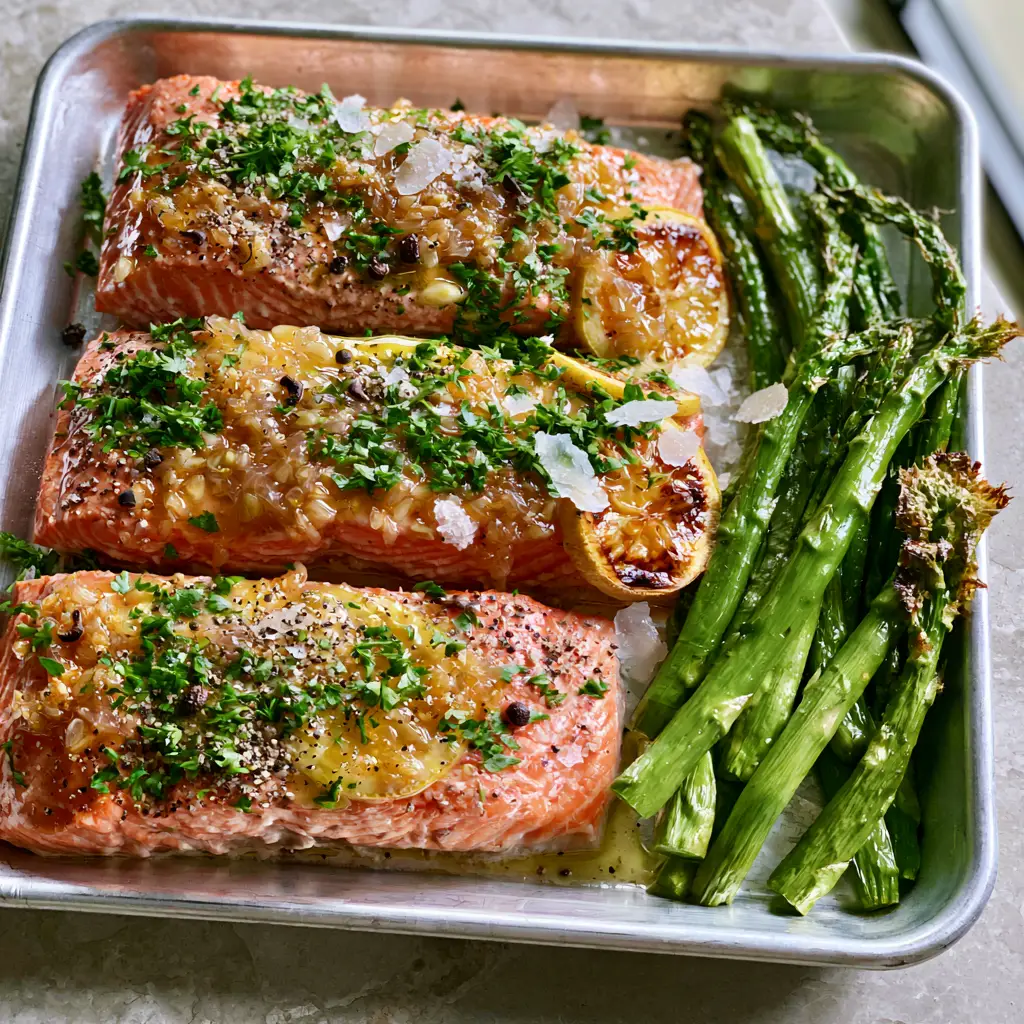
baked salmon is the ultimate weeknight dinner solution for busy home cooks who refuse to sacrifice flavor, nutrition, or visual appeal. This specific sheet pan recipe transforms simple, wholesome ingredients into a restaurant-quality masterpiece right before your eyes. By combining thick, center-cut Atlantic salmon fillets with a rich, glistening layer of melted golden garlic butter, this dish delivers an unparalleled sensory experience.
The beauty of this baked salmon lies in its effortless preparation on a classic silver sheet pan foundation, which ensures even heat distribution for perfectly flaky fish. Nestled alongside tender, bright green asparagus with slightly crispy, blistered tips and charred, caramelized lemon wheels, this meal is as visually stunning as it is delicious. Whether you are meal prepping for a busy week or hosting an elegant weekend gathering, this foolproof method guarantees succulent, moist results every single time.
If you love vibrant, seafood-forward dinners that require minimal cleanup, you should also explore our decadent baked flounder with lump crab or try our outdoor-friendly grilled halibut foil packs. But today, we are mastering the art of the perfect oven-baked sheet pan dinner.
Why This Easy Sheet Pan Supper Completely Changes the Weeknight Game
- Flaky, Moist Perfection: Gentle baking at an optimal temperature ensures the salmon proteins do not contract too quickly, locking in the natural juices of the fish.
- High-Contrast Visual Appeal: The striking juxtaposition of vibrant coral pink salmon, bright green blistered asparagus, and deeply charred golden lemon wheels creates a stunning presentation.
- Glistening Garlic Butter Glaze: A luxurious stream of warm, melted butter infused with translucent bits of minced sautéed garlic coats every single flake of the fish.
- Textural Harmony: Large flakes of crunchy sea salt and cracked black pepper contrast beautifully with the tender, melting texture of the perfectly baked seafood.
- Effortless Silver Sheet Pan Clean-Up: Cooking your entire protein and vegetable side dish on a single tray means less time washing dishes and more time enjoying your meal.
The Essential Ingredients and Smart Substitutions You Need
To recreate this breathtaking dish exactly as shown in our viral Pinterest pins, you will need a few high-quality pantry staples and fresh produce items. Each component serves a distinct culinary purpose to balance rich fats, bright acids, and savory aromatics.
Center-Cut Salmon Fillets: You will need 3 thick, center-cut Atlantic salmon fillets (approx. 6 oz / 170g each). Center-cut portions are uniform in thickness, which ensures they bake evenly without the thin tail sections drying out. If you cannot find Atlantic salmon, wild-caught King salmon or Coho salmon make excellent substitutes, though you may need to reduce the baking time by 2 to 3 minutes due to their lower fat content.
Fresh Green Asparagus: Look for 1 lb (454g) of fresh, vibrant green asparagus stalks. Medium-thickness spears work best here, as they will achieve perfectly blistered, crispy tips in the exact same time it takes for the fish to cook through. If asparagus is out of season, fresh green beans or broccolini florets can be substituted seamlessly.
Unsalted Butter: We use 4 tbsp (56g) of high-quality unsalted butter to create our signature melted golden garlic butter glaze. Utilizing unsalted butter allows you to completely control the sodium levels of your dish. For a dairy-free or Paleo alternative, substitute with an equal amount of clarified butter (ghee) or extra-virgin olive oil.
Fresh Garlic: Use 4 cloves of finely minced garlic. Sautéing the garlic slightly before applying it to the salmon ensures the translucent bits release their sweetness without any harsh, bitter raw bites. Avoid pre-jarred minced garlic, as it lacks the vibrant, pungent oils essential for this aromatic glaze.
Lemon Wheels: One large fresh lemon, cut into thin wheels. Placing these slices directly onto the silver sheet pan allows them to char and caramelize under the heat, intensifying their natural sugars and providing a mellow, sweet acidity. You can also swap in Meyer lemons for an even sweeter, floral profile.
Fresh Curly or Flat-Leaf Parsley: A heavy sprinkle of 1/4 cup (10g) finely chopped fresh parsley adds an essential pop of color and a clean, grassy finish that cuts through the richness of the butter glaze.
Coarse Sea Salt Flakes and Cracked Black Pepper: Large flakes of sea salt provide a delightful crunch and burst of clean salinity, while freshly cracked black peppercorns offer a sharp, woody heat that ground pepper simply cannot replicate.
The Culinary Science of Achieving Flaky Salmon and Blistered Veggies
Achieving the perfect texture on a single sheet pan requires understanding how different ingredients react to dry oven heat. Salmon contains a delicate protein called albumin. When salmon is cooked too quickly or at an excessively high temperature, this protein squeezes out, forming unappealing white clumps on the surface of the fish.
By baking at 400°F (204°C), we strike the absolute perfect balance. This temperature is high enough to flash-fry the thin cell walls of the asparagus tips, creating that highly sought-after blistered finish. Simultaneously, it caramelizes the natural sugars in the lemon slices while gently roasting the salmon to a juicy, flaky medium-rare or medium finish.
If you enjoy exploring deep culinary techniques with alternative seafood varieties, make sure to check out our guides on mastering grilled halibut or cooking up an elegant authentic Italian seafood feast.
Step-by-Step Guide to the Ultimate Garlic Butter Sheet Pan Dinner
Prepping the Silver Sheet Pan and Fresh Vegetables
First, preheat your oven to 400°F (204°C). Grab a high-quality, heavy-duty silver sheet pan foundation. The reflective surface of a silver aluminum pan prevents the bottoms of your food from burning while ensuring a gorgeous, even sear.
Wash your 1 lb (454g) of green asparagus thoroughly under cold running water. Hold a spear of asparagus firmly at both ends and bend it until it snaps naturally. It will break precisely where the woody, fibrous stem ends and the tender stalk begins. Discard the woody ends, pat the spears completely dry with a paper towel, and place them on one side of your sheet pan. Drizzle the asparagus with 1 tbsp (15ml) of extra-virgin olive oil and toss to coat uniformly.
Crafting the Translucent Minced Garlic Butter Glaze
In a small saucepan over low heat, melt your 4 tbsp (56g) of unsalted butter. Add the 4 cloves of finely minced garlic. Sauté the garlic gently for roughly 1 to 2 minutes, stirring constantly. Watch closely as the bits become translucent and release a highly aromatic, sweet fragrance.
Remove the saucepan from the heat immediately. Do not allow the garlic to turn brown or golden at this stage, as it will continue to cook and darken significantly while inside the hot oven.
Assembling and Seasoning the Tray For the Oven
Pat your 3 thick Atlantic salmon fillets completely dry using clean paper towels. Removing surface moisture is crucial; any residual water will create steam in the oven, preventing the butter from adhering and stopping the edges from getting slightly crisp. Arrange the salmon fillets evenly down the center of the silver sheet pan.
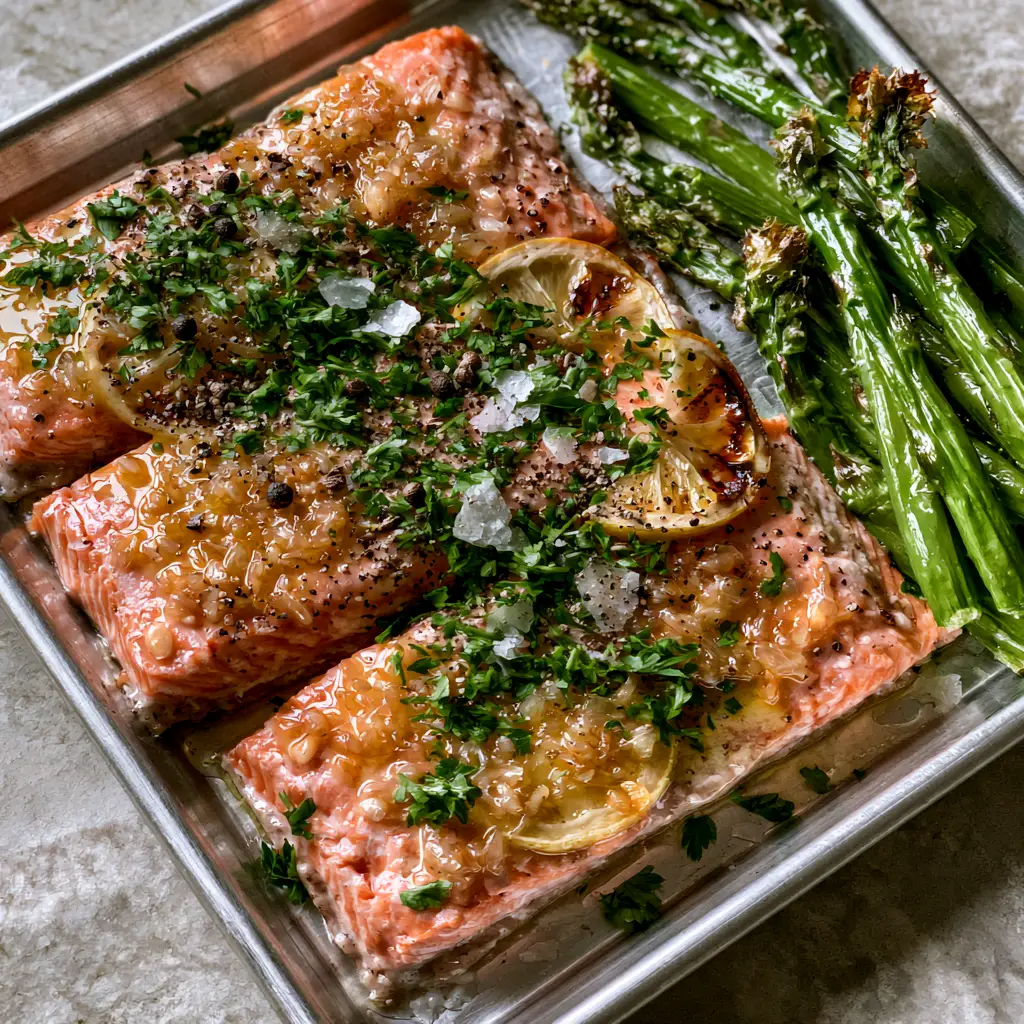
Pour the warm, glistening melted garlic butter glaze generously over each salmon fillet, ensuring the translucent bits of minced garlic are evenly distributed across the vibrant coral pink flesh. Arrange your thin lemon wheels tightly nestled against the fish and interspersed among the asparagus spears.
Generously season the entire tray—both the fish and the asparagus—with a heavy hand of coarse sea salt flakes and freshly cracked black pepper. The large salt crystals should be highly visible, catching the light against the glossy butter coating.
Baking to Visual and Sensory Perfection
Transfer the loaded sheet pan to the center rack of your preheated oven. Bake for 12 to 15 minutes. Around the 10-minute mark, your kitchen will fill with an incredible aroma of roasting garlic, sweet caramelized lemon, and rich butter.
Keep a close eye on the visual cues. You will know the dish is done when the salmon is a vibrant, light coral pink and yields gently to light pressure with a fork, separating into clean, moist flakes. The asparagus tips should appear beautifully wrinkled, slightly darkened, and crispy-blistered, while the lemon slices will boast gorgeous caramelized, browned edges.
Remove the pan from the oven and immediately shower the entire tray with your 1/4 cup (10g) of freshly chopped bright green parsley. Serve directly from the warm pan to maximize that cozy, rustic home-cooked feel.
Pro Tips for Getting Restaurant-Quality Salmon Every Single Time
- Always Bring Fish to Room Temperature: Let your salmon fillets sit on the counter for 15 to 20 minutes before baking. Cold fish drops the oven temperature instantly and cooks unevenly, leaving you with dry edges and a raw center.
- Don’t Overcrowd Your Sheet Pan: Leave clear space between your salmon portions and asparagus stalks. Air must circulate freely around the ingredients to properly blister the vegetables instead of steaming them.
- Use a Digital Meat Thermometer: The absolute safest way to test doneness is with a digital thermometer inserted into the thickest part of the salmon. Remove the fish from the oven at 135°F (57°C); it will continue to carryover cook to a perfect, safe 145°F (63°C) while resting.
- Keep the Skin On During Baking: Even if you do not plan on eating the skin, cooking salmon skin-side down acts as a natural heat shield, keeping the delicate meat incredibly juicy and preventing it from sticking to the pan.
How to Store, Reheat, and Repurpose Your Leftovers Safely
If you happen to have any leftovers from this delectable baked salmon dinner, allow them to cool down completely to room temperature before packing them away. Transfer the fish, blistered asparagus, and caramelized lemons into an airtight glass storage container. Store in the refrigerator for up to 3 days.
To reheat without drying out the delicate seafood, avoid using the microwave at all costs. Instead, place your salmon and vegetables back onto a small rimmed baking sheet. Splash 1 tbsp (15ml) of water or seafood stock onto the pan, cover the entire tray tightly with aluminum foil, and warm in a 300°F (149°C) oven for 8 to 10 minutes until heated through.
Alternatively, cold leftover garlic butter salmon tastes spectacular when flaked over a crisp green salad, tossed into a cold pasta dish, or mashed with a bit of cream cheese to create a luxurious seafood spread for breakfast.
Fabulous Drink and Side Dish Pairings to Elevate Your Meal
This garlic butter seafood centerpiece pairs beautifully with a wide array of side dishes. To keep things light and low-carb, serve it alongside a crisp Caesar salad or a bowl of riced cauliflower. If you want something incredibly comforting and hearty, nothing beats pairing this rich fish with a hot, velvety bowl of broccoli potato soup or some roasted fingerling potatoes.
When it comes to beverage pairings, a crisp, dry white wine like Sauvignon Blanc or Pinot Grigio cuts through the unctuous garlic butter glaze with refreshing precision. If you are looking for a fun, casual weekend vibe, try serving this elegant sheet pan dinner alongside a chilled, fruity lemonade moscato wine sprizer. And if you have room left over for dessert, treat your guests to warm, homemade crispy chocolate chip cookies or rich cocoa fudge brownies.
Frequently Asked Questions About Sheet Pan Seafood Dinners
Yes, you can use frozen fillets, but they must be completely thawed in the refrigerator overnight and patted completely dry with paper towels before assembling. Baking frozen or wet salmon will cause it to steam rather than roast.
Salmon is perfectly done when its color transforms to a light coral pink throughout and the flesh yields easily to a fork, flaking along its natural muscle lines. For precision cooking, an internal digital thermometer should read 135°F (57°C) before resting.
Thick, center-cut salmon fillets typically take between 12 to 15 minutes to bake fully at 400°F (204°C). The exact time depends on the thickness of your fillets, so checking for clean flakes with a fork or using a thermometer is highly recommended.
Leave the sheet pan uncovered. Baking uncovered allows the hot, dry air to quickly blister the asparagus tips and caramelize the edges of the lemon wheels while giving the salmon a gorgeous, glistening finish.
The white substance is albumin, a harmless protein that expels from the muscle fibers when the fish is cooked too fast or overcooked. You can minimize this by bringing the fish to room temperature before baking and avoiding overcooking.
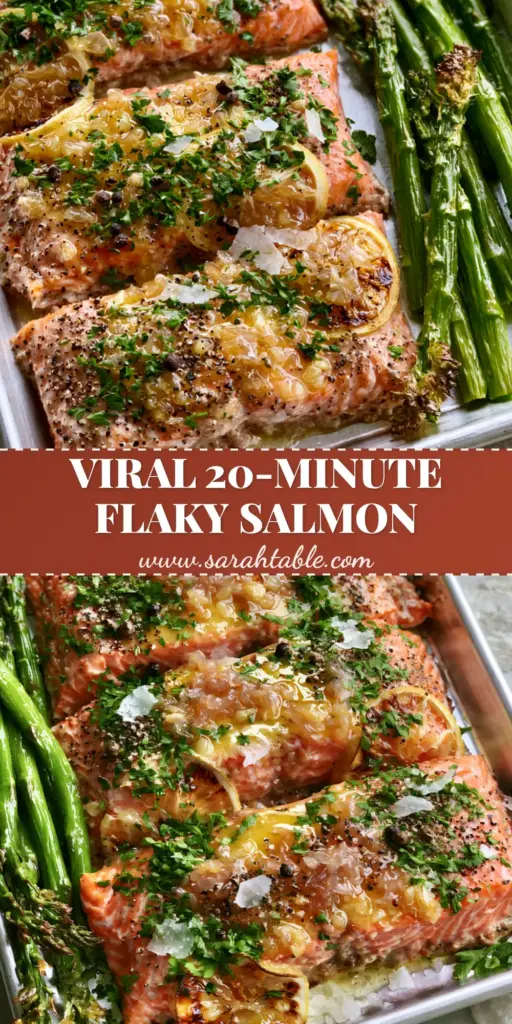
The Ultimate Garlic Butter Sheet Pan Baked Salmon Recipe
baked salmon with garlic butter and blistered asparagus
Ingredients
Equipment
Method
- Preheat your oven to 400°F (204°C). Wash the asparagus and snap off the fibrous woody ends. Arrange the dry asparagus spears on one side of a silver sheet pan, drizzle with olive oil, and toss to coat evenly.
- In a small saucepan over low heat, melt the unsalted butter. Add the minced garlic and sauté for 1 to 2 minutes until translucent and aromatic, taking care not to let it brown.
- Pat the salmon fillets completely dry with paper towels and place them down the center of the sheet pan. Pour the warm garlic butter glaze over each fillet, distributing the translucent garlic bits evenly. Nest the lemon wheels next to the fish and among the asparagus.
- Generously sprinkle the entire pan with coarse sea salt flakes and cracked black pepper. Bake for 12 to 15 minutes until the salmon is flaky and light coral pink, and the asparagus tips are beautifully blistered.
- Remove from the oven, garnish immediately with a heavy handful of chopped fresh parsley, and serve directly from the warm silver pan.
Notes
Use a digital meat thermometer to pull the salmon out at 135°F (57°C) for perfect carryover cooking.
Join the Sarah’s Table Community and Share Your Creations!
We are absolutely thrilled for you to try this gorgeous, ultra-savory baked salmon recipe in your own kitchen! It is truly a foolproof way to bring vibrant, wholesome, and deeply satisfying flavors to your dinner table with absolute ease.
If you loved making this sheet pan dinner, please take a quick moment to head over to Pinterest and save this recipe to your favorite dinner or seafood boards under the username sarah_table. Don’t forget to snap a high-angle photo of your final silver sheet pan creation and upload it directly to the comments section of the pin so we can see your beautiful blistered asparagus and glistening garlic butter fillets! Finally, please head back to this post and leave us a glowing 5-star rating—your kind feedback helps our small food blog grow and continue providing free, high-quality recipes for home cooks everywhere. Happy cooking!