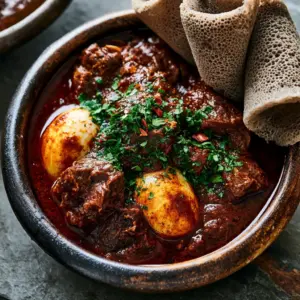
Ethiopian Beef Stew, known traditionally as Sega Wat, is the ultimate comfort food for those who crave deep, complex flavors and a touch of heat. This slow-cooked masterpiece features tender beef cubes swimming in a thick mahogany-red berbere sauce that is as visually stunning as it is delicious. If you have been searching for a recipe that brings the authentic heart of Addis Ababa to your kitchen, this is it. Every bite is a symphony of warm spices, ginger, and garlic, making it a perfect centerpiece for a communal meal with friends and family.
When you see the steam rising from a rustic ceramic bowl of this stew, you know you are in for a treat. This recipe captures the essence of traditional Ethiopian cooking, focusing on the slow caramelization of onions and the vibrant kick of Berbere spice. Whether you are a fan of a hearty American beef stew or you enjoy exploring global flavors, this Sega Wat will quickly become a recurring favorite in your meal rotation. Get ready to grab some rolled sourdough injera bread and dive into this flavorful journey.
Why You Will Crave This Slow-Cooked Sega Wat
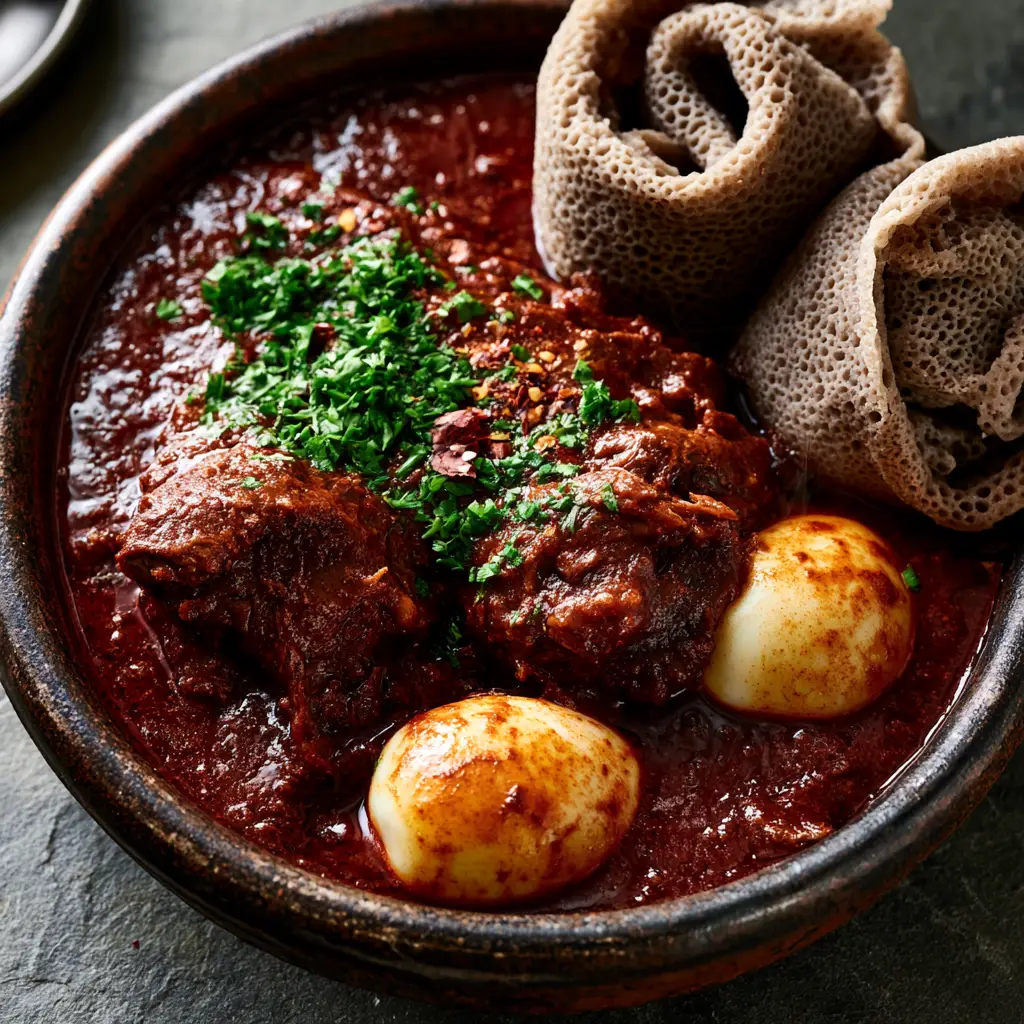
- Ultra-Tender Beef: The beef is simmered until it practically melts in your mouth, fully saturated with the glossy, deep mahogany-red sauce.
- Complex Spice Profile: Using authentic Berbere spice creates a layered heat that is smoky, sweet, and savory all at once.
- Traditional Presentation: The addition of whole hard-boiled eggs with stained outer whites adds a beautiful contrast and authentic touch.
- Textural Harmony: The porous, spongy injera is the perfect vessel for soaking up every drop of that rich sauce.
- Visual Masterpiece: Garnished with vibrant green cilantro and red chili flakes, this dish is a Pinterest-ready showstopper.
The Secret Ingredients for Authentic Ethiopian Beef Stew
To achieve the depth of flavor found in the best Ethiopian restaurants, you need specific ingredients that build the foundation of the dish. Here is what you will need for this Ethiopian Beef Stew:
Beef Chuck Roast (2 lbs / 900g): This cut is ideal for slow cooking as the fat and connective tissue break down into succulent, tender morsels. Cut them into 1-inch (2.5cm) cubes.
Niter Kibbeh (4 tbsp / 60ml): This is Ethiopian spiced clarified butter. It provides a unique aroma that regular butter cannot replicate. You can substitute with ghee if necessary.
Red Onions (4 large / 800g): You might think this is too many onions, but they are the “body” of the sauce. They must be finely chopped and cooked until they completely break down.
Berbere Spice Blend (3-5 tbsp / 30-50g): This is the heart of the dish. It contains chili, garlic, ginger, basil, korarima, rue, ajwain or radhuni, nigella, and fenugreek. Adjust the amount based on your heat tolerance.
Garlic and Ginger Paste (2 tbsp / 30ml): Freshly minced garlic and ginger add a sharp, aromatic bite that cuts through the richness of the mahogany-red sauce.
Tomato Paste (2 tbsp / 30ml): This helps deepen the color to that iconic mahogany-red and adds a subtle umami sweetness.
Hard-Boiled Eggs (4-6): These are traditional in Wats. They soak up the sauce and provide a creamy textural break from the spices.
Fresh Cilantro and Red Chili Flakes: Used as a final garnish to add a pop of color and a fresh herbaceous finish.
Injera Bread: A porous, spongy grey-tan sourdough flatbread. It is essential for serving, as it acts as your spoon.
Building the Flavor: Mastering the Berbere Base
Caramelizing the Onions Without Oil
Traditional Ethiopian Beef Stew begins with a unique technique: dry-cooking the onions. Place your finely chopped red onions in a heavy-bottomed pot over medium heat. Do not add oil yet. Stir them constantly for about 10-15 minutes until they release their moisture and start to soften and turn translucent. This step is crucial for achieving the smooth, thick texture of the final sauce.
Infusing the Niter Kibbeh and Aromatics
Once the onions have softened, add your Niter Kibbeh (spiced clarified butter). As the butter melts, the kitchen will fill with an incredible aroma. Add the garlic and ginger paste, stirring for another 2 minutes until fragrant. Next, add the Berbere spice and tomato paste. This creates a thick, dark paste that will eventually become your glossy, mahogany-red sauce.
Slow-Simmering the Beef Cubes
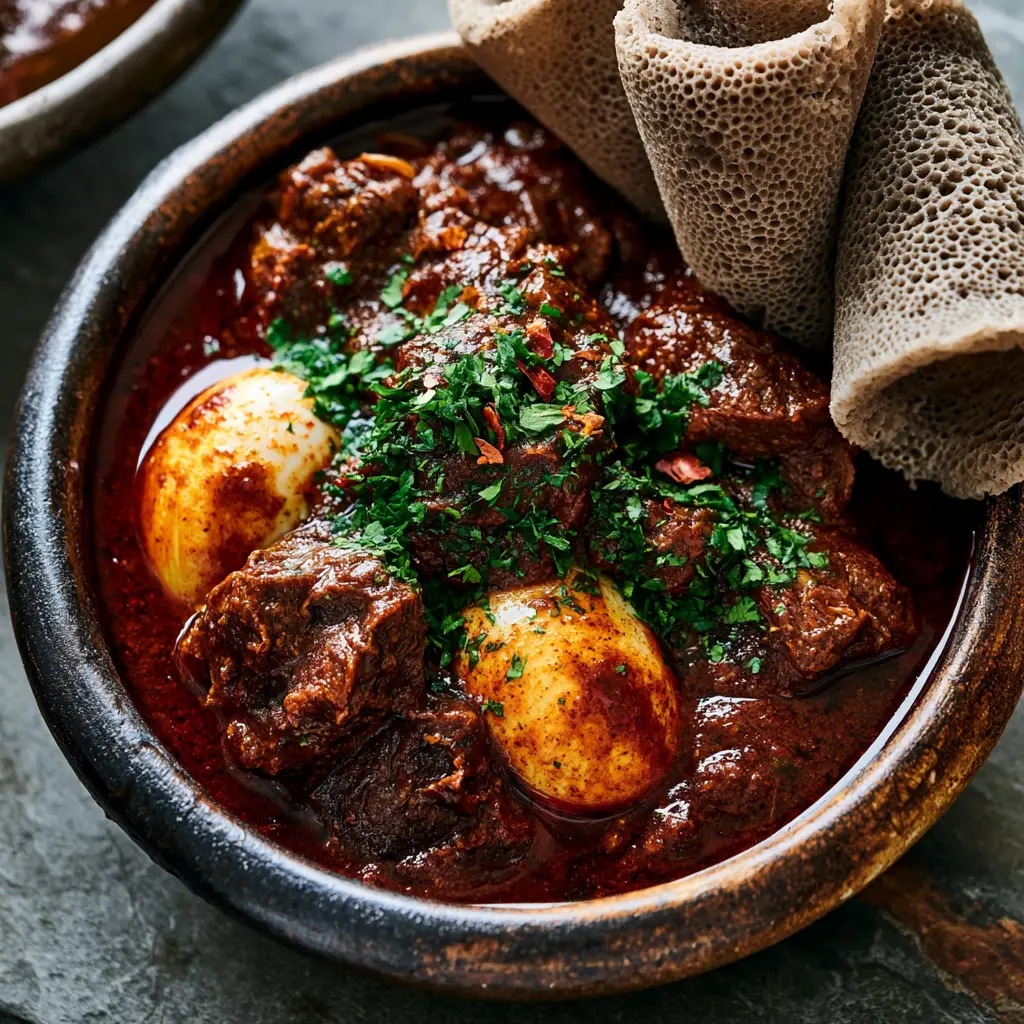
Add the tender beef cubes to the pot, stirring well to ensure every piece is completely coated in the spice mixture. Pour in 2 cups (480ml) of water or beef broth. Bring the mixture to a gentle simmer, then turn the heat to low. Cover the pot and let it cook for 1.5 to 2 hours. You are looking for a Visual Cue: the sauce should be thick and glossy, and the beef should be fork-tender.
The Final Touch: Adding the Stained Eggs
About 15 minutes before serving, take your peeled hard-boiled eggs and make small nicks in them with a knife. Gently nestle them into the stew. The eggs will begin to take on the color of the stew, resulting in stained outer whites that look beautiful when sliced or served whole. This also allows the spices to penetrate the surface of the egg.
Expert Tips for the Perfect Sega Wat
- Don’t Rush the Onions: The onions are the thickening agent. If you rush this step, your stew will be watery rather than having that thick mahogany-red consistency.
- Adjust the Heat: Berbere varies in heat levels. Start with 3 tablespoons and taste before adding more.
- Deglaze Carefully: If the onions or spices start to stick to the bottom of the pot, add a tablespoon of water at a time to scrape up those flavorful brown bits.
- Rest the Stew: Like many authentic slow-cooked recipes, this stew tastes even better the next day after the flavors have fully married.
How to Store and Reheat Your Ethiopian Beef Stew
To Refrigerate: Store leftover Ethiopian Beef Stew in an airtight container for up to 4 days. The flavors will continue to deepen as it sits.
To Freeze: This stew freezes beautifully. Place it in freezer-safe bags or containers for up to 3 months. Thaw in the refrigerator overnight before reheating.
To Reheat: Gently warm the stew on the stovetop over low heat. You may need to add a splash of water to loosen the thick mahogany-red sauce, as it will thicken further when cold.
What to Serve with Sega Wat
The only way to truly enjoy Ethiopian Beef Stew is with authentic, porous, spongy injera bread. The sour notes of the bread perfectly balance the spicy richness of the beef. If you cannot find injera, a side of basmati rice or even a piece of savory meat pie dough could serve as a non-traditional substitute, though we highly recommend seeking out the real deal!
For a full Ethiopian feast, consider serving this alongside Gomen (collard greens) or Misir Wat (spicy lentils). And for dessert, something simple like warm cinnamon rolls or crispy chocolate chip cookies provides a sweet relief after the spice of the Berbere.
Frequently Asked Questions
While Injera is traditional and its sour flavor balances the stew, you can serve Sega Wat over basmati rice or with warm flatbread if Injera is unavailable.
It has a significant kick due to the Berbere spice, but you can control the heat by adjusting the amount of spice blend you add to the onion base.
Berbere is a complex Ethiopian spice blend usually containing chili peppers, garlic, ginger, basil, korarima, rue, ajwain, nigella, and fenugreek. It provides the heat and deep flavor in Sega Wat.
Niter Kibbeh is an Ethiopian spiced clarified butter. It is infused with garlic, ginger, and various spices, giving the beef stew its authentic aroma.
Hard-boiled eggs (Doro Wat or Sega Wat style) are traditional in Ethiopian stews, adding texture and absorbing the rich, spicy flavors of the sauce.
The Ultimate Ethiopian Beef Stew Recipe Card
Ethiopian Beef Stew (Sega Wat) with Spiced Berbere Sauce
Ingredients
Equipment
Method
- Add chopped onions to a dry heavy-bottomed pot over medium heat. Cook for 10-15 minutes until softened and moisture has evaporated.
- Stir in Niter Kibbeh, garlic-ginger paste, tomato paste, and Berbere spice. Cook for 5 minutes until the mixture turns a deep mahogany-red.
- Add beef cubes to the pot, stirring to coat completely in the thick sauce. Pour in 2 cups (480ml) of water or broth.
- Cover and simmer on low for 1.5 to 2 hours until the beef is ultra-tender and the sauce is glossy.
- Gently nestle hard-boiled eggs into the stew for the final 15 minutes to stain the outer whites.
- Garnish with fresh cilantro and red chili flakes. Serve in a rustic ceramic bowl with rolled injera bread.
Notes
If Berbere is unavailable, a mix of paprika, cayenne, and ginger can work in a pinch.

Join the Table and Share Your Results!
We hope you love this Ethiopian Beef Stew as much as we do! It is a recipe that truly rewards patience and a love for bold spices. If you make this Sega Wat at home, please save this recipe to your Pinterest boards so you never lose it! Follow @sarah_table for more global comfort food inspiration. Don’t forget to snap a photo of your rustic ceramic bowl filled with mahogany-red stew and share it in the comments below. We love seeing your creations! Please leave a 5-star rating if you enjoyed this culinary journey.