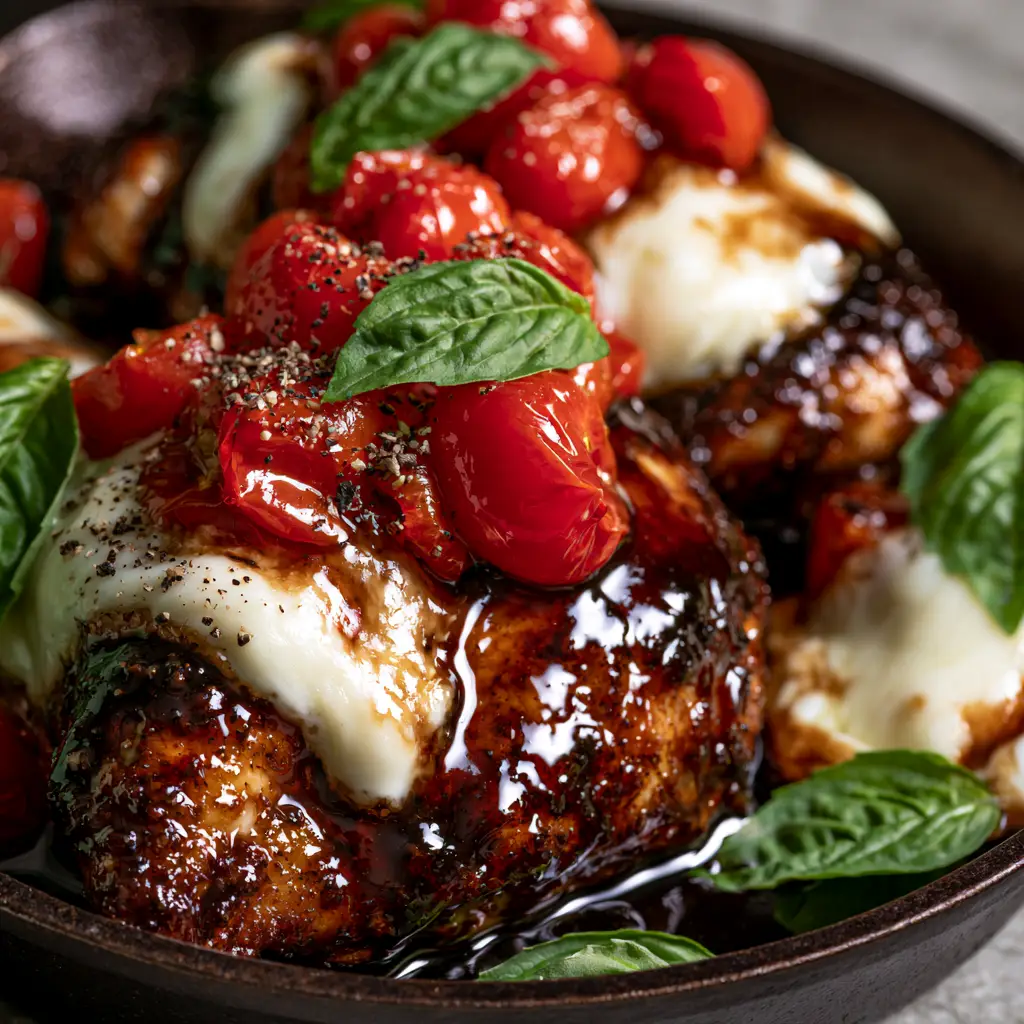
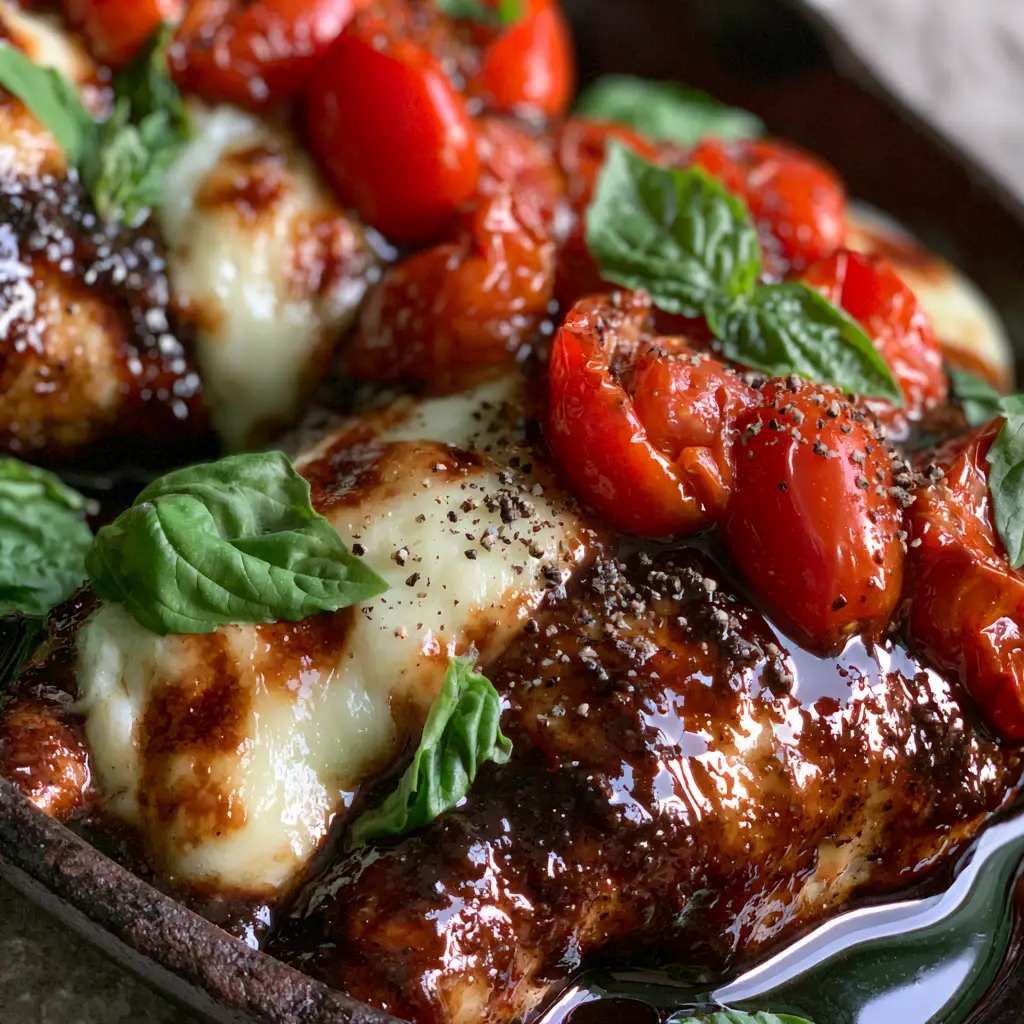
There is a specific culinary magic that happens when high-quality vinegar meets a hot rustic cast iron skillet. This balsamic chicken isn’t just a meal; it is a masterclass in texture and visual contrast, featuring a dark mahogany honey balsamic glaze that boasts a high-gloss reflective sheen. The deep, savory notes of the seared poultry are perfectly balanced by the bright acidity of blistered cherry tomatoes and the creamy, molten patches of fresh mozzarella cheese.
If you have been searching for a dinner that looks like a professional food photograph but comes together in a single pan, this is it. We are focusing on achieving that extreme close-up worthy finish—where every basil ribbon is vibrant green and every crack of black pepper adds a rustic touch to the golden-brown crust of the chicken. Whether you are a seasoned home cook or just starting your culinary journey, this recipe provides the sensory cues you need to succeed.
Building a dish with this much depth requires understanding how sugars and acids interact under heat. By the time you finish this guide, you will know exactly how to achieve that syrupy consistency without burning the delicate honey. This is the ultimate weeknight luxury, bridging the gap between a quick skillet meal and a gourmet dining experience.
Why You Will Crave This Pan-Seared Balsamic Chicken
- The Mahogany Glaze: We use a specific reduction technique to ensure the honey and balsamic vinegar emulsify into a thick, syrupy coating that clings to the chicken.
- Textural Contrast: You get the crunch of a golden-brown sear, the softness of molten mozzarella, and the “pop” of juicy, blistered cherry tomatoes.
- One-Pan Efficiency: Using a rustic black cast iron skillet allows for superior heat retention and a beautiful table-side presentation.
- Vibrant Freshness: The addition of fresh basil ribbons and coarse cracked black pepper cuts through the richness of the balsamic reduction.
The Essential Components for a High-Gloss Balsamic Chicken
Creating this balsamic chicken requires a balance of pantry staples and fresh, high-quality produce. Every ingredient plays a role in the final visual blueprint, from the color of the tomatoes to the viscosity of the glaze.
Chicken Breasts: Use 1.5 lbs (680g) of boneless, skinless chicken breasts. Ensure they are pounded to an even thickness to guarantee they reach a golden-brown exterior without drying out the center.
Balsamic Vinegar: You will need 1/2 cup (120ml) of a good quality balsamic. The acidity is crucial for deglazing the pan and picking up the flavorful brown bits (fond) left behind after searing the chicken.
Honey: 3 tbsp (45g) of honey provides the necessary sugars for that high-gloss reflective sheen. It also mellows the sharp bite of the vinegar, creating a sophisticated sweet-and-savory profile.
Fresh Mozzarella: 8 oz (225g) of fresh mozzarella, sliced or torn into chunks. We are looking for those generous molten patches that drape over the chicken rather than a completely uniform melt.
Cherry Tomatoes: 1.5 cups (250g) of bright red cherry tomatoes. When these hit the hot skillet, they blister and slightly burst, releasing their juices to mingle with the balsamic syrup.
Fresh Basil: A large handful of fresh basil leaves, sliced into thin ribbons (chiffonade). This adds a vibrant green contrast to the dark mahogany sauce and a peppery, herbal finish.
Foundational Seasonings: You must have 1 tbsp (15ml) of high-smoke point oil (like avocado or light olive oil), 1 tsp (5g) of kosher salt, and plenty of coarse cracked black pepper for that final rustic touch.
The Tools of the Trade for Professional Searing
To achieve the visual result described in our blueprint, the equipment is just as important as the ingredients. A 12-inch rustic cast iron skillet is the gold standard here. Its ability to maintain a consistent high temperature is what gives the chicken that deep golden-brown crust.
You will also need a sturdy pair of tongs for flipping the chicken without tearing the sear, and a meat thermometer to ensure the chicken reaches exactly 165°F (74°C). A sharp chef’s knife is essential for creating those clean, vibrant green basil ribbons that sit atop the melted cheese.
Step-by-Step Guide to Achieving the Perfect Balsamic Chicken
1. Preparing the Chicken and the Skillet
Pat the chicken breasts completely dry with paper towels. This is a non-negotiable step; moisture on the surface of the meat will cause it to steam rather than sear. Season both sides generously with salt and a preliminary sprinkle of cracked black pepper.
Heat your cast iron skillet over medium-high heat. Add the oil and wait until it shimmers and just starts to wisps of smoke. This indicates the pan is ready to create the Maillard reaction, which is responsible for the golden-brown color we desire.
2. Executing the Golden-Brown Sear
Place the chicken breasts in the skillet, laying them away from you to avoid oil splatter. Let them cook undisturbed for 5-6 minutes. Resist the urge to peek! When the chicken is ready to flip, it will release naturally from the pan.
Flip the chicken and cook for another 4-5 minutes until the other side is equally golden. At this stage, the chicken should be nearly cooked through. Remove the chicken from the pan and set it aside on a plate; it will finish cooking in the sauce later.
3. Reducing the Mahogany Glaze
Lower the heat to medium. Pour the balsamic vinegar and honey into the skillet. Use a wooden spoon to scrape the bottom of the pan, incorporating all the seared chicken bits into the liquid. This is where the flavor lives.
Add the cherry tomatoes to the liquid. Simmer the sauce for 3-5 minutes. You are looking for two things: the liquid should reduce by half until it is thick and syrupy, and the tomatoes should begin to blister and slightly burst under the heat.
4. The Final Melt and Presentation
Nestle the chicken breasts back into the mahogany glaze, spooning some of the syrup over the top to create that high-gloss sheen. Place the chunks of fresh mozzarella directly onto the chicken breasts. Cover the skillet with a lid for 1-2 minutes until the cheese forms molten patches.
Remove the lid and look for the visual cues: the cheese should be creamy white and glistening, and the sauce should have a dark, reflective quality. Turn off the heat. Immediately top with the fresh basil ribbons and a final, aggressive sprinkle of coarse cracked black pepper.
Expert Tips for a High-Gloss Finish
- Control the Honey: If the glaze becomes too thick or starts to smell like burnt sugar, add a splash of water or chicken broth (1 tbsp at a time) to loosen it back to a syrupy consistency.
- Tomato Timing: If you prefer your tomatoes more intact, add them halfway through the reduction. For a juicier, more integrated sauce, add them at the beginning of the simmer.
- The Cheese Factor: Fresh mozzarella has high water content. If you see too much liquid pooling, briefly increase the heat to evaporate the excess moisture before adding the basil.
- Resting the Meat: Let the balsamic chicken sit in the skillet for 3 minutes after turning off the heat. This allows the juices to redistribute, ensuring the chicken is tender when sliced.
Storage, Reheating, and Freezing
This dish is best served immediately to maintain the contrast between the hot glaze and the fresh basil. However, leftovers can be stored in an airtight container in the refrigerator for up to 3 days. The balsamic chicken stays remarkably moist due to the honey in the glaze.
To reheat, place the chicken and sauce in a small skillet over low heat. Add a teaspoon of water to help the glaze loosen up. Avoid the microwave if possible, as it can turn the fresh mozzarella rubbery. We do not recommend freezing this dish, as the texture of the fresh mozzarella and blistered tomatoes will degrade significantly upon thawing.
What to Serve With This Skillet Masterpiece
Because the balsamic chicken is so rich and flavorful, you want side dishes that can soak up the mahogany syrup. A simple bed of pasta is a classic choice, or you could try a creamy slow cooker pasta as a side if you are feeding a crowd. For a lighter option, serve it alongside crunchy parmesan crisps and a bitter arugula salad.
If you’re looking for a complete menu, this balsamic chicken pairs beautifully with a Mediterranean-inspired spread. Start with some flavorful appetizers if you’re doing a fusion night, or keep it traditional with a side of roasted garlic potatoes. And don’t forget a refreshing drink—a strawberry margarita offers a bright fruitiness that complements the balsamic acidity perfectly.
Frequently Asked Questions
Yes, boneless skinless chicken thighs work beautifully. They are more forgiving and remain juicy, though they may require an additional 2-3 minutes of cooking time to reach the desired internal temperature.
The key is adding the tomatoes during the reduction phase. The liquid in the skillet prevents the chicken from burning while the high heat and contact with the pan bottom cause the tomato skins to burst.
Yes, fresh mozzarella is essential for achieving the visual ‘molten patches’ described. Shredded mozzarella contains anti-caking agents that prevent it from melting into the creamy, glossy pools seen in the photos.
Continue to simmer the sauce on medium heat for another 2-3 minutes without the lid. The evaporation of water will concentrate the sugars and thicken the sauce into a mahogany syrup.
Balsamic vinegar is a thin liquid used for dressings and deglazing. Balsamic glaze is vinegar that has been reduced (often with sugar or honey) until it reaches a thick, syrupy consistency. This recipe makes its own glaze in the pan.
The Perfect Balsamic Chicken Recipe Card
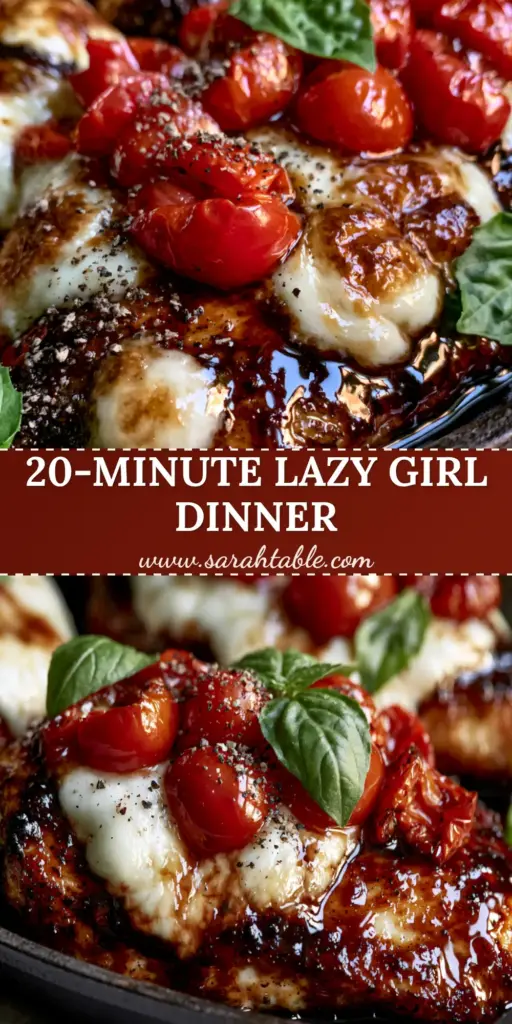
Balsamic Chicken with Honey Glaze and Melted Mozzarella
Ingredients
Equipment
Method
- Pat chicken breasts dry and season with salt and pepper.
- Heat oil in cast iron skillet over medium-high heat. Sear chicken for 5-6 minutes per side until deep golden-brown. Remove and set aside.
- Lower heat to medium. Add balsamic vinegar, honey, and tomatoes. Scape the bottom of the pan to release browned bits.
- Simmer for 3-5 minutes until the sauce is a thick, mahogany syrupy glaze and tomatoes blister.
- Return chicken to pan, coat in glaze, and top with mozzarella. Cover for 1-2 minutes until cheese is molten.
- Top with fresh basil ribbons and more cracked black pepper before serving directly from the skillet.
Notes
Don't overcrowd the pan or the chicken won't sear properly.
Bring the Gourmet Experience Home
Mastering this balsamic chicken is a milestone for any home cook. The combination of the dark mahogany glaze and the molten mozzarella creates a visual and flavorful profile that is hard to beat. It proves that with the right technique and a rustic cast iron skillet, you can create restaurant-quality results in your own kitchen.
We would love to see your results! If you make this dish, please leave a comment below and let us know how your glaze turned out. Be sure to share your photos and follow us on Pinterest for more visually stunning recipe inspiration.