There is nothing quite like a steaming bowl of Persian Noodle Soup, known traditionally as Ash Reshteh, to warm your soul. This isn’t just a soup; it is a vibrant, herb-infused masterpiece that sits at the heart of Persian culture. Imagine a thick green herb broth, bubbling with tender chickpeas and red kidney beans, topped with a glossy emerald fried mint oil that shimmers under the light. Whether you are seeking a healing bowl of soup or a protein-packed vegetarian meal, this recipe delivers a sensory experience that rivals even the most beloved healing chicken noodle soup.
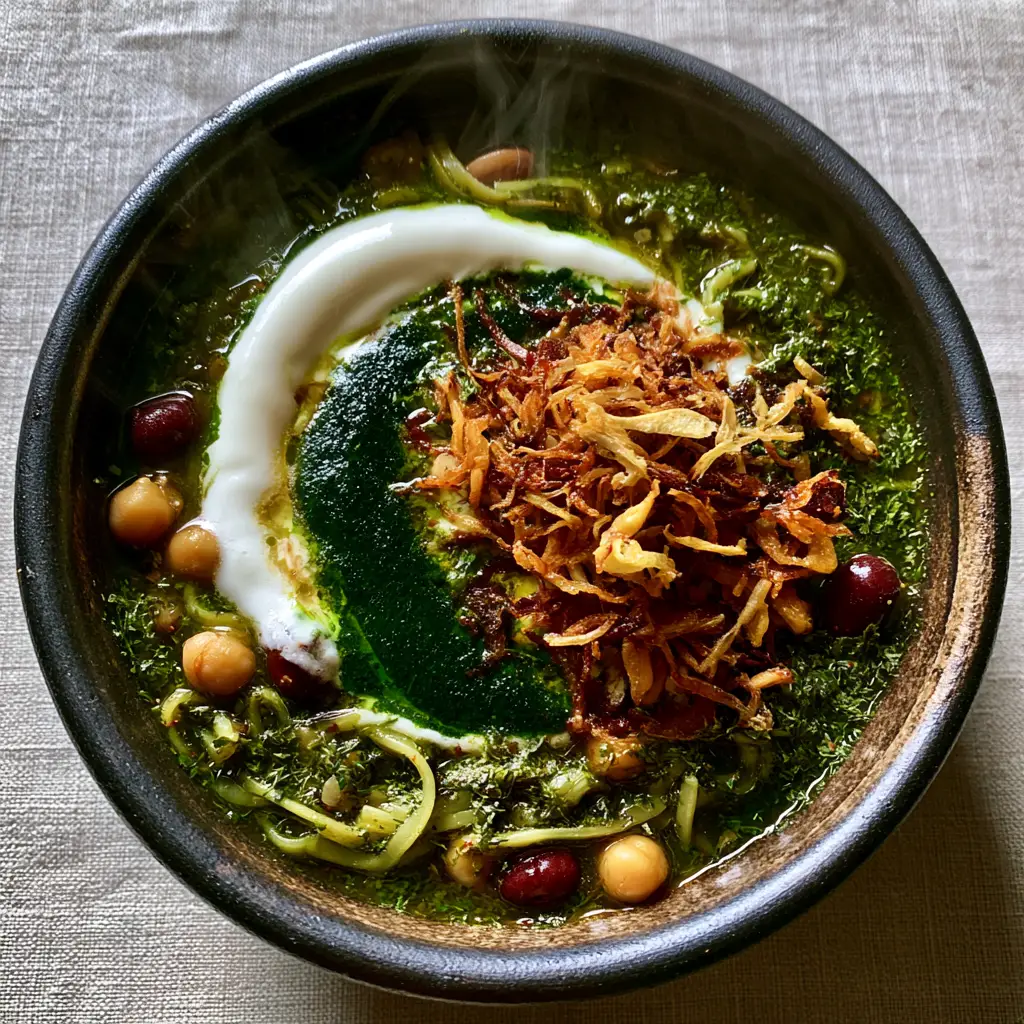
The visual appeal of Persian Noodle Soup is undeniable. From the creamy white kashk whey swirls to the ultra-crispy, golden-shredded fried onions, every spoonful offers a new texture. The flat wheat noodles (reshteh) provide a satisfying bite, while the steam vapors carry the aroma of toasted garlic and fresh cilantro throughout your kitchen. If you have ever enjoyed a robust homemade vegetable soup, you will find the complexity of Ash Reshteh to be a delightful culinary upgrade.
Why You Will Fall in Love With This Persian Noodle Soup
- Visual Texture Explosion: A stunning contrast between the dark-green herb broth and the bright, creamy white kashk swirls.
- Complex Flavor Profile: A perfect balance of earthy legumes, salty fermented whey, and the sharp bite of toasted garlic.
- Incredible Satiety: Between the flat wheat noodles and the trio of beans, this soup keeps you full for hours.
- Crispy Toppings: The “Piaz Dagh” (crispy onions) and fried mint oil add a professional, restaurant-quality finish that is highly “pinnable” and shareable.
The Secret Ingredients for the Most Flavorful Broth
To achieve the authentic, deep-green hue of a traditional Persian Noodle Soup, the quality and quantity of herbs are non-negotiable. This is not a garnish; the herbs are the vegetable base of the soup itself. Much like the base of a fragrant split pea soup, the aromatics here build the foundation of the entire dish.
1. The Herbs (The Green Soul): You will need 2 cups (60g) of fresh parsley, 2 cups (60g) of fresh cilantro, and 2 cups (60g) of fresh spinach. These must be chopped finely to melt into the broth, creating that signature thick green herb broth texture.
2. Reshteh (The Persian Noodles): These are flat, salty wheat noodles. They are starchier than Italian pasta, which helps thicken the soup. If you can’t find them, linguine is a passable substitute, but you must add extra salt to the water.
3. Kashk (The Creamy Factor): This is a fermented, drained yogurt or whey. It provides a unique sour and salty tang that defines Persian Noodle Soup. It is much more complex than the cream used in creamy bean soups.
4. The Legumes: A mix of 1/2 cup (100g) chickpeas, 1/2 cup (100g) red kidney beans, and 1/2 cup (100g) lentils provides the “bulk” and essential proteins.
The Art of the “Dagh”: Perfecting the Toppings
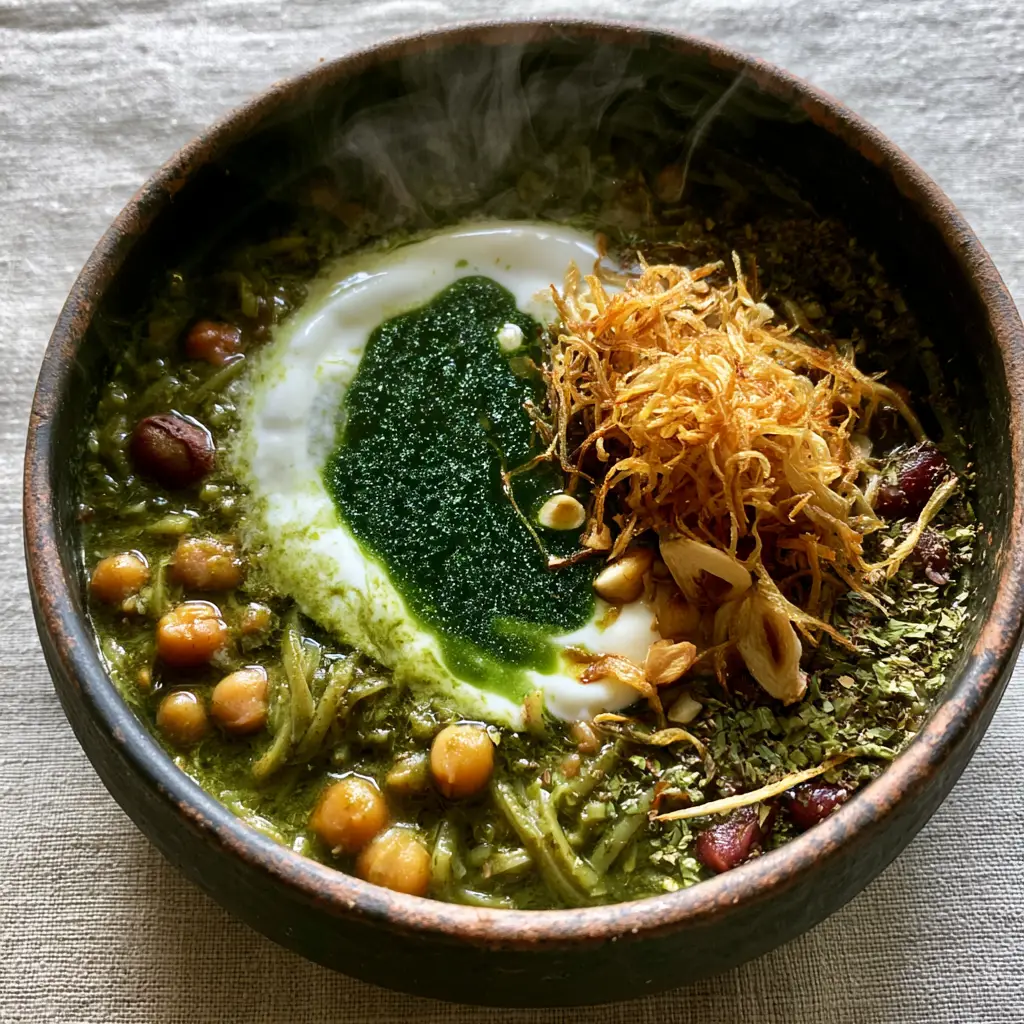
In Persian cuisine, “Dagh” refers to the sizzling toppings that elevate a dish. For your Persian Noodle Soup, you will prepare three distinct toppings that provide the visual “wow” factor seen in the Midjourney-inspired photos. These crispy elements are what make the recipe go viral on Pinterest.
First, the Piaz Dagh (crispy onions). You need 2 large yellow onions, sliced paper-thin. When fried in 1/2 cup (120ml) of neutral oil, they transform into golden-brown shards of flavor. Next is the Sir Dagh (toasted garlic). Thinly sliced garlic slivers are fried until just pale gold—any longer and they turn bitter.
Finally, the Na’na Dagh (fried mint oil). This is the glossy emerald fried mint oil that you see swirled on top. You simply heat oil and stir in dried mint for 30 seconds. It creates a shimmering dark emerald-green effect that is essential for the Persian Noodle Soup aesthetic.
Step-by-Step: Crafting Your Persian Noodle Soup
Step 1: Preparing the Legume Base
Start by soaking your 1/2 cup (100g) chickpeas and 1/2 cup (100g) red kidney beans overnight. This ensures they cook evenly and are tender-to-the-bite. Drain and place them in a large pot with 8 cups (2 liters) of water. Bring to a boil, then simmer for about 45 minutes before adding the lentils. This staggered start prevents the lentils from turning to mush while the harder beans soften.
Step 2: The Herb Infusion
Once the beans are tender, it is time to add the “Sabzi” (herbs). Stir in your finely chopped parsley, cilantro, spinach, and 1 cup (30g) of chopped leeks or scallions. The broth will immediately turn a vibrant green. Season with 1 teaspoon (5g) of turmeric to add a golden undertone to the green broth, much like the spice profile of a robust beef stew.
Step 3: Cooking the Reshteh Noodles
Add 8 oz (225g) of Reshteh noodles to the pot. Break them in half so they are easier to eat. These noodles release starch as they cook, transforming the watery broth into a thick, velvety consistency. If the soup becomes too thick, add 1 cup (240ml) of hot water. The noodles should be soft but still hold their flat, linguine-style shape.
Step 4: Incorporating the Kashk
Take 1/2 cup (120ml) of kashk and thin it with a little warm water. Stir half of it directly into the Persian Noodle Soup. This turns the dark green broth into a slightly creamier, lighter shade and adds that signature fermented tang. Keep the rest for the artful decoration on top.
Expert Tips for Pinterest-Perfect Results
- Don’t Overcook the Noodles: Reshteh noodles continue to absorb liquid even after the heat is off. Serve immediately to maintain that perfect “flat wheat noodle” definition.
- The Oil Temperature: When making the mint oil, ensure the oil is hot but the heat is turned OFF before adding the dried mint. Mint burns in seconds!
- Thin the Kashk: For those beautiful creamy white kashk swirls, ensure your kashk is the consistency of heavy cream. If it’s too thick, it will sink; if it’s too thin, it will bleed into the green.
- Salt Warning: Reshteh noodles and kashk are both very salty. Do not add additional salt to the pot until the very end after tasting!
How to Store and Reheat Your Ash Reshteh
Storage: This Persian Noodle Soup keeps well in the refrigerator for up to 3 days. However, be aware that the noodles will continue to swell and absorb the broth. You may need to add a splash of water when reheating.
Freezing: You can freeze the herb and bean base, but I do not recommend freezing the soup with the noodles already in it. The noodles will lose their texture and become mushy upon thawing. For the best results, freeze the “base” and add fresh noodles when you are ready to eat.
What to Serve With Persian Noodle Soup
This soup is incredibly filling on its own, but it pairs beautifully with a side of warm Sangak or Lavash bread. For a full Persian feast, serve it alongside a fresh Shirazi salad (cucumber, tomato, and onion) to provide a crisp, acidic contrast to the rich, creamy soup. If you are serving this as part of a larger gathering, it fits perfectly alongside other comfort classics like a lasagna soup or even a hearty loaded potato soup for a diverse soup bar.
Frequently Asked Questions
They are similar in shape, but Reshteh is a Persian wheat noodle that is much saltier and starchier. If using linguine, add extra salt to your soup and a tablespoon of flour to reach the desired thickness.
Heat the oil until shimmering, then turn the heat completely off. Stir in the dried mint and remove the pan from the hot burner immediately. The residual heat is enough to infuse the oil.
Yes, Ash Reshteh is traditionally a vegetarian dish. It is packed with plant-based protein from chickpeas, lentils, and kidney beans.
If you cannot find kashk, a mixture of Greek yogurt and a squeeze of lemon juice or a bit of sour cream provides a similar tangy profile, though it won’t be quite as salty or pungent.
This usually happens if the herbs are overcooked or not fresh enough. Add the herbs toward the middle-end of the process and ensure you use a large volume of spinach and parsley to keep the color vibrant.
The Authentic Persian Noodle Soup (Ash Reshteh) Recipe

Persian Noodle Soup: The Ultimate Guide to Authentic Ash Reshteh
Ingredients
Equipment
Method
- Add soaked chickpeas and kidney beans to a large pot with 8 cups of water. Simmer for 45 minutes.
- Add the lentils to the pot and continue simmering for another 20 minutes until all beans are tender.
- Stir in the chopped parsley, cilantro, spinach, and turmeric. Cook for 15 minutes until the broth is a thick green herb broth.
- Add the reshteh noodles. Cook for 10-15 minutes until the noodles are tender and the soup has thickened.
- Stir in half of the kashk and remove from heat.
Notes
Be careful with salt as kashk and reshteh are naturally very salty.
Join the Community!
Did you make this Persian Noodle Soup? I would love to see your beautiful kashk swirls and crispy onion toppings! Please leave a 5-star rating in the recipe card below and follow me on Pinterest @sarah_table for more authentic global recipes. Don’t forget to upload a photo of your bowl in the comments—seeing your creations is the highlight of my day!
If you loved this, be sure to check out our other comforting recipes like the fresh herb chicken noodle soup or our viral zuppa toscana copycat. Happy cooking!