baked cottage cheese eggs are the ultimate breakfast revolution for anyone craving a cloud-like, high-protein start to their day. If you have been searching for a way to transform humble pantry staples into a gourmet experience, this aerated egg soufflé is your answer. By blending rich cottage cheese with fresh eggs, we create a silky custard foundation that rises beautifully in the oven, resulting in a dish that looks as impressive as it tastes. This recipe validates every Pinterest craving with its golden-brown toasted top and moist, aerated interior.
The beauty of baked cottage cheese eggs lies in the science of the blend. Unlike traditional scrambled eggs or omelets, the addition of cottage cheese introduces moisture and structure, allowing the eggs to puff up into a delicate, pillowy texture. When you scoop into the matte white ceramic ramekin, you are met with a moist, cloud-like rise that feels incredibly indulgent yet remains packed with clean protein. It is the perfect companion to a savory cheese and bacon strata during a weekend brunch spread.
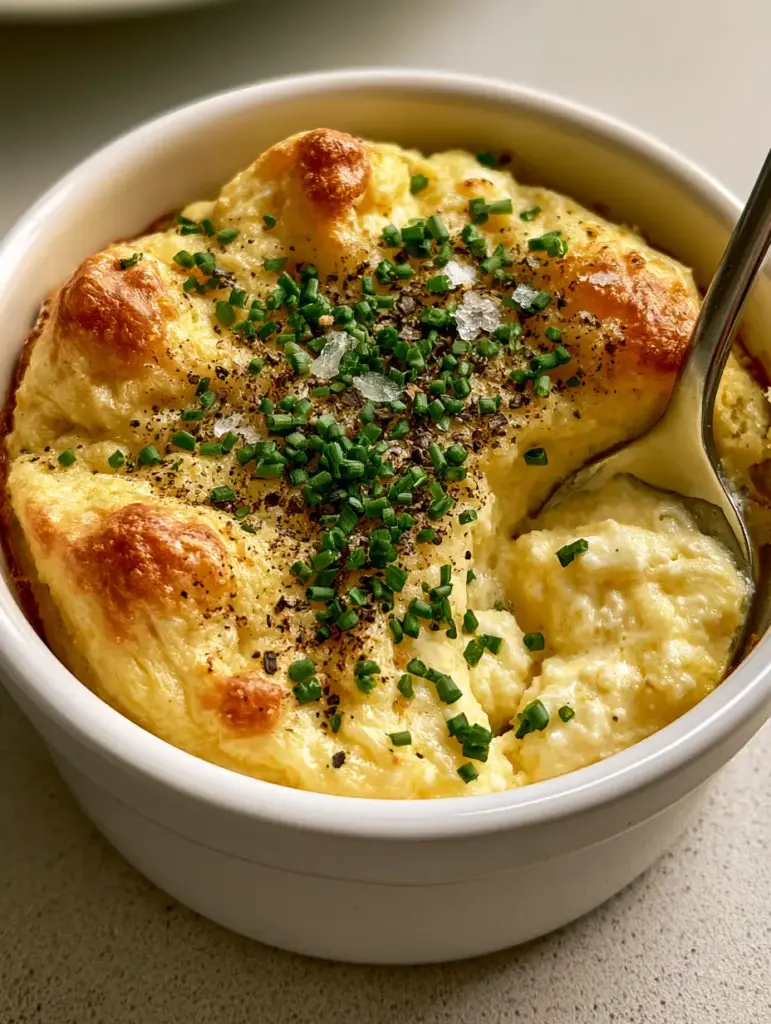
Why You Will Obsess Over These Blended Baked Eggs
- The Perfect Texture: A silky, custard-like base with zero visible curds thanks to a high-speed blend.
- Aesthetic Appeal: Features a stunning golden-brown toasted top with light, airy peaks that scream “professional chef.”
- High Protein: A powerhouse breakfast that keeps you full for hours without the heavy feel of a traditional egg and sausage breakfast casserole.
- Visual Garnish: Finished with vibrant green chives, coarse cracked black pepper, and translucent flakes of sea salt for a restaurant-quality finish.
The Short List of Essential Ingredients
To achieve the specific baked cottage cheese eggs texture seen in our visuals, the quality of your ingredients matters. Every component serves a culinary purpose to ensure the soufflé rises and maintains its “cloud” status.
Large Eggs: The structural backbone of the dish. Use room temperature eggs for the maximum possible rise and aeration.
Full-Fat Cottage Cheese: Use 4% milkfat for the creamiest results. This provides the moisture needed for that “moist, aerated interior” without making the dish watery. Avoid fat-free versions as they lack the stability for a true soufflé rise.
Unsalted Butter: Used strictly for greasing the matte white ceramic ramekins. This ensures the eggs can “climb” the sides of the dish as they bake.
Fresh Chives: Finely minced to provide a mild, onion-like brightness that cuts through the richness of the custard.
Seasoning Trio: Coarse cracked black pepper for a pungent bite, flaky sea salt for texture, and a pinch of fine salt in the base for even seasoning.
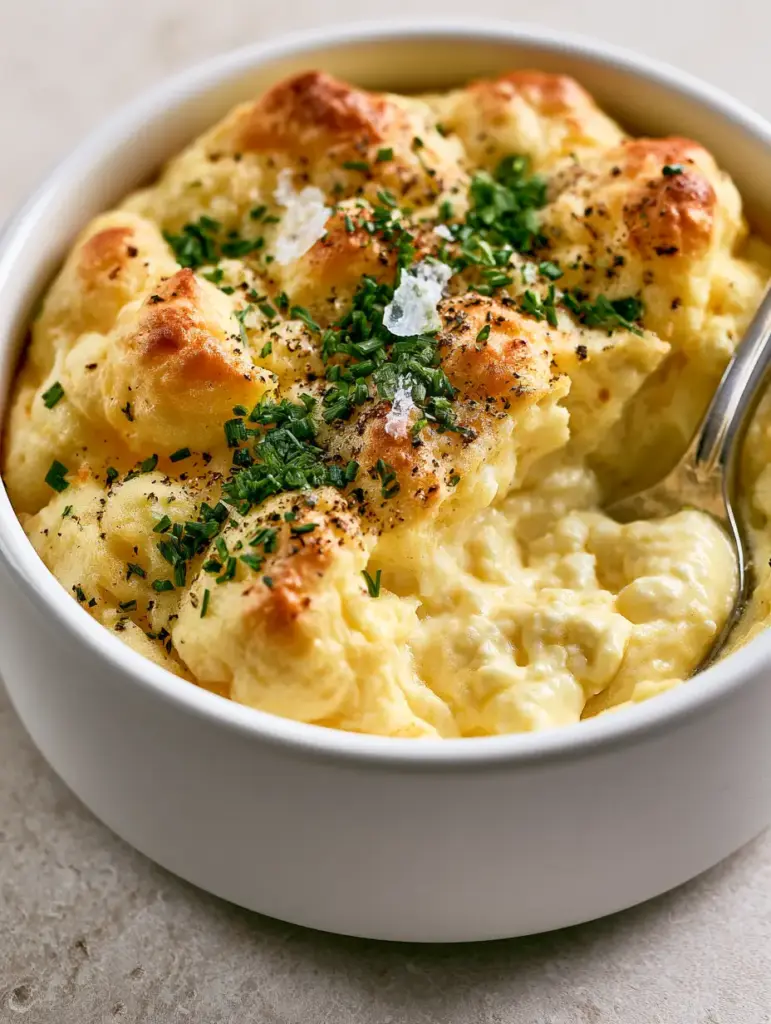
How to Make the Fluffiest Baked Cottage Cheese Eggs
1. Creating the Silky Custard Base
Preheat your oven to 375°F (190°C). The first secret to perfect baked cottage cheese eggs is the blender. Combine 1 cup (240ml) of cottage cheese and 4 large eggs in a high-speed blender. Blend on high for 30-45 seconds until the mixture is completely homogenous. You are looking for a “silky custard foundation with zero visible curds.” This aeration is what creates the “soufflé” effect during the baking process.
2. Preparing the Ramekins
Generously grease two 6-ounce matte white ceramic ramekins with softened butter. Ensure you coat the sides all the way to the rim. This step is critical; if the eggs stick to the side, they will collapse rather than achieving that iconic “cloud-like rise.” Unlike a potatoes o’brien breakfast casserole, this dish relies on vertical movement.
3. The Precision Bake
Divide the blended mixture evenly between the ramekins. Place them on a small baking sheet for stability. Bake for 22-25 minutes. Visual Cue: Watch for the eggs to puff up significantly above the rim of the ramekin. The top surface should develop light toasted golden-brown peaks while the center remains slightly jiggly to the touch.
4. The Finishing Touches
Once removed from the oven, the baked cottage cheese eggs will begin to settle slightly—this is normal! Immediately top with a meticulous garnish of vibrant green finely minced chives. Sprinkle a delicate layer of coarse cracked black pepper and a few translucent flakes of sea salt. The contrast of the green herbs against the golden top is what makes this dish go viral on Pinterest.
Expert Tips for Soufflé Success
- Don’t Peek: Avoid opening the oven door during the first 15 minutes of baking. The sudden drop in temperature can cause the aerated cells to collapse.
- Room Temperature Ingredients: Warm eggs and cottage cheese blend more smoothly and incorporate more air than cold ingredients.
- Use a High-Speed Blender: A food processor or a whisk won’t achieve the “zero visible curds” requirement. You need the power of a blender to emulsify the cheese fats with the egg proteins.
- Serve Immediately: Much like a traditional soufflé, the height is most impressive the moment it leaves the heat. If you’re hosting, have your fresh herb chicken soup or other sides ready to go first.
Storage, Reheating, and Freezing
While baked cottage cheese eggs are best enjoyed fresh, you can store leftovers in the refrigerator for up to 2 days. Keep them in their ramekins covered tightly with plastic wrap.
To Reheat: Use a toaster oven at 325°F (160°C) for 5-7 minutes. This helps maintain some of the airy texture. Avoid the microwave if possible, as it can make the eggs rubbery and cause them to lose their “moist, cloud-like” interior.
Freezing: We do not recommend freezing this specific recipe. The delicate aerated structure of the soufflé does not survive the ice crystal formation during freezing and will become spongy upon thawing.
What to Serve with Your Egg Soufflé
This dish is remarkably versatile. For a light lunch, serve it alongside a crisp arugula salad with a lemon vinaigrette. If you’re looking for a more robust breakfast, it pairs beautifully with crispy bacon or a side of sausage and hashbrown casserole.
For those who love a “brunch for dinner” vibe, follow this up with something sweet like a cream cheese french toast casserole. The light, savory nature of the baked cottage cheese eggs balances perfectly with heavier, sweeter bakes.
Frequently Asked Questions
To maintain the light souffle texture, it is best to keep mix-ins very finely minced and small in quantity. Heavy ingredients will weigh down the aerated base and prevent it from rising.
For the specific ‘silky custard’ texture in the photos, a blender is required. Whisking by hand will leave visible curds and won’t aerate the mixture enough for a cloud-like rise.
Ensure your oven is fully preheated to 375°F. If they aren’t golden by the 22-minute mark, you can switch to a broiler for the final 60 seconds, but watch closely to avoid burning the chives!
You can, but 4% full-fat cottage cheese provides much better structural stability and a richer flavor. Low-fat versions tend to release more water, which can lead to a soggy bottom.
Like any souffle-style dish, these eggs rely on air bubbles. If you open the oven door too early or don’t grease the ramekin sides well, the eggs can’t climb or will drop due to temperature changes.
The Ultimate Baked Cottage Cheese Eggs Recipe
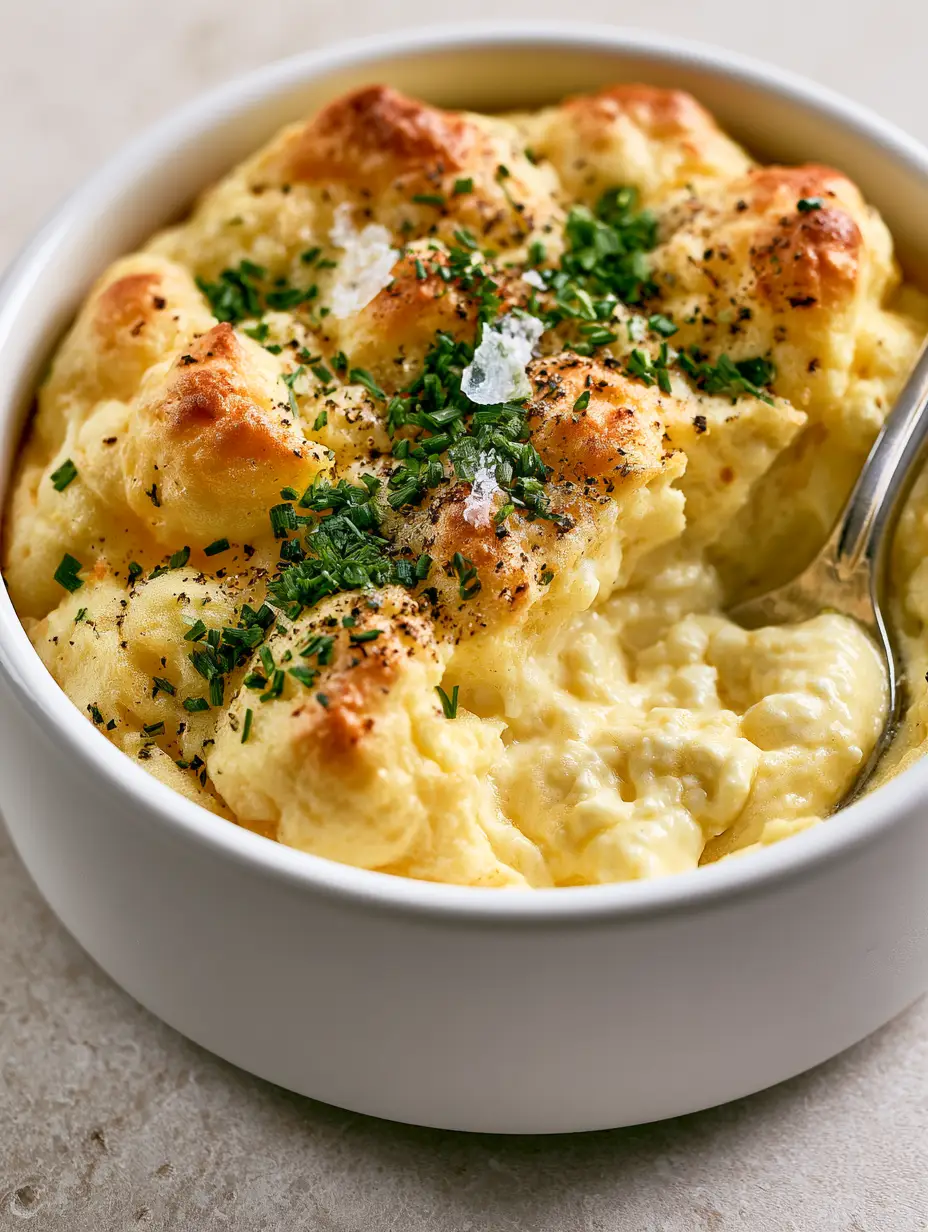
baked cottage cheese eggs: The Fluffiest High-Protein Breakfast Soufflé
Ingredients
Equipment
Method
- Preheat oven to 375°F (190°C). Grease two 6-ounce ramekins thoroughly with butter.
- Place eggs, cottage cheese, and fine salt in a blender. Process on high for 45 seconds until completely smooth with zero curds.
- Pour the mixture into the prepared ramekins. Bake for 22-25 minutes until puffed and golden on top.
- Top with fresh chives, cracked pepper, and flaky salt immediately before serving while the rise is at its peak.
Notes
Do not open the oven door while baking to prevent collapsing.
Save This Recipe to Pinterest!
Ready to level up your breakfast game? Hover over any of the images in this post to save this baked cottage cheese eggs recipe to your “Healthy Breakfast” or “Brunch Ideas” board on Pinterest! We love seeing your recreations, so please follow sarah_table for more high-protein culinary inspiration. If you make this, snap a photo of those golden peaks and share it in the comments below—and don’t forget to leave a 5-star rating if you loved it!