Authentic Italian recipes are defined by their simplicity, and there is no dish more iconic or misunderstood than the classic Spaghetti alla Carbonara. When you look at a plate of real Carbonara, you aren’t seeing a heavy cream sauce; you are witnessing the magic of culinary emulsification. The glossy, golden sheen that coats every strand of al dente pasta comes purely from high-quality egg yolks and sharp Pecorino Romano cheese.
This recipe is designed for those who crave the rustic elegance of a Roman trattoria. We are stripping away the “Americanized” additions and focusing on the four pillars of the dish: cured pork, eggs, cheese, and pepper. The result is a sensory masterpiece that balances the funk of sheep’s milk cheese with the smoky, rendered fat of charred guanciale.
If you have been searching for authentic Italian recipes that prioritize technique over complicated ingredient lists, you have arrived. This Spaghetti alla Carbonara is a masterclass in temperature control and timing. Get ready to transform five humble ingredients into a restaurant-quality meal that will make you feel like you’re dining in the heart of Trastevere.
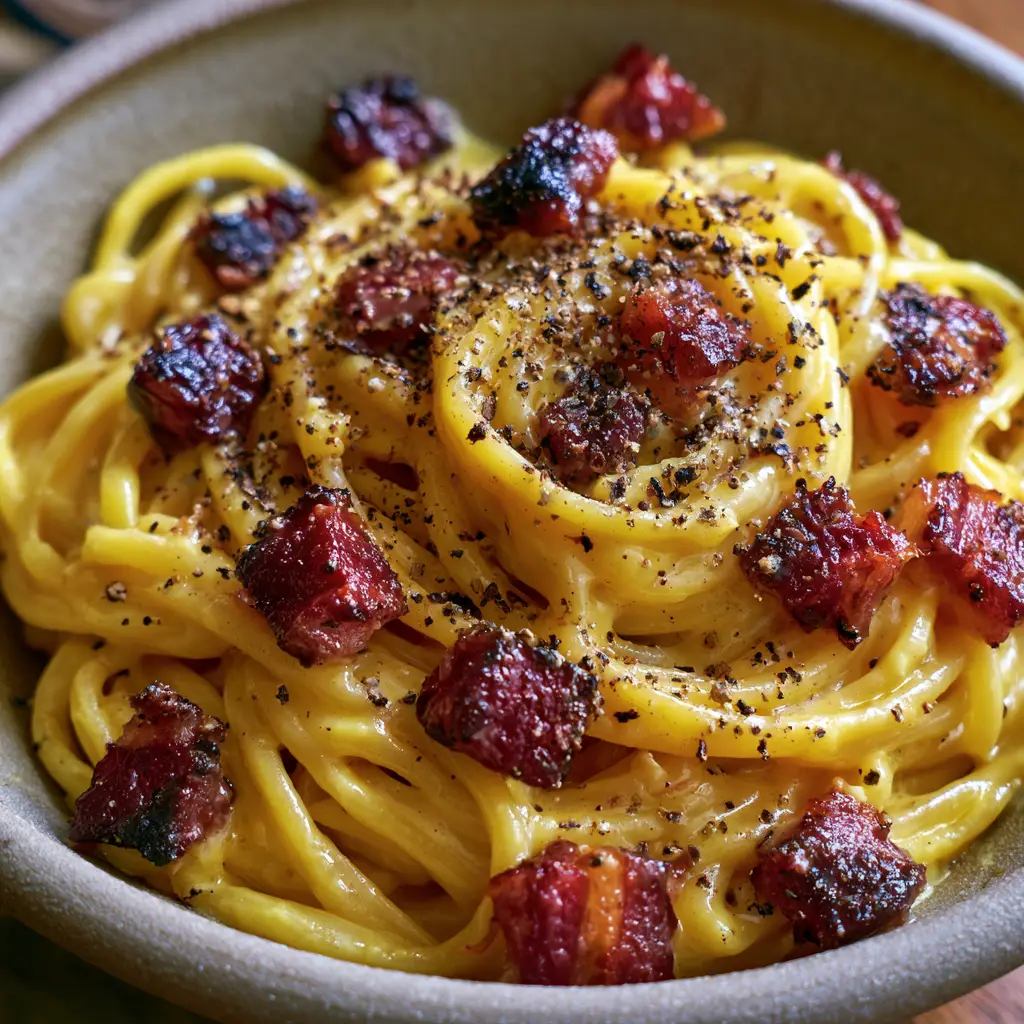
Why This Carbonara Defines Authentic Italian Recipes
- The Golden Emulsion: A thick, silky, and glossy golden coating made entirely of egg yolks and Pecorino Romano—absolutely no cream allowed.
- The Guanciale Crunch: Deep-red, crispy, charred cubes of guanciale provide a salty, fatty contrast to the tender pasta.
- Perfect Al Dente Texture: Spaghetti cooked with a bite to stand up to the richness of the yolk-based sauce.
- Coarse Pepper Punch: A generous dusting of freshly cracked black pepper provides the “carbon” (coal) aesthetic that gives the dish its name.
- Matte Ceramic Presentation: Served in a rustic, shallow bowl to maintain heat while showcasing the vibrant colors of the dish.
The Four Pillars: Ingredients for Success
1 lb (450g) Spaghetti: Choose a high-quality bronze-die extruded pasta. The rough surface of the noodle is essential for the egg emulsion to cling to.
5 oz (150g) Guanciale: This is cured pork jowl. It is the soul of authentic Italian recipes like this one. It has a higher fat-to-meat ratio than pancetta, which creates the base of our sauce.
4 Large Egg Yolks + 1 Whole Egg: Using mostly yolks ensures that signature golden color and a rich, velvety mouthfeel without the watery consistency of too many whites.
1.5 cups (150g) Pecorino Romano: This aged sheep’s milk cheese provides the salt and the “bite.” Make sure it is finely grated so it melts instantly into the pasta water.
2 tsp (10g) Coarse-Ground Black Pepper: Do not use pre-ground pepper. Toasting whole peppercorns and then crushing them provides an aromatic heat that cuts through the fat.
Pinch of Sea Salt: Used only for the pasta water. The guanciale and Pecorino are naturally very salty, so be cautious with additional seasoning.
Before you start the pasta, you might want to prepare a refreshing beverage from our list of drink recipes to balance the richness of the pork fat.
The Culinary Science of the Carbonara Emulsion
Understanding the “why” behind the technique is what separates authentic Italian recipes from mediocre imitations. The “sauce” in Carbonara is actually a stable emulsion of fat (rendered guanciale fat), protein (egg yolks), and starch (pasta water).
The biggest mistake home cooks make is scrambled eggs. This happens when the eggs hit a surface that is too hot (above 150°F / 65°C). By using the residual heat of the pasta and a small amount of starchy water, we gently cook the eggs into a custard rather than an omelet.
If you enjoy mastering these technical sauces, you might also love our Cajun chicken alfredo stuffed shells, which uses a different but equally decadent cheese-based sauce technique.
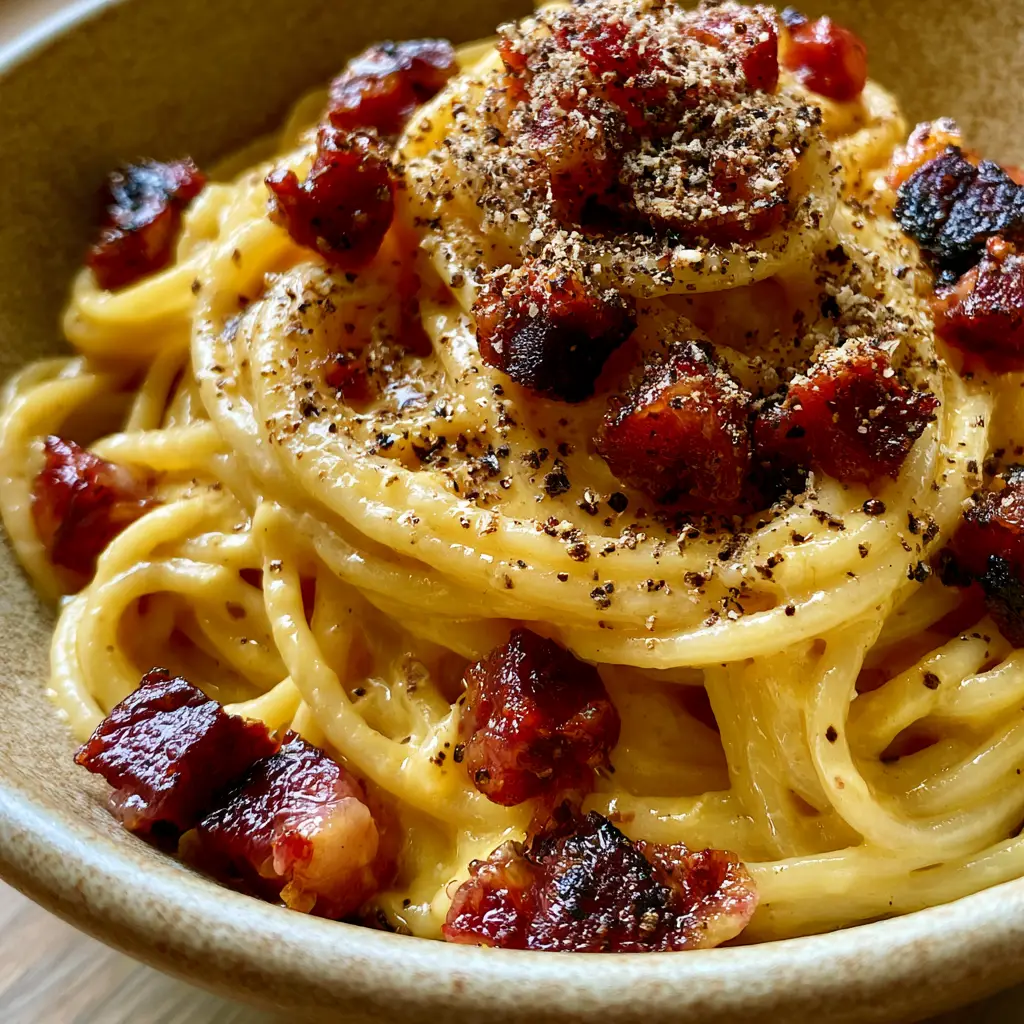
Step-by-Step Instructions for Perfect Carbonara
1. Rendering the Guanciale
Cut the guanciale into 1/2-inch cubes. Place them in a cold skillet and turn the heat to medium-low. This “cold start” allows the fat to render slowly without burning the meat.
Cook until the cubes are deep-red and crispy, with charred edges. The fat should be clear and liquid. Remove the skillet from the heat, but keep the fat in the pan—this is liquid gold for your authentic Italian recipes.
2. The “Al Dente” Boil
Bring a large pot of water to a boil. Use less water than usual to ensure a higher concentration of starch. Add a small pinch of salt—remember, the cheese and pork are salty!
Boil the spaghetti until it is two minutes shy of the package instructions. It should have a firm white core when bitten. Reserve 1 cup (240ml) of the starchy pasta water before draining.
3. Preparing the Egg and Cheese Slurry
While the pasta cooks, whisk the 4 egg yolks, 1 whole egg, and the finely grated Pecorino Romano in a small matte ceramic bowl. Add the coarse black pepper.
The mixture should form a thick, pale yellow paste. This is the foundation of the silky coating you see in authentic Italian recipes. Whisk in 2 tablespoons of warm pasta water to “temper” the eggs, preventing them from curdling later.
4. The Final Emulsion
Add the drained, hot spaghetti directly into the skillet with the guanciale and rendered fat. Toss well to coat every strand. This creates a fat-barrier that helps the egg sauce stick.
Remove the pan entirely from the heat source. Pour in the egg and cheese mixture. Quickly toss the pasta using tongs or a pasta fork, adding splashes of the reserved pasta water as needed.
Visual Cue: Watch as the liquid transforms into a thick, glossy, golden emulsion. It should look like shimmering silk, not liquid soup. The charred guanciale should be evenly distributed throughout the swirls of pasta.
Expert Tips for Success
- Room Temperature Eggs: Always use room temperature eggs. Cold eggs can shock the emulsion and cause the cheese to clump rather than melt.
- Avoid the Heat: Never add the egg mixture while the skillet is still on the burner. The residual heat of the pasta and the pan is more than enough to cook the eggs safely.
- Pepper Toasting: For a deeper flavor, toast your peppercorns in a dry pan for 60 seconds before grinding them coarsely.
- Pasta Water is Key: The starch in the water acts as a binder. If your sauce looks “tight” or dry, add another tablespoon of water and toss vigorously.
Storage and Reheating
Carbonara is best enjoyed immediately. Because the sauce is an egg emulsion, reheating it usually results in scrambled eggs. If you must store it, keep it in an airtight container for up to 24 hours.
To reheat, add a splash of water and heat it very gently in a double boiler (bowl over simmering water), whisking constantly until just warm. Do not microwave!
What to Serve With Authentic Italian Recipes
Since Carbonara is incredibly rich, pair it with a crisp, acidic side dish. A simple arugula salad with lemon vinaigrette works perfectly. For a full Italian-inspired evening, follow this meal with a lemonade moscato wine spritzer to cleanse the palate.
For dessert, stay with the theme of classic comfort by trying our homemade banana pudding or perhaps some crispy chocolate chip cookies for a sweet crunch.
Frequently Asked Questions
While bacon is a common substitute, it is smoked, whereas guanciale is cured with salt and pepper. For a truly authentic flavor, guanciale is preferred for its unique pork-jowl fat consistency.
No. Authentic Roman Carbonara relies strictly on the emulsification of egg yolks, Pecorino Romano cheese, and starchy pasta water to achieve its creamy texture.
Most authentic recipes use a high ratio of yolks (like 4 yolks to 1 whole egg) to ensure a rich, golden color and prevent the sauce from becoming too watery from the whites.
Pecorino Romano is the traditional choice. It is a sharp, salty sheep’s milk cheese that provides the necessary ‘funk’ and structure for the sauce.
This happens when the egg mixture is exposed to high, direct heat. Always remove the pan from the burner before adding the eggs and rely on the residual heat of the pasta to create the emulsion.
Authentic Spaghetti alla Carbonara
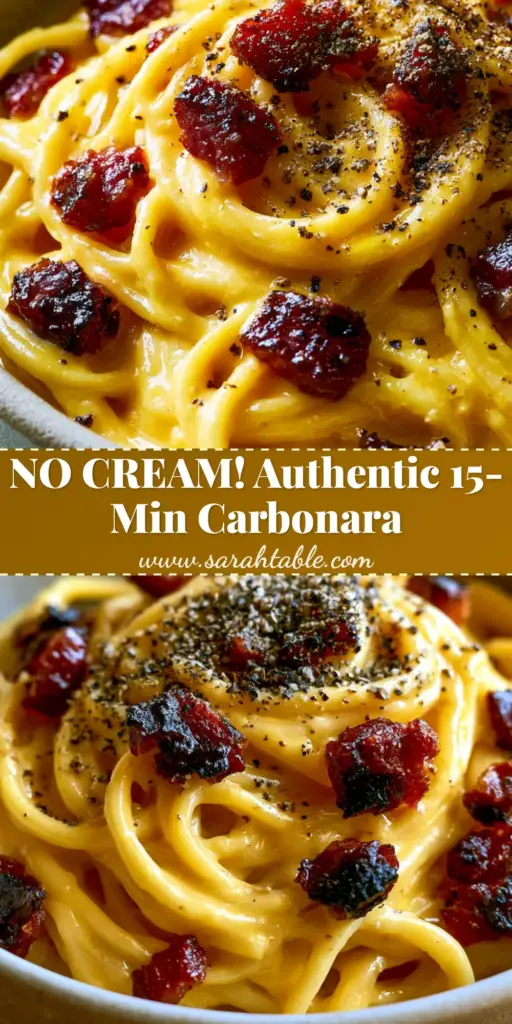
Authentic Italian Recipes: The Ultimate Silky Spaghetti alla Carbonara
Ingredients
Equipment
Method
- Place guanciale cubes in a cold skillet. Render over medium-low heat until deep-red, crispy, and charred on the edges. Remove from heat but keep the fat in the pan.
- Boil spaghetti in salted water until very al dente (2 minutes before package directions). Reserve 1 cup of pasta water.
- In a ceramic bowl, whisk egg yolks, whole egg, Pecorino Romano, and black pepper into a thick paste.
- Toss hot pasta in the skillet with the guanciale fat. Remove pan from heat. Pour in egg mixture and toss vigorously, adding pasta water until a silky, glossy golden emulsion forms.
Notes
Never add the eggs while the skillet is on the active heat source.
Join the Conversation!
Did you master the silky emulsion? Authentic Italian recipes are all about the love and craft put into the ingredients. Please save this recipe to your Pinterest boards so you never lose the technique!
If you made this dish, I would love to see it. Upload a photo of your matte ceramic bowl filled with golden pasta in the comments below. Don’t forget to leave a 5-star rating if you enjoyed this Roman classic. Follow @sarah_table for more deep dives into culinary traditions!