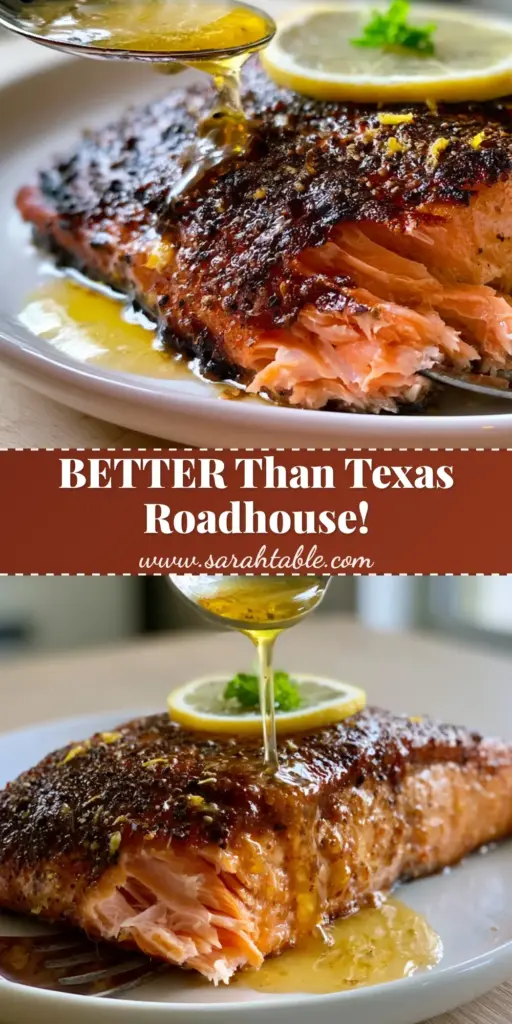
If you have ever stepped foot inside a bustling roadhouse steakhouse, you know that the irresistible aroma wafting from the kitchen is not just from the steaks. The Texas Roadhouse style baked salmon is an absolute legendary menu item, celebrated for its unique balance of a bold, smoky, caramelized savory-salty crust and an incredibly tender, juicy interior. Capturing that exact restaurant-quality magic at home can feel intimidating, but this recipe unlocks the exact culinary secrets needed to replicate it perfectly in your own kitchen.
Many home cooks struggle with seafood, often turning out dry, bland fillets that lack that signature charred depth. This recipe solves that problem completely by combining an intense, sweet-and-savory spice rub with a high-heat baking technique that mimics a professional kitchen grill or salamander broiler. The result is a gorgeous piece of fish that looks like it was plated by a professional chef, complete with a glossy, translucent yellow lemon pepper butter sauce cascading over the top.
Whether you are planning a special date night or simply want to elevate your weekly meal rotation, this Texas Roadhouse style baked salmon delivers unmatched flavor and visual appeal. It is elegant enough for a dinner party but simple enough to whip up on a busy weeknight. Let us dive deep into the culinary science and step-by-step techniques required to achieve this ultimate seafood masterpiece.
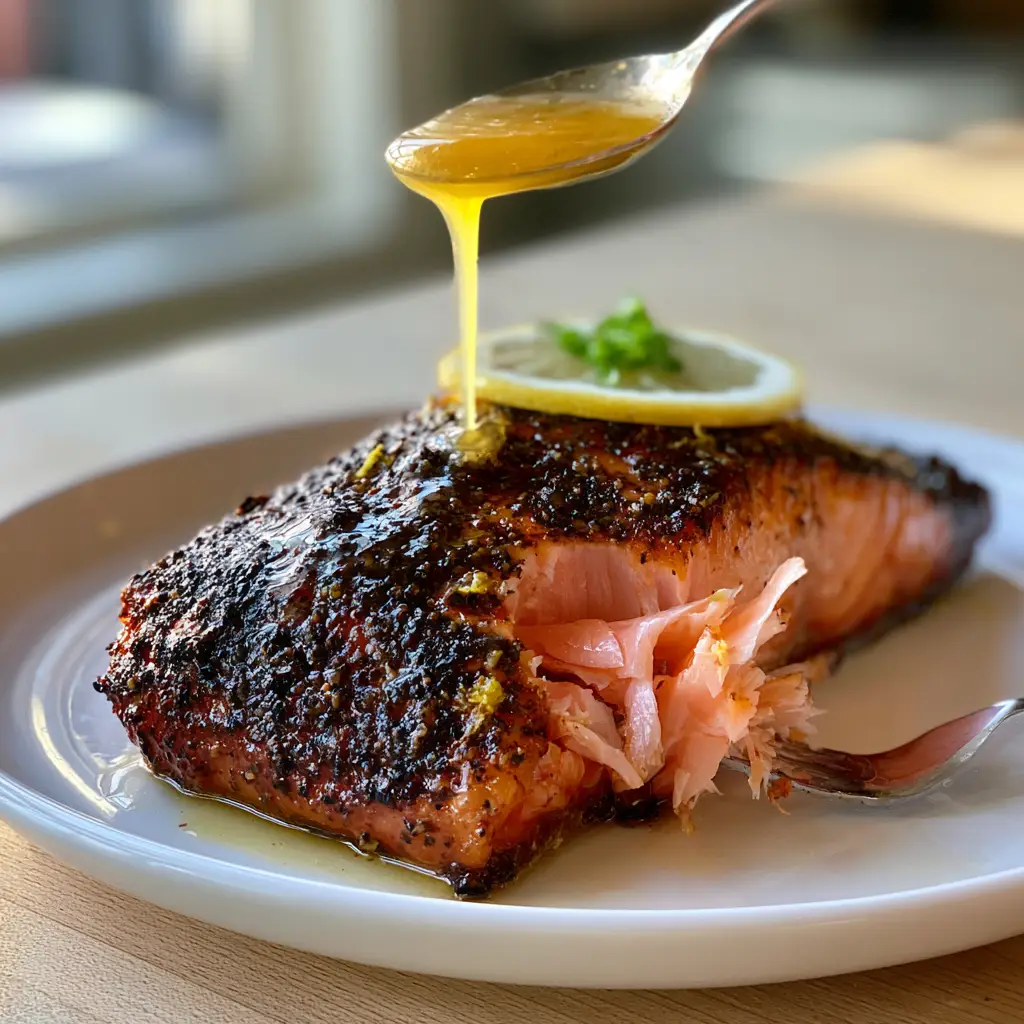
Why This Copycat Salmon Recipe Absolutely Rules
- The Ultimate Textural Contrast: You get a thick, dark, caramelized savory-salty crust on the outside that perfectly complements the moist pink interior flakes inside.
- Infused with Bright Citrus: The rich, decadent butter glaze is cut perfectly by fresh lemon zest and cracked black pepper, creating a beautiful balance of flavors.
- Streamlined and Foolproof: By using precise timing and temperature controls, you will never have to worry about overcooking or drying out your fish again.
- Restaurant Quality at Home: Skipping the expensive restaurant bill while enjoying a dish that tastes exactly like the original is an incredible win for any home cook.
Achieving this level of culinary excellence does not require professional culinary school training. It simply requires understanding how flavors interact and how high heat transforms simple ingredients into something extraordinary. If you enjoy mastering restaurant copies, you might also want to try our classic baked salmon recipe or expand your seafood repertoire with a delicious baked flounder with lump crab.
Secret Ingredients for the Ultimate Caramelized Crust and Glaze
Every single ingredient in this Texas Roadhouse style baked salmon serves a distinct culinary purpose. To achieve that signature dark, savory-salty crust and the glistening lemon pepper butter glaze, you must select high-quality components and measure them precisely.
- Salmon Fillets: 4 large fillets, about 6 oz (170g) each. Look for center-cut fillets with a vibrant pink color and uniform thickness so they bake evenly.
- Brown Sugar: 2 tbsp (25g). This is the secret to the Maillard reaction, allowing the exterior to develop a deep, caramelized savory-salty crust without burning the fish.
- Smoked Paprika: 1 tbsp (7g). Provides that beautiful dark color and adds a subtle, wood-fired smoky undertone that mimics a real restaurant grill.
- Garlic Powder & Onion Powder: 1 tsp (3g) each. These foundational aromatic spices create a deeply savory base layer that clings perfectly to the fish.
- Coarse Kosher Salt: 1 tsp (6g). Crucial for drawing out just enough surface moisture to form a tight crust while deeply seasoning the flesh.
- Cracked Black Pepper: 1.5 tsp (4g). Coarsely cracked pepper provides a bold, pungent bite that cuts through the natural fattiness of the salmon.
- Unsalted Butter: 4 tbsp (57g). Used as the luxurious base for our glistening lemon pepper butter glaze, giving it a velvety, rich mouthfeel.
- Fresh Lemon Juice & Zest: 1 tbsp (15ml) juice and 1 tsp zest. Provides a sharp, vibrant acidity that balances the rich butter and caramelized sugar.
- Fresh Parsley: 1 tbsp, finely chopped. Adds a tiny sprinkle of bright green color and a clean, refreshing finish to the final plate.
- Lemon Wheels: 4 thin slices. Placed gently on top of each fillet during the final moments of cooking for a striking visual presentation.
When shopping for your ingredients, try to purchase fresh, wild-caught salmon if available. However, high-quality farmed Atlantic salmon works wonderfully here too, as its higher fat content makes it incredibly forgiving and leads to exceptionally moist pink interior flakes.
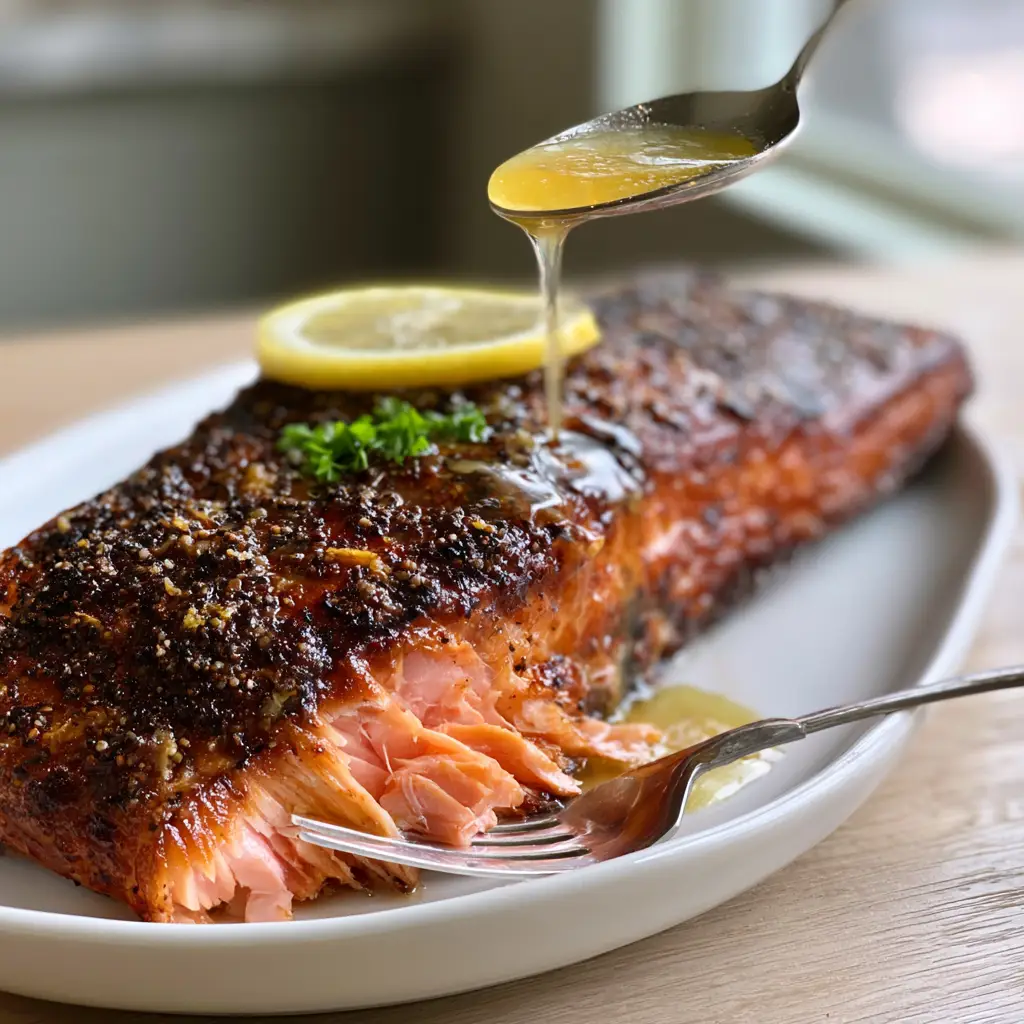
Step-by-Step Guide to Restaurant-Quality Salmon
To recreate the iconic Texas Roadhouse style baked salmon, you must follow a precise sequence of prepping, seasoning, baking, and glazing. This ensures the sugar caramelizes perfectly while the center remains incredibly tender.
Step 1: Prep and Dry the Salmon Fillets
Remove your salmon fillets from the refrigerator about 15 minutes before cooking to take the chill off. This ensures the fish cooks evenly from the edges to the absolute center. Take a clean paper towel and thoroughly pat the surface of each fillet completely dry.
Removing surface moisture is a critical culinary step. If the fish is wet, it will steam in the oven rather than develop that gorgeous, thick, dark, caramelized savory-salty crust we are looking for. Place the dried fillets skin-side down on a parchment-lined baking sheet.
Step 2: Blend the Signature Savory-Salty Rub
In a small mixing bowl, combine the brown sugar, smoked paprika, garlic powder, onion powder, coarse kosher salt, and 1 teaspoon of the cracked black pepper. Use a small whisk or fork to break up any clumps of brown sugar until the spice mixture is completely uniform.
Generously spoon the spice rub over the top of each salmon fillet. Use your fingers to press the rub firmly into the flesh, ensuring the entire top surface is completely coated from edge to edge. The rub should form a visible, thick layer that will transform under the oven’s heat.
Step 3: Bake and Broil for Maximum Caramelization
Preheat your oven to 400°F (204°C). Slide the prepared baking sheet onto the center rack of the oven and bake for 10 to 12 minutes. The cooking time will depend slightly on the thickness of your fillets, so keep a close eye on them.
To get that authentic restaurant look, turn your oven to the broil setting for the final 2 minutes of cooking. Watch intensely as the brown sugar and spices bubble, forming a dark, glistening, caramelized savory-salty crust. Carefully place a thin lemon wheel on top of each fillet during the last 60 seconds of broiling.
Step 4: Craft the Glistening Lemon Pepper Butter Glaze
While the salmon is finishing up in the oven, place a small silver saucepan over low heat. Melt the unsalted butter completely, taking care not to let it brown. Remove the saucepan from the heat source to maintain its bright, translucent appearance.
Whisk in the fresh lemon juice, half of the fresh lemon zest, and the remaining half-teaspoon of cracked black pepper. The mixture should look like a glossy, translucent yellow lemon pepper butter sauce that smells intensely fragrant and bright.
Step 5: Plating, Drizzling, and Serving
Carefully transfer a beautifully cooked salmon fillet onto a clean, warm white ceramic plate. Using a small silver spoon, slowly drizzle the glossy, translucent yellow lemon pepper butter sauce directly over the top of the caramelized crust, letting it glisten under the light.
Garnish the dish with a tiny sprinkle of finely minced bright green parsley and the remaining fresh lemon zest. Use a fork to slightly flake open the side of the fillet, proudly revealing the moist, tender, vibrant pink interior flakes underneath. Serve immediately while roaring hot.
Expert Tips from a Professional Kitchen
- Never Omit the Sugar: The brown sugar is not just for sweetness; it lowers the caramelization temperature, allowing the crust to form rapidly before the salmon overcooks.
- Use a Digital Meat Thermometer: Salmon is perfectly done when the internal temperature hits 135°F (57°C) in the thickest part. It will rise to an ideal 140°F (60°C) as it rests.
- Keep the Skin On: Even if you do not plan to eat the skin, baking the salmon skin-side down acts as a natural heat shield, keeping the internal flesh incredibly moist.
- Cracked vs. Ground Pepper: Always use coarsely cracked black pepper rather than fine ground pepper. The large cracks provide an incredible visual texture and a burst of flavor that mimics the roadhouse style.
If you love mastering high-temperature seafood dishes that deliver bold flavors, you should definitely check out our guide on flaky grilled halibut or try your hand at grilled halibut foil packs for your next outdoor gathering.
How to Store, Reheat, and Freeze Leftovers
If you happen to have any leftover Texas Roadhouse style baked salmon, it can be stored easily for future meals. Allow the fish to cool completely to room temperature before moving it.
Place the cooled fillets into an airtight glass container and store them in the refrigerator for up to 3 days. To protect the caramelized crust, avoid stacking the fillets directly on top of one another; separate them with a small sheet of parchment paper if necessary.
To reheat, place the salmon on a baking sheet, cover it loosely with aluminum foil to trap moisture, and warm it in an oven preheated to 300°F (149°C) for about 8 to 10 minutes. Avoid the microwave, as it will quickly overcook the delicate flesh and turn the moist pink interior flakes rubbery.
Freezing cooked salmon is possible but not highly recommended, as the freezing process can degrade the delicate texture of the fish. If you must, wrap the fillet tightly in plastic wrap, place it in a heavy-duty freezer bag, and freeze for up to 2 months. Thaw completely overnight in the refrigerator before reheating.
What to Serve Alongside Your Roadhouse Salmon
To truly recreate the authentic steakhouse experience at home, you need the perfect classic side dishes to accompany your gorgeous Texas Roadhouse style baked salmon.
A classic loaded baked potato slathered with sour cream, cheddar cheese, and crisp bacon pieces is a phenomenal option. The rich potato pairs beautifully with the sweet and smoky crust of the salmon fillet. Alternatively, seasoned steak fries or a pile of buttery, garlic-infused green beans provide that classic comfort food balance.
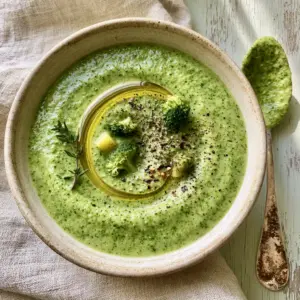
If you prefer a lighter, comforting start to your meal, a warm bowl of creamy broccoli potato soup makes an incredible appetizer. For drinks, nothing cuts through the rich, buttery glaze of this fish quite like a chilled, refreshing lemonade moscato wine spritzer on a warm evening.
Frequently Asked Questions About This Copycat Recipe
Yes, you can use skinless fillets, but keeping the skin on acts as a natural heat barrier in the oven, keeping the interior flakes exceptionally moist and tender.
The most accurate method is using a digital food thermometer inserted into the thickest part of the fillet. It is perfectly cooked when it reaches 135°F (57°C) and easily flakes open with a fork.
Not at all. The cracked black pepper offers a robust, aromatic bite rather than intense heat, which balances beautifully against the rich butter and bright lemon juice.
The signature dark, caramelized savory-salty crust comes from a precise combination of brown sugar and smoked paprika. Under high heat and a quick broil, the sugar caramelizes rapidly without burning the fish.
Master the Texas Roadhouse Style Baked Salmon at Home
Texas Roadhouse Style Baked Salmon with Glistening Lemon Pepper Butter
Ingredients
Equipment
Method
- Pat the surface of each salmon fillet completely dry with a clean paper towel to ensure proper crust formation.
- In a small mixing bowl, combine the brown sugar, smoked paprika, garlic powder, onion powder, coarse kosher salt, and 1 teaspoon of cracked black pepper.
- Press the spice rub firmly onto the top of each fillet, forming a thick, even layer from edge to edge.
- Preheat oven to 400°F (204°C). Place salmon skin-side down on a parchment-lined baking sheet and bake for 10-12 minutes.
- Switch oven to broil for the final 2 minutes until the sugar bubbles into a dark, caramelized savory-salty crust. Add a thin lemon wheel on top for the last 60 seconds.
- Melt unsalted butter in a small saucepan over low heat. Remove from heat and whisk in lemon juice, half the lemon zest, and the remaining 0.5 teaspoon of cracked black pepper.
- Transfer salmon to a white ceramic plate. Drizzle with the glistening lemon pepper butter glaze using a small silver spoon. Top with remaining zest and finely chopped parsley.
Notes
Use a digital meat thermometer to check for an internal temperature of 135°F (57°C) for perfect flakiness.
Join the Table and Share Your Creations!
We are absolutely thrilled for you to try this spectacular copycat recipe in your own kitchen! It is truly the closest you will ever get to that iconic steakhouse flavor without leaving the comfort of your home.
If you loved making this dish, please head over to our Pinterest page and follow @sarah_table for endless weeknight dinner inspiration, comforting restaurant copycats, and expert culinary guides. Do not forget to pin this recipe to your favorite seafood or dinner boards so you can easily access it whenever a craving strikes!
Did you make this recipe? We want to see your gorgeous culinary results! Please snap a quick photo of your beautifully plated salmon on its white ceramic plate and share it in the comment section below. Do not forget to leave us a 5-star rating if this recipe completely blew your tastebuds away!