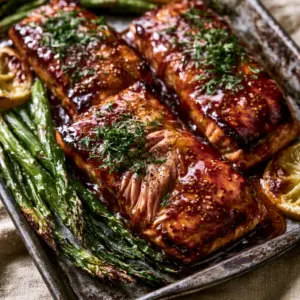
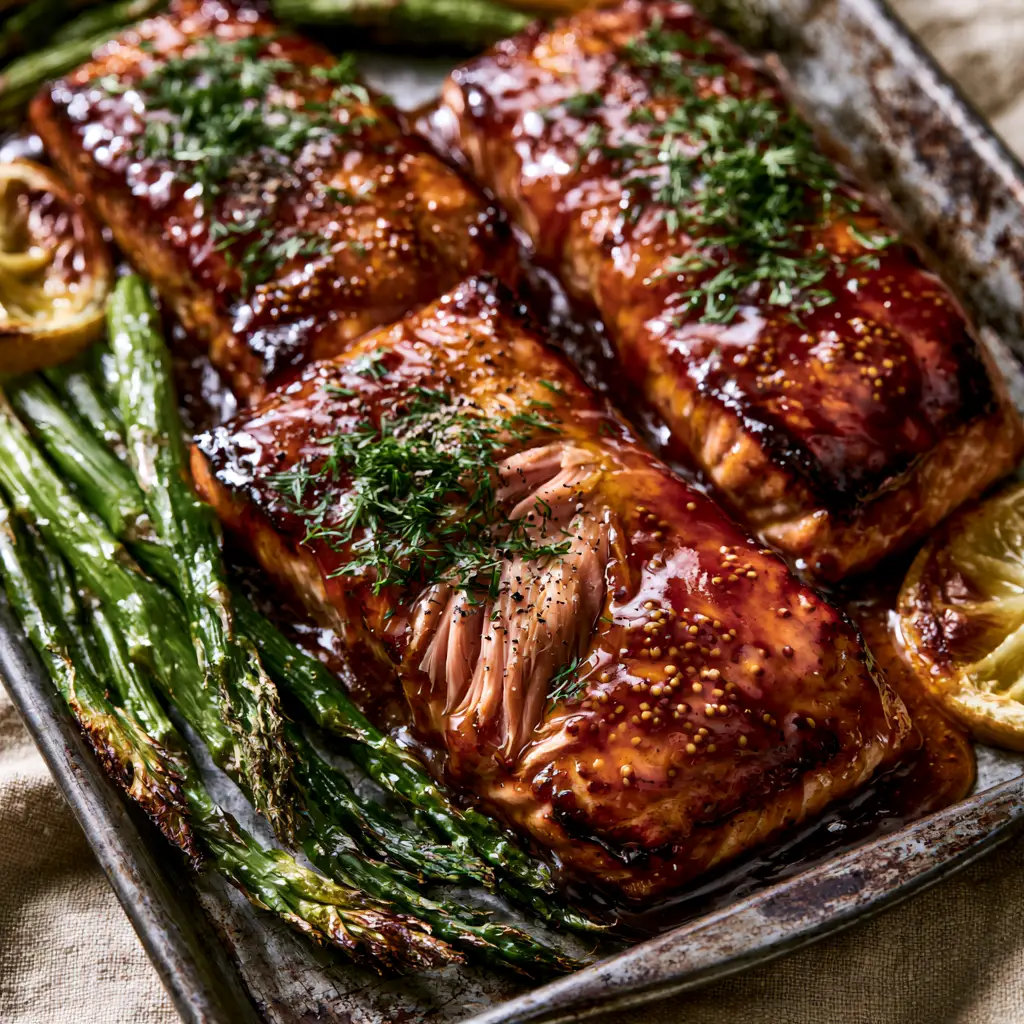
There is a specific kind of culinary magic that happens when high-quality Atlantic salmon meets the conductive heat of a seasoned dark metal sheet pan. This Maple dijon baked salmon isn’t just a meal; it is a visual and sensory masterpiece characterized by its viscous, glossy amber glaze and perfectly caramelized edges.
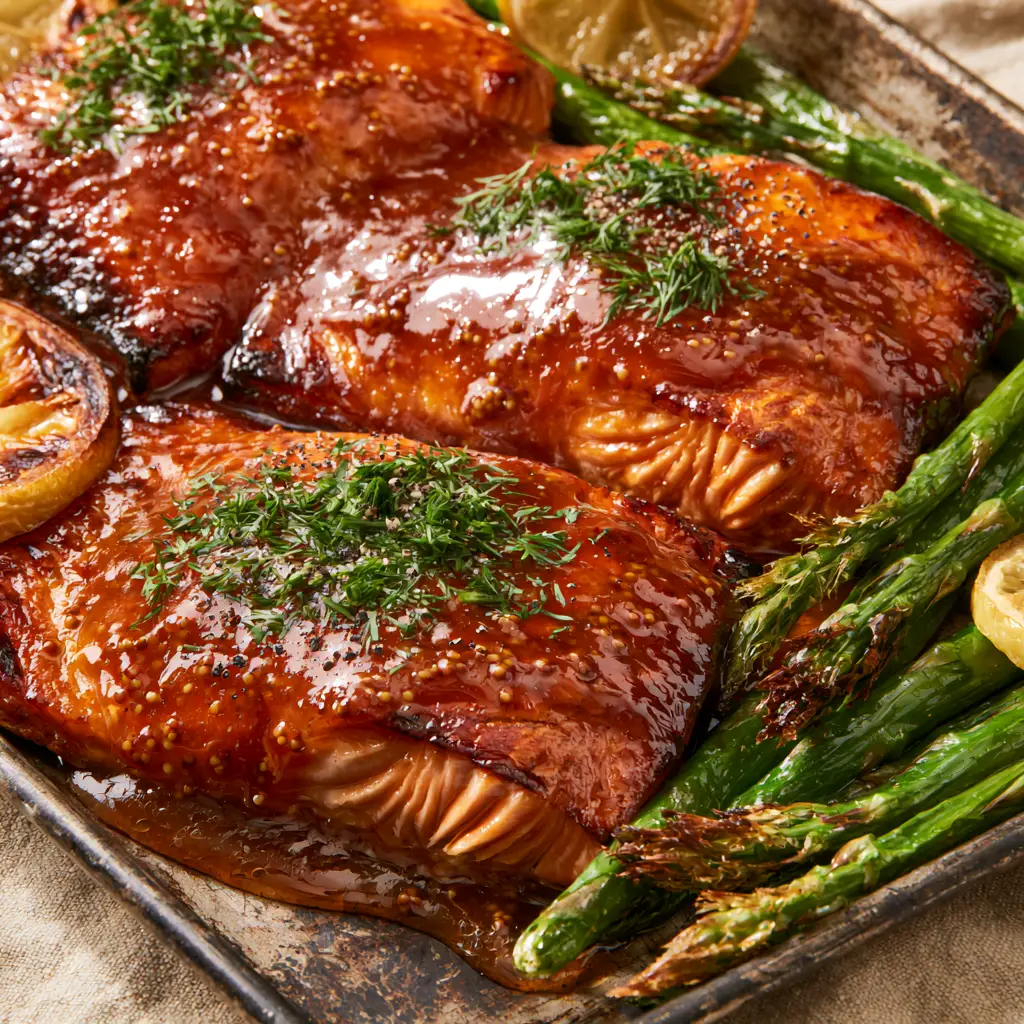
When you pull this dish from the oven, the first thing you notice is the way the light catches the honey-like consistency of the sauce, highlighting the tiny, rustic whole grain mustard seeds scattered across the surface. The salmon itself remains incredibly moist, with tender flakes that separate effortlessly at the touch of a fork.
Accompanying the star of the show are vibrant green asparagus spears, their tips rendered crispy and charred by the intense heat, and roasted lemon wheels that have softened into sweet, jammy discs of citrus gold. This recipe is designed for the home cook who values both aesthetic brilliance and professional-grade flavor profiles.
The Unmatched Appeal of This Sheet Pan Masterpiece
- Textural Contrast: You get the crunch of charred asparagus tips paired with the buttery, melt-in-your-mouth texture of thick-cut Atlantic salmon.
- Balanced Flavor Profile: The sweetness of pure maple syrup perfectly offsets the sharp, vinegar-forward bite of whole grain mustard.
- Visual Sophistication: The deep amber glaze provides a stunning high-shine highlight that looks like it came straight from a professional food photography set.
- Nutritional Powerhouse: Packed with Omega-3 fatty acids and lean protein, this dish fits perfectly into a rotation of high-protein meals for those seeking balance.
The Essential Elements for the Ultimate Amber Glaze
To achieve the specific visual blueprint of this Maple dijon baked salmon, every ingredient serves a dual purpose: flavor and architecture. We are building a glaze that stays put rather than running off the fish.
Thick Atlantic Salmon Fillets: You need fillets at least 1.5 inches (3.8cm) thick. This thickness ensures the outside caramelizes under the high heat while the center remains succulent and translucent.
Pure Grade A Maple Syrup: Use 1/3 cup (80ml) of real maple syrup. Its high sugar content is what creates that glossy, amber “lacquer” look once it hits the oven’s heat.
Whole Grain Mustard: We use 2 tablespoons (30g) to provide those distinct, visible seeds mentioned in our visual prompt. It adds a rustic texture that smooth mustard simply cannot replicate.
Dijon Mustard: 1 tablespoon (15g) acts as an emulsifier, helping the maple syrup and mustard seeds bond together into a cohesive, viscous sauce.
Fresh Asparagus Spears: Choose medium-thickness spears (about 1lb or 450g). Too thin and they will turn to mush; too thick and they won’t achieve that crispy, charred tip we desire.
Roasted Lemon Wheels: One large lemon, sliced into thin rounds. Roasting lemons mellows their acidity and concentrates their natural sugars, providing a sweet-tart garnish.
Invisible Foundations: You will need 2 tablespoons (30ml) of high-smoke point extra virgin olive oil to ensure the asparagus chars without burning, and 1 teaspoon (5g) of flaky sea salt to draw out the natural fats of the fish.
Professional Tools for Superior Caramelization
The vessel you choose is just as important as the ingredients. For this recipe, a rustic, seasoned dark metallic sheet pan is non-negotiable. Dark metal absorbs and radiates heat more aggressively than light aluminum, which is the secret to getting those charred asparagus tips and caramelized salmon edges.
You will also need a small silicone basting brush. This tool allows you to “paint” the glaze onto the salmon, ensuring a heavy, even coat that builds up into that thick, honey-like layer visible in the macro photography.
If you enjoy the efficiency of one-pan cooking, you might also find success with our Korean beef bowls, which utilize similar high-heat techniques for maximum flavor development.
Mastering the Sheet Pan: A Step-by-Step Guide
Preparing the Salmon and Vegetables
Start by preheating your oven to 400°F (200°C). While the oven reaches temperature, pat your three thick Atlantic salmon fillets bone-dry with paper towels. Removing surface moisture is the only way to ensure the glaze sticks and the edges caramelize.
Place the fillets in the center of your dark metal sheet pan. Arrange the trimmed asparagus spears and lemon wheels around the fish. Drizzle the vegetables with olive oil and toss to coat, ensuring they are spread in a single layer to facilitate roasting rather than steaming.
Constructing the Glossy Maple Dijon Glaze
In a small bowl, whisk together the maple syrup, whole grain mustard, and Dijon mustard. The mixture should be thick and viscous. If it feels too thin, add an extra teaspoon of Dijon to act as a binder.
Using your basting brush, apply a heavy layer of the glaze to the top and sides of each salmon fillet. You want to see the whole grain seeds suspended in the amber liquid. Season the entire pan generously with cracked black pepper and a sprinkle of flaky sea salt.
The Roasting Process and Sensory Cues
Slide the pan into the center rack of the oven. Bake for 12-15 minutes. At the 10-minute mark, look through the oven window. You are looking for the glaze to begin bubbling and darkening into a deep amber hue.
For the final 2 minutes, you may wish to turn on the broiler. Watch closely: you want the edges of the salmon to show dark caramelization and the asparagus tips to turn vibrant green with charred, crispy ends. The lemons should look softened with slightly browned rinds.
The Final Flourish
Remove the pan from the oven and let it rest for 3 minutes. This allows the juices inside the salmon to redistribute, ensuring those moist, separating flakes. Immediately garnish with a heavy sprinkle of fresh chopped dill. The heat from the pan will release the dill’s oils, creating an incredible aromatic experience.
Expert Tips for Visual and Flavor Perfection
- Dry the Fish: I cannot stress this enough—wet salmon will steam the glaze off. Use multiple paper towels until the skin and flesh feel tacky.
- Temperature Control: Use an instant-read thermometer. Pull the salmon when it hits 135°F (57°C); the carryover heat will bring it to a perfect 145°F (63°C).
- The Lemon Trick: Lay the salmon fillets directly on top of a few lemon wheels if you want to infuse the bottom of the fish with citrus and prevent any potential sticking.
- Glaze Re-application: For an even glossier finish, brush on one final thin layer of fresh maple syrup immediately after the salmon comes out of the oven.
What to Serve with Maple Dijon Baked Salmon
This dish is a complete meal on its own, but it pairs beautifully with other vibrant textures. Consider starting with parmesan crisps as an appetizer to lean into the savory notes.
If you’re looking for a refreshing drink to cut through the richness of the maple glaze, a frozen strawberry margarita offers a bright, acidic contrast. For a more traditional pairing, a starch like Hawaiian mac salad can provide a creamy counterpoint to the charred vegetables.
Storage and Reheating Insights
Maple dijon baked salmon is best enjoyed fresh to maintain the integrity of the glaze and the crispness of the asparagus. However, leftovers can be stored in an airtight container in the refrigerator for up to 2 days.
To reheat, avoid the microwave, which will turn the salmon rubbery. Instead, place the salmon back on a sheet pan in a 275°F (135°C) oven for 8-10 minutes until warmed through. This helps preserve the moisture and the glossy finish of the sauce.
Frequently Asked Questions
Yes, honey can be substituted 1:1 for maple syrup. However, maple syrup provides a more distinct amber color and a deeper caramelization profile that complements the whole grain mustard perfectly.
The key is using a dark metal sheet pan and ensuring the asparagus is dry before adding oil. Do not overcrowd the pan; if the vegetables are too close, they will steam rather than char.
The salmon is done when it reaches an internal temperature of 145°F (63°C). Visually, the flakes should separate easily with a fork but still look slightly moist in the very center.
We recommend leaving the skin on during baking. It acts as a natural barrier to prevent the fish from drying out against the hot metal pan. You can easily slide the meat off the skin when serving.
Ensure you are using a mix of both whole grain and smooth Dijon mustard. The Dijon acts as an emulsifier to thicken the maple syrup. Also, patting the salmon completely dry is crucial for the glaze to adhere.
The Ultimate Maple Dijon Baked Salmon Recipe
Maple Dijon Baked Salmon with Charred Asparagus and Roasted Lemons
Ingredients
Equipment
Method
- Preheat oven to 400°F (200°C). Pat salmon fillets bone-dry with paper towels and place on a dark metal sheet pan.
- Place asparagus and lemon wheels around the salmon. Drizzle with 2 tbsp (30ml) olive oil and toss to coat.
- In a small bowl, whisk maple syrup, whole grain mustard, and Dijon mustard until thick and viscous.
- Brush a heavy layer of glaze onto the salmon. Season the entire pan with cracked black pepper and sea salt.
- Bake for 12-15 minutes until the glaze is bubbling and amber, the salmon edges are caramelized, and asparagus tips are charred.
- Remove from oven, let rest for 3 minutes, then garnish with a heavy sprinkle of fresh dill.
Notes
Use a dark metal pan for better vegetable charring.
Closing & Call to Action
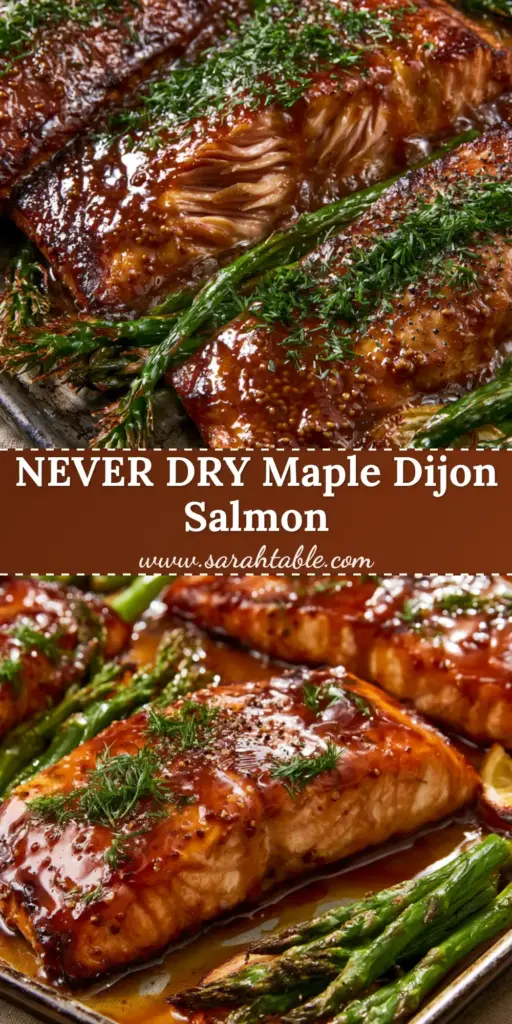
This Maple dijon baked salmon represents the perfect intersection of ease and elegance. With its thick amber glaze and charred vegetable accompaniments, it’s a recipe that tastes even better than it looks. The combination of sweet maple and pungent mustard creates a flavor profile that is both sophisticated and deeply comforting.
If you enjoyed this recipe, please leave a comment below and let us know how your caramelization turned out! Don’t forget to share your photos and tag us. For more visually stunning dinner inspiration, follow our boards at Pinterest and save this recipe to your “Healthy Dinners” board.