German Potato Dumplings, known affectionately in Germany as Kartoffelklöße, are the undisputed crown jewel of European comfort food. Imagine a fluffy boiled potato interior so light it feels like a cloud, encased in a perfectly smooth starch-dusted dumpling exterior. When you break one open with a fork, the steam escapes, revealing a texture that is designed to soak up every drop of a glossy translucent brown onion gravy. Whether you are serving these alongside a traditional roast or enjoying them as a standalone vegetarian feast, mastering the art of the German potato dumpling is a culinary rite of passage.
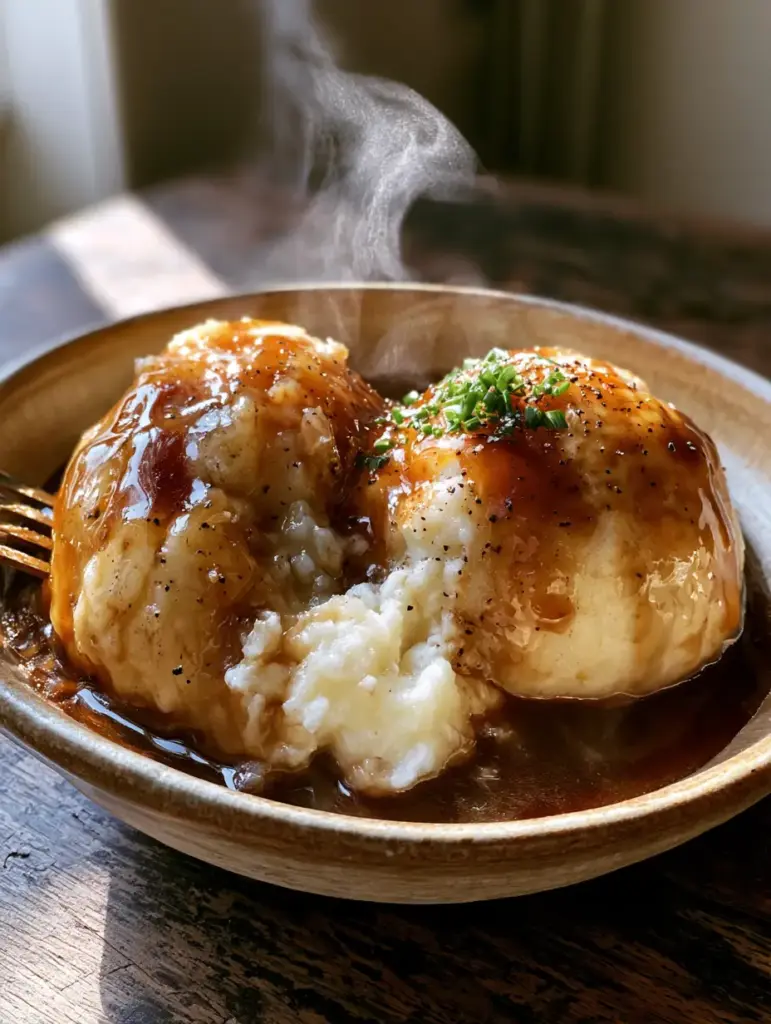
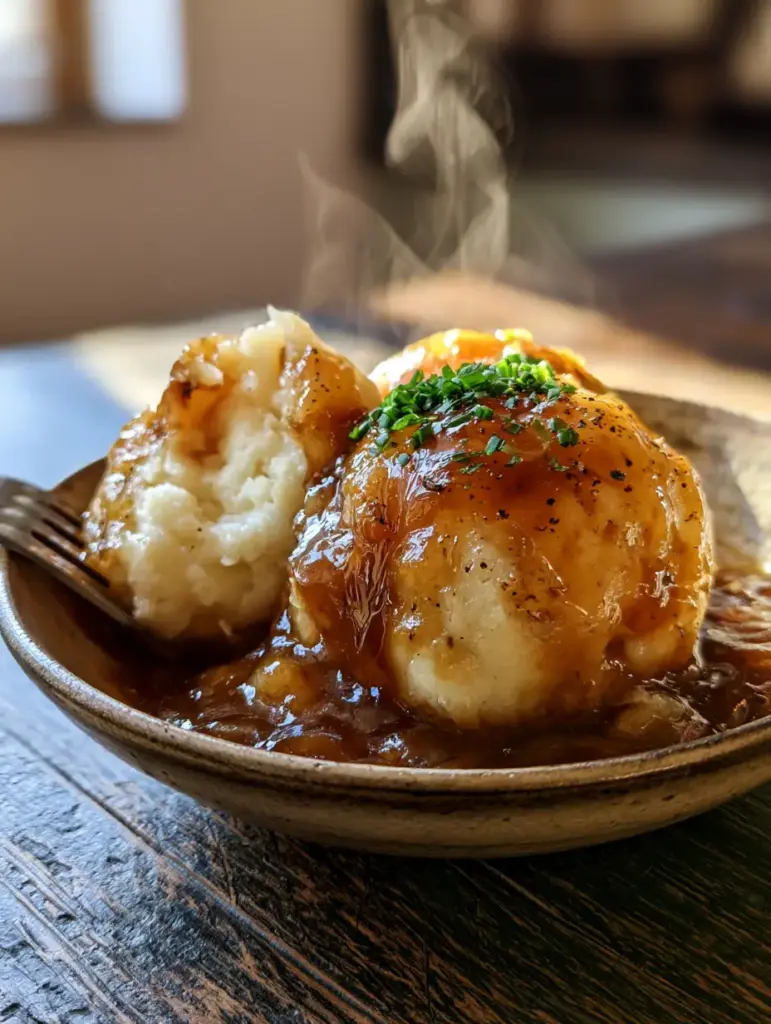
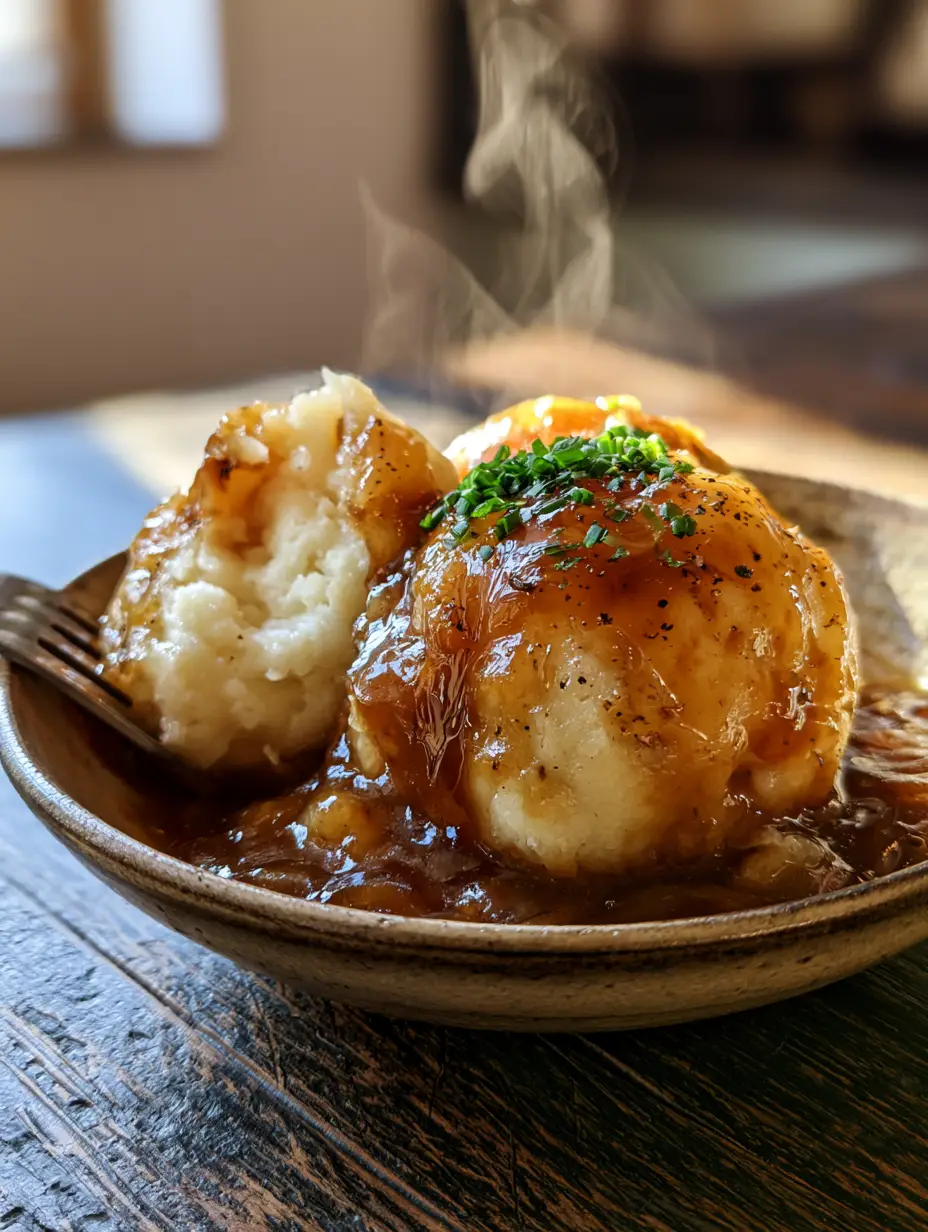
If you have ever scrolled through Pinterest and seen those perfectly spherical dumplings nestled in a rustic stoneware bowl, you know exactly how appetizing this dish is. Our recipe focuses on that exact visual: two large, perfectly spherical German potato dumplings sitting in a shallow rustic ceramic bowl, glistening under a ladle of deep amber-brown gravy. To finish, we add a sprinkle of finely chopped fresh green chives and a crack of black pepper to cut through the richness. This isn’t just a side dish; it is a masterpiece of texture and flavor that brings the warmth of a German farmhouse kitchen straight to your table.
Why You Will Fall in Love With These German Potato Dumplings
- The “Cloud-Like” Texture: Unlike doughy flour dumplings, these rely on starchy potatoes for an ultra-fluffy, cloud-like white interior.
- Visual Perfection: The smooth starch-dusted dumpling exterior creates a beautiful contrast against the glossy translucent brown onion gravy.
- Authentic Flavor Profile: Hints of nutmeg and the richness of real butter make these taste exactly like they came from a Bavarian grandmother’s kitchen.
- Maximum Sauce Absorption: The slightly textured surface is engineered to cling to gravies and stews, making it the perfect partner for Nigerian Beef Stew.
- Simple Ingredients: You likely already have everything you need in your pantry to make this high-impact, restaurant-quality dish.
The Secret Ingredients for the Fluffiest German Potato Dumplings
To achieve that specific fluffy boiled potato interior, the type of potato you choose is non-negotiable. You must use starchy potatoes (like Russets or Idaho potatoes) because their high starch content and low moisture levels create the necessary structure without becoming gummy. If you enjoy the heartiness of Crockpot Potato Soup, you will appreciate how these dumplings elevate the humble potato to new heights.
Starchy Potatoes: 2.2 lbs (1kg) of Russet potatoes. These provide the “fluff” factor. We boil them in their skins to prevent water from entering the flesh.
Potato Starch: 3/4 cup (100g) to 1 cup (130g). This is the “glue” that creates that signature smooth starch-dusted dumpling exterior. Do not substitute with flour, or the texture will become heavy.
Egg Yolks: 2 large yolks. These add richness and help bind the dough while maintaining a bright white interior.
Unsalted Butter: 2 tbsp (30g), melted. Butter adds a silky mouthfeel and helps the dumplings stay moist.
Nutmeg: 1/4 tsp, freshly grated. This is the “secret” flavor that defines authentic German cuisine.
Sea Salt & Black Pepper: Essential for seasoning the potato dough from within. We also use cracked black pepper as a final garnish.
For the Glossy Onion Gravy: You will need yellow onions, beef or vegetable broth, a touch of sugar for caramelization, and a cornstarch slurry to reach that glossy translucent brown consistency seen in our visual blueprint.
Step-by-Step Instructions: Mastering the Kartoffelklöße
1. Prepping the Potatoes for Maximum Fluff
Start by scrubbing your potatoes clean. Place them in a large pot and cover with cold water. Bring to a boil and cook for about 25-30 minutes, or until fork-tender. Crucial Tip: Do not peel them before boiling! Boiling in the skin keeps the interior dry. Once cooked, drain and let them steam-dry for 5 minutes. While still hot, peel the skins off—use a clean kitchen towel to hold them if they are too hot.
2. The Ricing Process
Pass the hot potatoes through a potato ricer into a large bowl. This is the only way to ensure an ultra-fluffy, cloud-like white interior. Do not use a masher, as it can make the potatoes gluey. If you have ever made Sweet Potato Dumplings, you know that the finer the mash, the lighter the dumpling.
3. Creating the Starch-Dusted Dough
Spread the riced potatoes out on a baking sheet to cool slightly. Sprinkle the potato starch, salt, nutmeg, and melted butter over the top. Add the egg yolks. Use your hands to gently fold the mixture together. You want to work quickly and lightly. The dough should feel soft but hold its shape. If it feels too sticky, add another tablespoon of potato starch.
4. Shaping the Perfect Spheres
Divide the dough into 8-10 equal portions. Roll them between your palms to create perfectly spherical German potato dumplings. Dust your hands with a little extra starch to achieve that smooth starch-dusted dumpling exterior. For an extra authentic touch, you can push a small cube of toasted bread (crouton) into the center of each sphere before sealing.
5. The Gentle Simmer
Bring a large pot of salted water to a boil, then immediately turn it down to a bare simmer. Do not let the water boil vigorously, or the dumplings will break apart. Carefully drop the dumplings into the water. They will sink to the bottom at first. After about 15-20 minutes, they will rise to the surface. Let them float for another 2-3 minutes to ensure the center is heated through.
6. Crafting the Glossy Brown Onion Gravy
While the dumplings simmer, sauté thinly sliced onions in butter until deep golden brown. Add a pinch of sugar to help them caramelize. Pour in 2 cups (480ml) of beef broth. Let it simmer, then whisk in a cornstarch slurry (1 tbsp cornstarch mixed with 1 tbsp water). Stir until it transforms into a glossy, translucent, deep amber-brown onion gravy that is thick enough to coat the back of a spoon.
Expert Tips for Success
- The Temperature Rule: Always rice your potatoes while they are hot, but mix in the egg and starch once they have cooled slightly to prevent the eggs from scrambling.
- The Test Dumpling: If you are worried about them falling apart, drop one small “test” dumpling into the simmering water first. If it disintegrates, add more starch to your dough.
- Keep the Water Calm: A “lazy” simmer is the key. High heat is the enemy of a smooth exterior.
- Fresh Chives are Non-Negotiable: The finely chopped fresh green chives added at the end provide a necessary pop of freshness against the savory gravy.
Storage, Reheating & Freezing
German Potato Dumplings are best served fresh, but if you have leftovers, they store beautifully. Keep them in an airtight container in the fridge for up to 3 days. To reheat, you can steam them for 5 minutes or—my favorite method—slice them in half and sear them in a pan with butter until crispy. This “fried dumpling” style is a common breakfast in Germany, similar in heartiness to a Sausage, Egg, and Hashbrown Casserole.
To freeze, place the uncooked shaped spheres on a tray in the freezer. Once solid, transfer to a freezer bag. You can boil them directly from frozen; just add 5-8 minutes to the simmering time.
What to Serve With This Dish
These dumplings are the ultimate vessel for sauces. They pair magnificently with rich, meat-heavy dishes like Sauerbraten, Rouladen, or even a hearty Fresh Herb Chicken Noodle Soup if you want a lighter dumpling-in-broth experience. Because of their neutral, buttery flavor, they also work well with cream-based sauces or mushroom gravies.
Frequently Asked Questions
Standard mashed potatoes often contain milk or cream, which makes the dough too wet. For the fluffiest results, use plain riced potatoes that were boiled in their skins.
Yes, potato starch is essential for the authentic ‘slippery’ smooth exterior and light interior. Using flour will result in a much denser, bread-like texture.
The secret to a glossy, translucent gravy is using a cornstarch slurry at the very end. Unlike flour-based roux, cornstarch thickens without making the sauce opaque.
The terms are often used interchangeably, but ‘Klöße’ is more common in Northern/Western Germany, while ‘Knödel’ is used in Southern Germany and Austria. Both refer to these delicious potato spheres.
This usually happens if the water is boiling too vigorously or if the dough doesn’t have enough potato starch. Ensure a gentle simmer and always do a ‘test dumpling’ to check the binding.
The Ultimate German Potato Dumplings Recipe
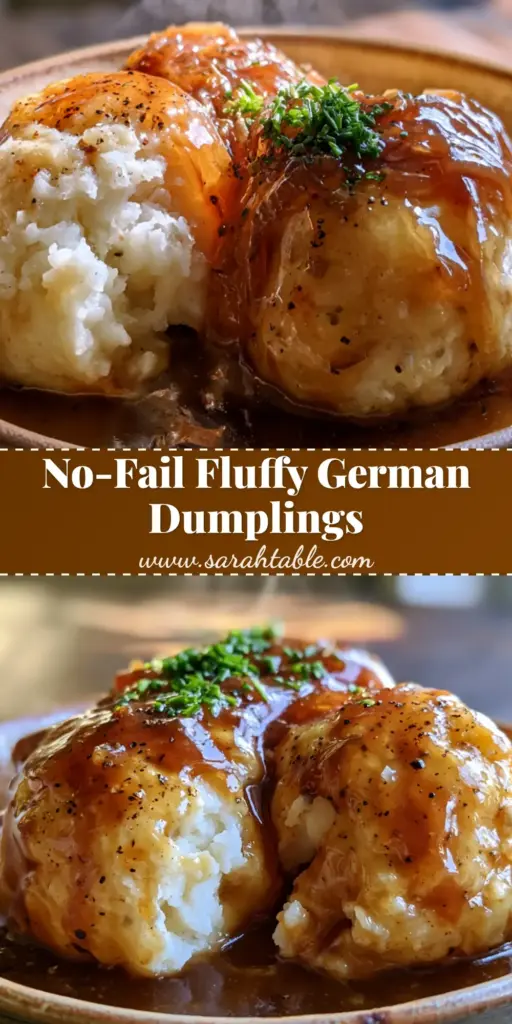
German Potato Dumplings: The Ultimate Guide to Fluffy Kartoffelklöße
Ingredients
Equipment
Method
- Boil whole potatoes in their skins in salted water until fork-tender (25-30 mins). Drain and steam dry.
- Peel while hot and pass through a potato ricer into a large bowl. Allow to cool slightly.
- Add potato starch, egg yolks, melted butter, nutmeg, and salt. Gently mix by hand into a soft dough.
- Roll dough into large, perfectly spherical dumplings. Dust with extra starch for a smooth exterior.
- Drop into barely simmering salted water. Cook for 15-20 minutes until they float.
- Sauté onions until brown, add broth, and thicken with cornstarch slurry until glossy and translucent.
- Ladle gravy over dumplings and top with fresh chives and cracked black pepper.
Notes
Using old, starchy potatoes is the secret to a cloud-like interior.
Save This Recipe to Pinterest!
If you love authentic European recipes and cozy comfort food, make sure to save this recipe to your Pinterest boards! Follow me, sarah_table, for more kitchen inspiration. Did you make these? I would love to see your results! Post a photo in the comments below and don’t forget to leave a 5-star rating if these are the fluffiest dumplings you’ve ever tasted!