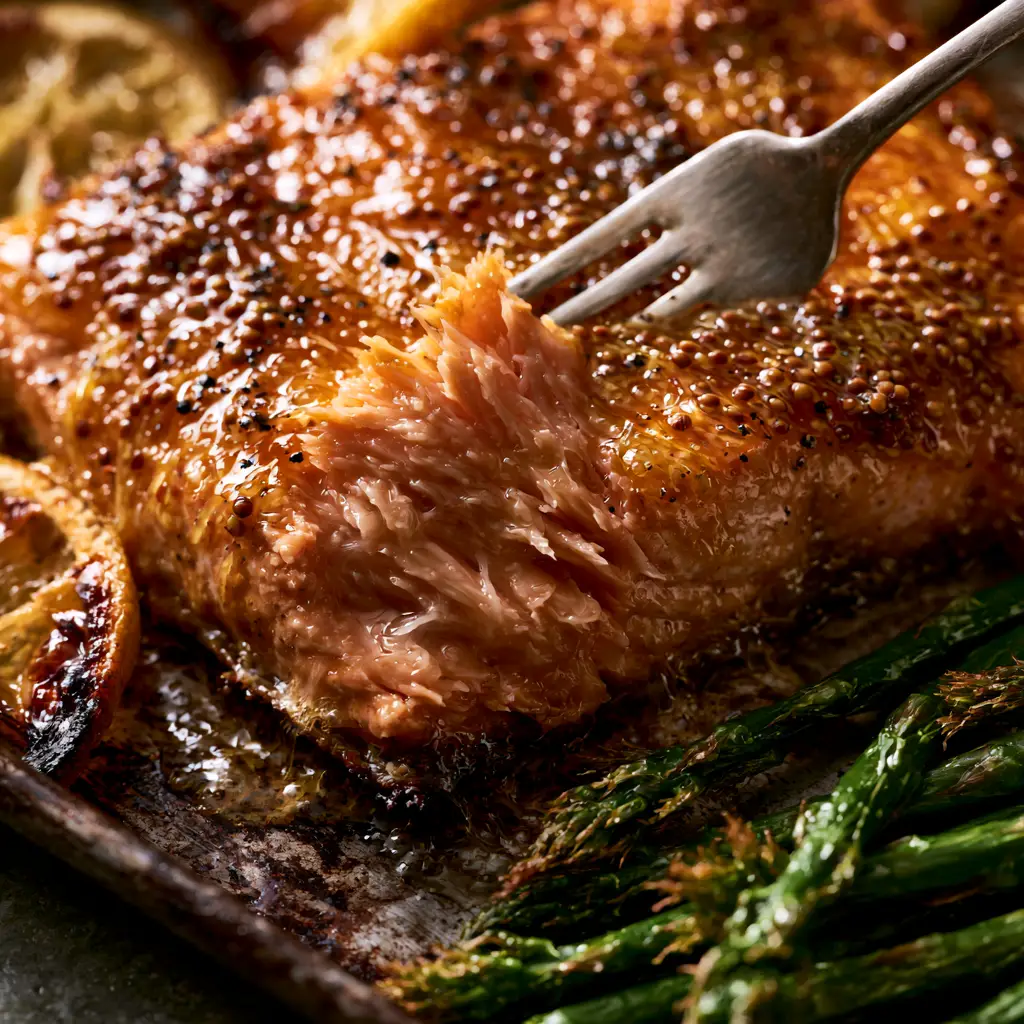
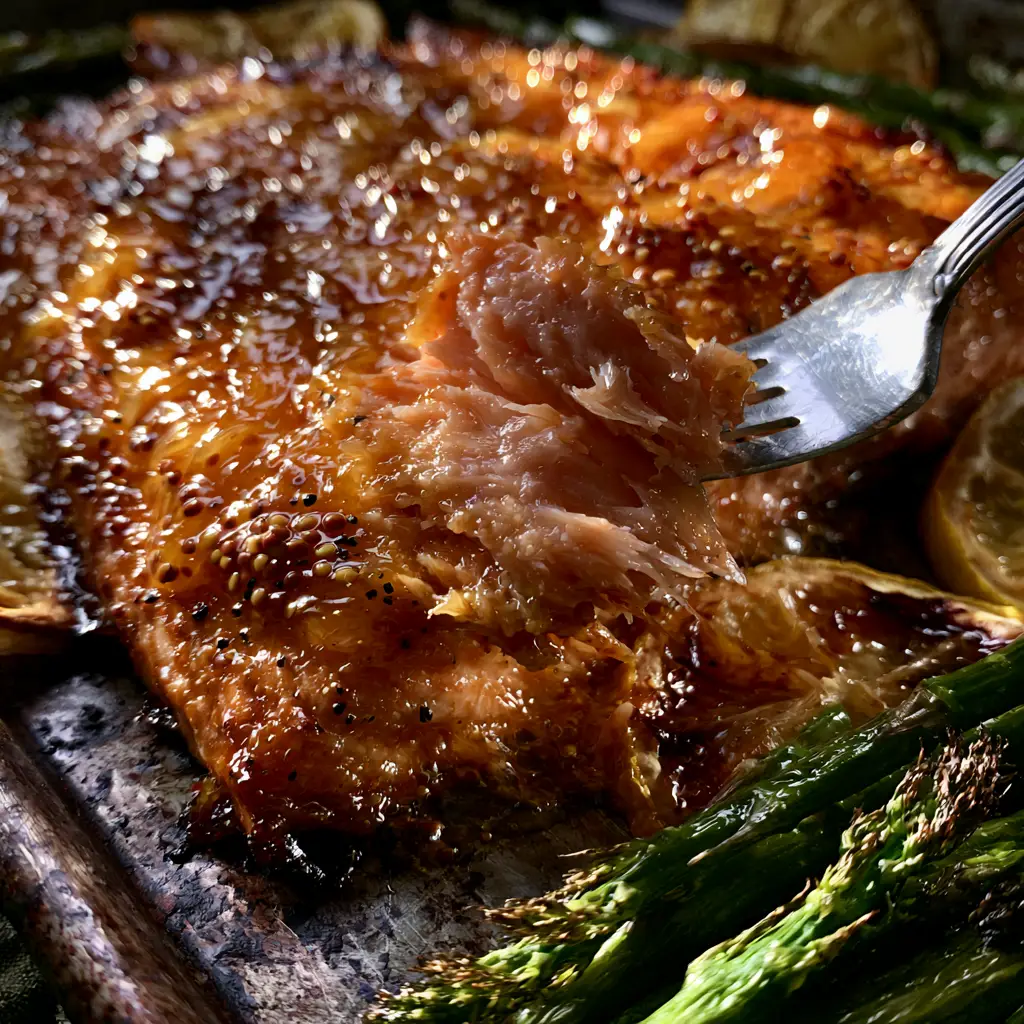
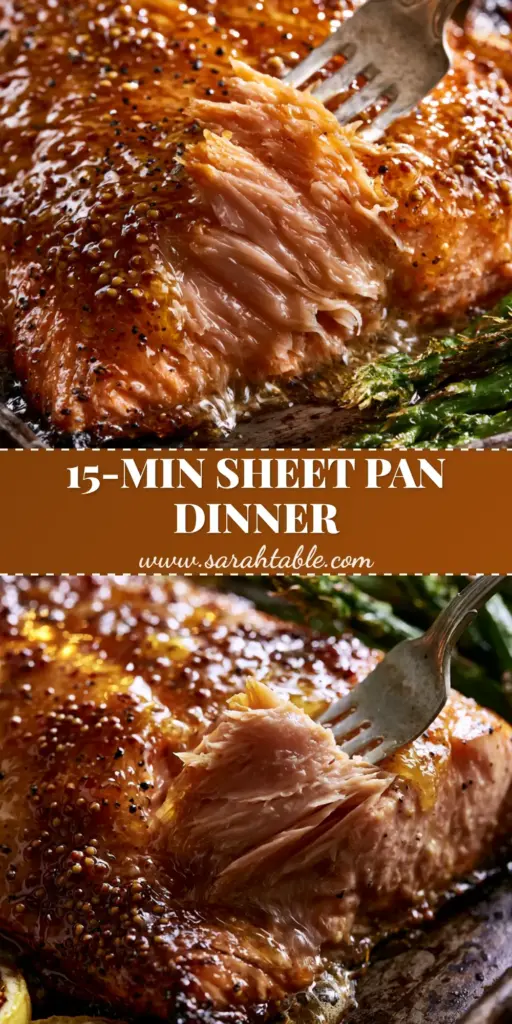
There is nothing quite as satisfying as a perfectly executed Baked Dijon Salmon. Imagine a thick, juicy Atlantic salmon fillet resting on a rustic metal sheet, its surface coated in a thick, glossy honey dijon glaze that bubbles under the heat of the oven. As you press a silver fork into the center, the fillet yields effortlessly, flaking into large, tender, opaque pink layers that steam with fresh-cooked perfection.
This recipe isn’t just about flavor; it is a visual masterpiece of rich gold, amber, and burnt orange tones. The sharp tang of whole grain mustard seeds and cracked black pepper flecks cuts through the sweetness of the honey, while charred lemon slices and vibrant green asparagus with crispy tips provide the perfect textural contrast. Whether you are hosting a dinner party or looking for a weeknight upgrade, this dish delivers restaurant-quality results with minimal effort.
Why This Honey-Crusted Seafood Dinner Works
- Textural Harmony: The combination of creamy Dijon and popping whole grain mustard seeds creates a sophisticated mouthfeel atop the buttery salmon.
- One-Pan Efficiency: By roasting the asparagus and lemons alongside the fish, we allow the juices to mingle, creating a built-in sauce for the vegetables.
- Maillard Magic: The sugars in the honey caramelize against the high heat, producing those sought-after deep golden highlights and bubbling edges.
- Visual Precision: This dish is designed to look as good as it tastes, featuring bright greens, deep ambers, and the rustic charm of a dark weathered baking sheet.
The Science Behind the Perfect Glaze Ingredients
To achieve the specific “thick and bubbling” result seen in our visual blueprint, each ingredient serves a scientific purpose. We are building an emulsion that stays thick during the roasting process rather than sliding off the fish.
Atlantic Salmon Fillets: Choose thick-cut fillets (about 1.5 inches or 4cm thick) to ensure the interior stays moist while the exterior glazes. The fat content in Atlantic salmon stands up beautifully to the acidity of the mustard.
Dijon Mustard: This acts as our primary emulsifier, providing a smooth, pungent base that grips the protein fibers of the fish. Use 1/4 cup (60g) of a high-quality French Dijon for the best flavor profile.
Whole Grain Mustard: We include 2 tbsp (30g) of whole grain mustard specifically for the visual “seed flecks” and the textural “pop” that mimics caviar. It adds a rustic, gourmet aesthetic to the final plating.
Raw Honey: Use 3 tbsp (45ml) of honey to provide the fermentable sugars necessary for caramelization. This is what creates the “bubbling” effect and the rich amber color described in our visual prompt.
Fresh Lemon Slices: We use one large lemon, sliced into 1/4-inch (6mm) rounds. When roasted, the edges char, intensifying the citrus oils and providing a bittersweet counterpoint to the honey.
Fresh Asparagus: One bunch (approx. 1 lb or 450g) of medium-thick spears ensures the tips get crispy at the exact moment the salmon reaches an internal temperature of 145°F (63°C).
Extra Virgin Olive Oil: You will need 2 tbsp (30ml) to coat the asparagus and the pan, preventing sticking and facilitating heat transfer for those charred edges.
Invisible Foundations: Don’t forget 1 tsp (6g) of kosher salt and 1/2 tsp (2g) of cracked black pepper. The pepper flecks are a critical visual component that breaks up the golden hue of the glaze.
Essential Tools for a Professional Roast
To replicate the authentic food blog aesthetic, your equipment is just as important as your ingredients. A dark, weathered baking sheet is preferred because dark metal absorbs more heat, leading to better browning on the bottom of the asparagus and lemon slices.
You will also need a small whisk to properly emulsify the honey and mustard. A silicone pastry brush is the best tool for applying the glaze thickly and evenly, ensuring the entire top surface is encapsulated in flavor. Finally, a digital meat thermometer is non-negotiable for ensuring the salmon remains “juicy and moist” rather than dry and chalky.
If you enjoy the process of roasting proteins to perfection, you might also want to try our garlic butter baked salmon for a more savory, herbal profile. For those looking for a different texture, our parmesan crusted baked salmon offers a salty, golden crunch.
Step-by-Step Instructions for the Ultimate Baked Dijon Salmon
Preparing the Sheet Pan Landscape
Preheat your oven to 400°F (200°C). This high temperature is essential for creating the “bubbling” glaze and “crispy tips” on the asparagus. Take your dark metal baking sheet and lightly grease it with 1 tbsp (15ml) of olive oil.
Lay the salmon fillets in the center of the pan, leaving space between them for air circulation. Arrange the trimmed asparagus spears and lemon slices around the fish. Drizzle the vegetables with the remaining oil and a pinch of salt, tossing them directly on the pan to coat.
Mastering the Honey-Dijon Emulsion
In a small glass bowl, combine the Dijon mustard, whole grain mustard, honey, and cracked black pepper. Whisk vigorously until the mixture is uniform and thick. It should have the consistency of a heavy syrup.
Using a spoon or pastry brush, spoon a generous amount of the glaze over each salmon fillet. Do not be afraid to be heavy-handed; we want a “thick, glossy” coating that will stand up to the oven’s heat without thinning out completely.
The Roasting Process and Sensory Cues
Slide the tray into the center rack of the oven. Bake for 12 to 15 minutes. Around the 8-minute mark, you should begin to smell the sweet aroma of caramelizing honey and the sharp tang of mustard.
Watch for visual cues: the glaze on the salmon should start to form tiny golden bubbles, and the edges of the lemon slices will begin to turn a deep amber-brown. The asparagus tips will look slightly shriveled and dark green, indicating they are becoming crispy.
The Flake Test and Final Garnish
Remove the pan from the oven when the salmon’s internal temperature reaches 140°F (60°C). The temperature will rise to 145°F (63°C) as it rests. Use a silver fork to gently flake a corner; the interior should be an opaque pink, moist and steaming.
Immediately sprinkle the fresh chopped parsley over the entire tray. The bright green of the herbs against the rich gold glaze and the rustic dark pan creates a stunning visual contrast that is perfect for photography.
Expert Tips for Visual and Culinary Success
- Room Temperature Protein: Take your salmon out of the fridge 15 minutes before cooking. This ensures the “moist interior” remains even, rather than having a cold center and overcooked edges.
- Pat Dry: Always pat the salmon skin and flesh dry with a paper towel before glazing. Moisture is the enemy of a thick, bubbling glaze.
- Char Control: If your lemons aren’t caramelizing fast enough, move the tray to the top rack for the final 2 minutes of cooking.
- Mustard Balance: If you find Dijon too sharp, increase the honey by 1 tsp (5ml). The balance between the “rich gold” sweetness and the mustard acidity is key.
Storage, Reheating, and Meal Prep Advice
Leftover Baked Dijon Salmon can be stored in an airtight container in the refrigerator for up to 3 days. To maintain the “juicy Atlantic salmon” texture, avoid the microwave if possible. Reheat in a 300°F (150°C) oven for 8-10 minutes with a splash of water in the pan to create steam.
We do not recommend freezing the cooked salmon, as the delicate “opaque pink layers” will lose their structural integrity and become mushy upon thawing. However, the raw glaze can be made up to a week in advance and stored in the fridge.
What to Serve With This Vibrant Salmon Dish
To complement the bold flavors of the mustard and honey, consider serving this dish alongside a light, refreshing salad. A spinach apple chickpea salad provides a crisp sweetness that echoes the honey in the glaze.
If you prefer a more vegetable-forward side, these baked cauliflower steaks offer a meaty texture that pairs perfectly with the salmon. For a light lunch the next day, flake any remaining salmon into a cucumber crab salad for a protein-packed seafood medley.
Frequently Asked Questions
Yes, maple syrup is an excellent 1:1 substitute. It will provide a slightly different woody sweetness but will still caramelize beautifully to create those golden highlights.
Absolutely! Roasting salmon with the skin on helps retain moisture. For this recipe, place the salmon skin-side down on the dark baking sheet to help it crisp up while the top glazes.
The most reliable method is using a meat thermometer to reach an internal temperature of 145°F (63°C). Visually, the salmon should be opaque pink in the center and flake easily when pressed with a fork.
Dijon provides the creamy, sharp base and emulsification for the glaze, while whole grain mustard adds the rustic visual seeds and a popping texture that elevates the dish’s aesthetic.
This usually happens if the salmon is too wet or the glaze is too thin. Ensure you pat the fillets completely dry with paper towels and use a high-quality, thick Dijon mustard mixed thoroughly with honey.
Baked Dijon Salmon Recipe Card
Baked Dijon Salmon with Honey Mustard Glaze and Roasted Asparagus
Ingredients
Equipment
Method
- Preheat oven to 400°F (200°C). Grease a dark metal baking sheet with 1 tbsp (15ml) olive oil.
- Place salmon fillets in the center. Surround with asparagus and lemon slices. Drizzle veggies with remaining oil and salt.
- Whisk together Dijon, whole grain mustard, honey, and black pepper until thick and glossy.
- Brush a thick layer of the mustard mixture onto each salmon fillet, covering the tops and sides.
- Roast for 12-15 minutes until glaze is bubbling and salmon flakes easily with a fork.
Notes
Check for an internal temperature of 145°F (63°C) for food safety and optimal texture.
Closing & Call to Action
This Baked Dijon Salmon is more than just a meal; it is a sensory experience that combines the sharp zest of whole grain mustard with the mellow sweetness of caramelized honey. The result is a vibrant, golden-hued centerpiece that is as impressive to look at as it is to eat. The succulent, flaky texture of the Atlantic salmon paired with crispy asparagus makes it a perennial favorite in our kitchen.
If you made this recipe, we would love to hear your thoughts! Did your glaze bubble perfectly? Did your lemons achieve that deep amber char? Leave a comment below and let us know. Don’t forget to save this recipe to your favorite boards on Pinterest so you can find it whenever you need a reliable, high-protein dinner win!