There is a specific culinary magic that happens when a succulent Atlantic salmon fillet meets the intense, dry heat of a professional-grade oven. If you have been searching for that elusive combination of a shatteringly crisp exterior and a steaming, vibrant pink interior, this Parmesan Crusted Baked Salmon is your final destination.
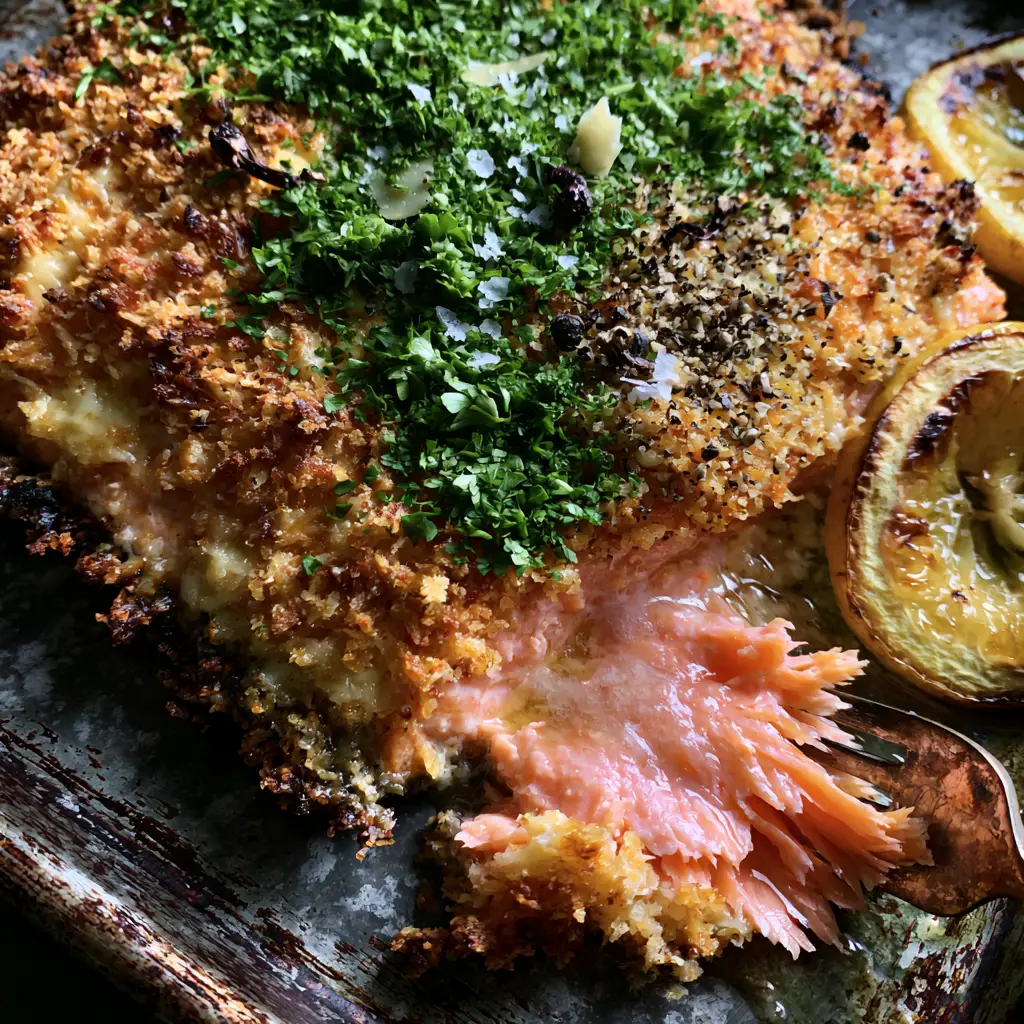
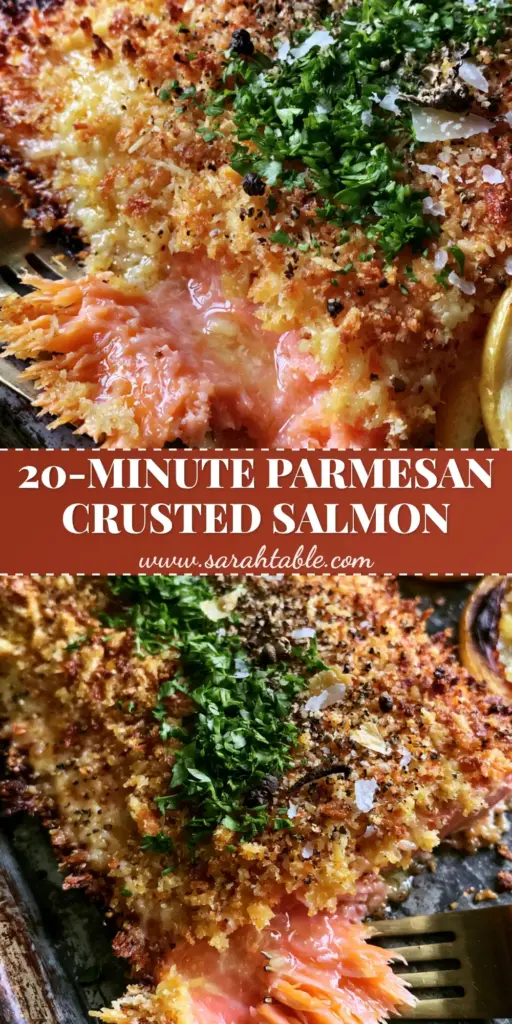
Imagine a thick cut of Atlantic salmon resting on a weathered dark zinc sheet pan, its surface obscured by a dense, textured landscape of golden-brown panko and melted parmesan cheese. As you pull the pan from the oven, the clear garlic-butter glaze sizzles against the fish, while the aroma of charred lemon and fresh thyme fills your kitchen.
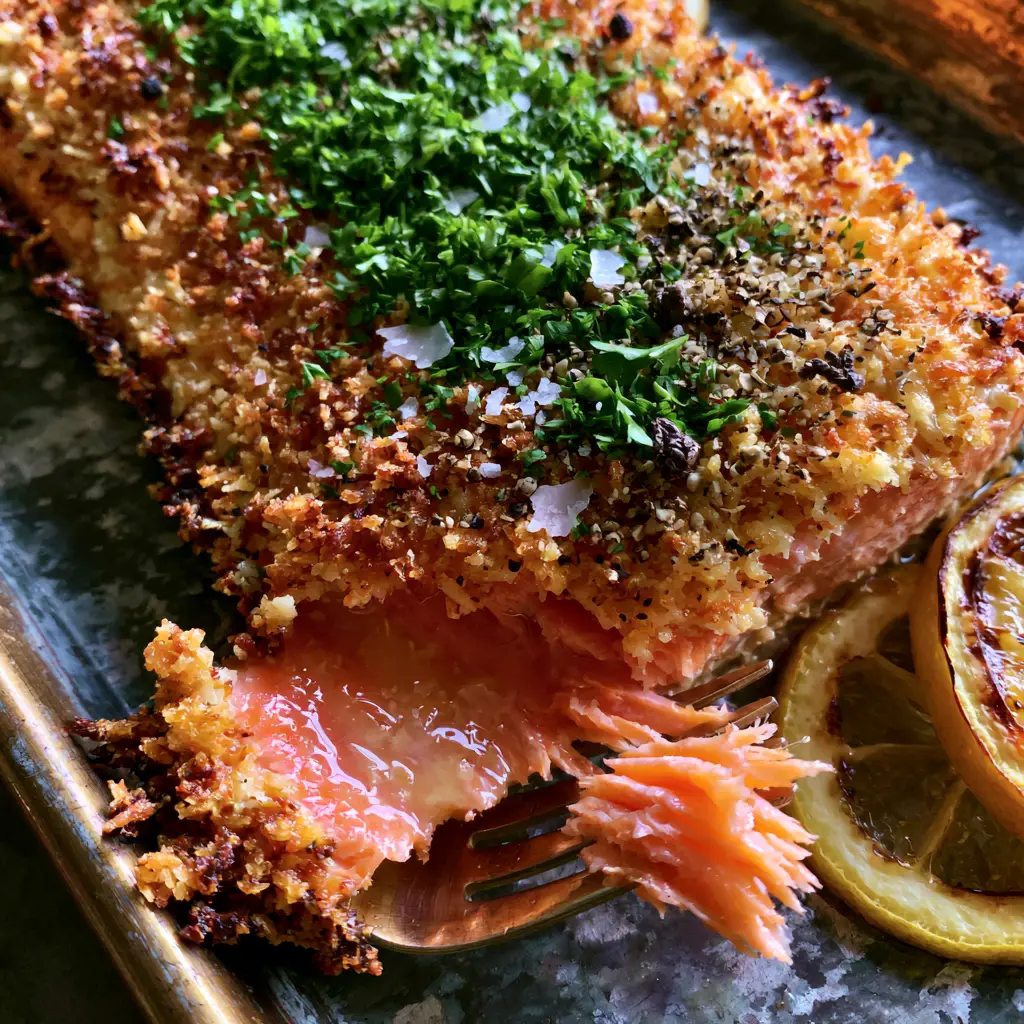
This recipe isn’t just about feeding a family; it is about achieving the perfect “flake.” When your fork pierces the crust, it should reveal a moist, glistening center that practically melts on the tongue. By following this guide, you will master the forensic details—from the caramelized edges of the lemon wheels to the exact dusting of Maldon sea salt—that elevate a simple dinner into a gourmet experience.
Why This Crispy Parmesan Salmon Recipe Works
- Textural Contrast: The combination of toasted panko and finely grated parmesan creates “visible crags and crispy edges” that stand in stark contrast to the tender, buttery salmon meat.
- The Garlic Butter Bridge: A rich garlic-butter glaze acts as a flavor conductor, ensuring the seasoning penetrates deep into the thickest part of the fillet.
- Charred Citrus Infusion: Nestling lemon slices directly beside the fish allows the juice to caramelize and the oils to infuse the crust with a bright, smoky acidity.
- Forensic Seasoning: Using coarse Maldon sea salt flakes and freshly cracked black peppercorns provides bursts of flavor that fine table salt simply cannot replicate.
Essential Components for the Ultimate Salmon Crust
To achieve the visual and flavorful results seen in our professional test kitchen, each ingredient must serve a specific culinary purpose. Do not skip the foundational elements that provide the structural integrity for that golden-brown finish.
Atlantic Salmon Fillet: Choose a thick, center-cut piece of Atlantic salmon. Its higher fat content ensures the fish remains “steaming and moist” even under the high heat required to toast the panko.
Panko Breadcrumbs: 1 cup (60g) of Japanese-style panko is essential. Unlike standard breadcrumbs, panko has a larger, airier surface area that catches the heat and creates those signature crispy crags.
Parmesan Cheese: Use 1/2 cup (45g) of freshly grated parmesan. Avoid the bottled “shaker” variety; real parmesan melts into the breadcrumbs, acting as the “glue” for your crust.
Unsalted Butter: 4 tbsp (56g) of high-quality butter forms the base of our glaze. Using unsalted allows you to control the exact sodium levels with your sea salt flakes.
Fresh Garlic: 3 cloves (15g) of finely minced garlic provide the pungent, aromatic backbone to the glaze. It should be fragrant but not burnt.
Fresh Herbs: A combination of 1/4 cup (15g) minced parsley and several fresh thyme sprigs adds a “bright green” visual pop and an earthy, floral undertone.
Lemons: 2 whole lemons, one sliced into wheels for charring and one for juicing, provide the essential acid to cut through the richness of the fish.
Seasoning: 1 tsp (5g) Maldon sea salt flakes and 1/2 tsp (2g) cracked black pepper are the finishing touches that make the flavors “glow.”
Professional Tools for a Flawless Bake
The equipment you choose is just as important as the ingredients. To replicate the “weathered zinc” look and even heat distribution, use a heavy-duty rimmed baking sheet.
A sharp chef’s knife is required to achieve that “finely minced” parsley texture. Additionally, a small saucepan for the garlic butter glaze and a shallow bowl for mixing the panko-parmesan topping will keep your station organized.
If you enjoy this method of preparation, you might also find success with our baked Dijon salmon, which utilizes a similar high-heat technique for incredible moisture retention.
Step-by-Step Guide to the Perfect Golden Bake
Preparing the Salmon and Zinc Pan
Start by preheating your oven to 400°F (200°C). If you want those deeply charred lemon edges, ensure your oven rack is in the center position. Pat your 1.5 lb (680g) salmon fillet completely dry with paper towels.
This is a critical “forensic” step: moisture is the enemy of a crispy crust. If the surface is damp, the panko will steam rather than toast. Place the salmon on your baking sheet, skin-side down, and lighty brush with a neutral oil to prevent sticking.
Crafting the Garlic Butter Glaze
In a small saucepan over medium-low heat, melt your 4 tbsp (56g) of butter. Add the minced garlic and sauté for just 60 seconds until fragrant. Remove from heat and whisk in 1 tbsp (15ml) of fresh lemon juice.
Brush half of this mixture generously over the top of the salmon. This creates a tacky surface for the crumbs to adhere to while ensuring the interior is glistening with fat. This is the same logic we use in our garlic butter baked salmon to maintain succulent texture.
Engineering the Parmesan Panko Crust
In a bowl, combine the panko, grated parmesan, half of the minced parsley, and a pinch of cracked pepper. Drizzle the remaining garlic butter over the crumbs and toss with a fork until the mixture resembles wet sand.
Press the mixture firmly onto the top of the salmon. You want a “dense, textured crust” that covers the entire surface. Don’t be afraid to pile it high; it will compress slightly during the baking process.
The Baking and Charring Process
Nestle your lemon wheels and fresh thyme sprigs around the salmon on the pan. Slide the pan into the oven and bake for 12-15 minutes, depending on the thickness of the fillet. The visual cue you are looking for is panko that has turned a light golden hue.
For the final “professional food blogger” finish, turn the broiler to high for the last 2 minutes. Watch closely! You want the parmesan to bubble and the panko to reach a deep golden-brown, while the lemon edges become “caramelized and slightly charred.”
Expert Tips for Success
- The Temperature Test: Use an instant-read thermometer. Pull the salmon when the thickest part hits 135°F (57°C). The carry-over heat will bring it to a perfect, steaming 145°F (63°C).
- Freshness Matters: Only use freshly grated parmesan. Pre-shredded cheese is coated in potato starch, which prevents it from melting into the crags of the panko.
- The Zinc Pan Effect: If you don’t have a zinc or dark sheet pan, a cast-iron skillet is a great alternative for achieving those crispy bottom edges.
- Rest Before Flaking: Allow the salmon to rest for 5 minutes after coming out of the oven. This allows the juices to redistribute, ensuring every bite is moist.
How to Store and Reheat Leftovers
If you happen to have leftovers, store them in an airtight container in the refrigerator for up to 2 days. To maintain the integrity of the crust, avoid the microwave.
Instead, reheat the salmon in a 300°F (150°C) oven or air fryer for 5-7 minutes. This will crisp the panko back up without overcooking the delicate fish inside. You can even flake the cold salmon over a fresh spinach salad for a quick lunch the next day.
What to Serve with Parmesan Crusted Salmon
To balance the richness of the garlic butter and parmesan, we recommend light, vegetable-forward sides. The earthy notes of savory parmesan mushrooms complement the crust perfectly.
For a low-carb option, try serving this alongside baked cauliflower steaks or a bright, crisp spinach apple chickpea salad. The acidity in the salad’s dressing pairs beautifully with the charred lemon notes of the fish.
Frequently Asked Questions
Yes, but you must thaw it completely and pat it extremely dry. Frozen salmon often releases more moisture, so drying it is the only way to ensure the panko crust stays crispy.
The salmon is done when it reaches an internal temperature of 145°F (63°C). Visually, the meat should be opaque and flake easily with a fork, revealing a steaming, moist center.
We recommend leaving the skin on during baking to protect the delicate flesh from the hot pan. It also helps the fillet hold its shape while you’re pressing the parmesan crust onto the top.
Use a microplane or the finest side of a box grater. Finely grated cheese integrates better with the panko, creating those signature crispy crags and edges shown in the photos.
Soggy crust is usually caused by excess moisture on the fish or not enough fat in the topping. Ensure you pat the fish dry and use the full amount of garlic butter to help the breadcrumbs fry in the oven.
The Ultimate Parmesan Crusted Baked Salmon Recipe
Parmesan Crusted Baked Salmon with Garlic Butter Glaze
Ingredients
Equipment
Method
- Preheat your oven to 400°F (200°C). Pat the salmon fillet completely dry with paper towels to ensure a crispy crust. Place on a dark sheet pan.
- In a small saucepan, melt butter and sauté minced garlic for 60 seconds. Stir in 1 tbsp of lemon juice. Brush half over the salmon.
- Mix panko, parmesan, parsley, and the remaining garlic butter. Press firmly onto the salmon fillet to create a dense layer.
- Add lemon wheels and thyme to the pan. Bake for 12-15 minutes. Broil for 2 minutes until the crust is golden-brown and lemons are charred.
- Garnish with remaining parsley, Maldon sea salt flakes, and cracked pepper. Let rest for 5 minutes before flaking with a fork.
Notes
Always use freshly grated parmesan to avoid a grainy texture.
Closing & Call to Action
Mastering the Parmesan Crusted Baked Salmon is a milestone for any home cook. It combines the technical precision of high-heat roasting with the rustic, comforting flavors of garlic and cheese. The result is a dish that looks as if it were pulled straight from a professional photo shoot—textured, vibrant, and incredibly succulent.
If you enjoyed this recipe, please leave a comment and a star rating below! Don’t forget to share your creations on Pinterest and tag us so we can see those perfectly charred lemon wheels.