There is a specific, visceral joy in the perfect bite of salt and pepper pork. Imagine a cube of succulent pork shoulder encased in an airy, golden-blonde starch batter that shatters upon impact, revealing tender, seasoned meat within. This isn’t just a simple stir-fry; it is a masterclass in texture, featuring jagged crispy edges and a coating so bubbly it looks like it was plucked from a high-end Cantonese kitchen. When served in a modern matte charcoal ceramic bowl against a neutral concrete backdrop, the vibrant reds of the bird’s eye chilies and the deep greens of bias-cut scallions create a visual feast before you even take your first bite.
Achieving this level of crunch at home requires more than just high heat. It requires an understanding of starch hydration and the precision of flash-frying aromatics. In this guide, we are diving deep into the culinary forensics of the perfect salt and pepper pork, ensuring your version has the visible steam and incredible texture detail that makes professional food photography so appetizing. Whether you are a fan of versatile pork recipes or looking for a new weekend project, this dish is the gold standard for enthusiasts of “crunch-factor” cooking.
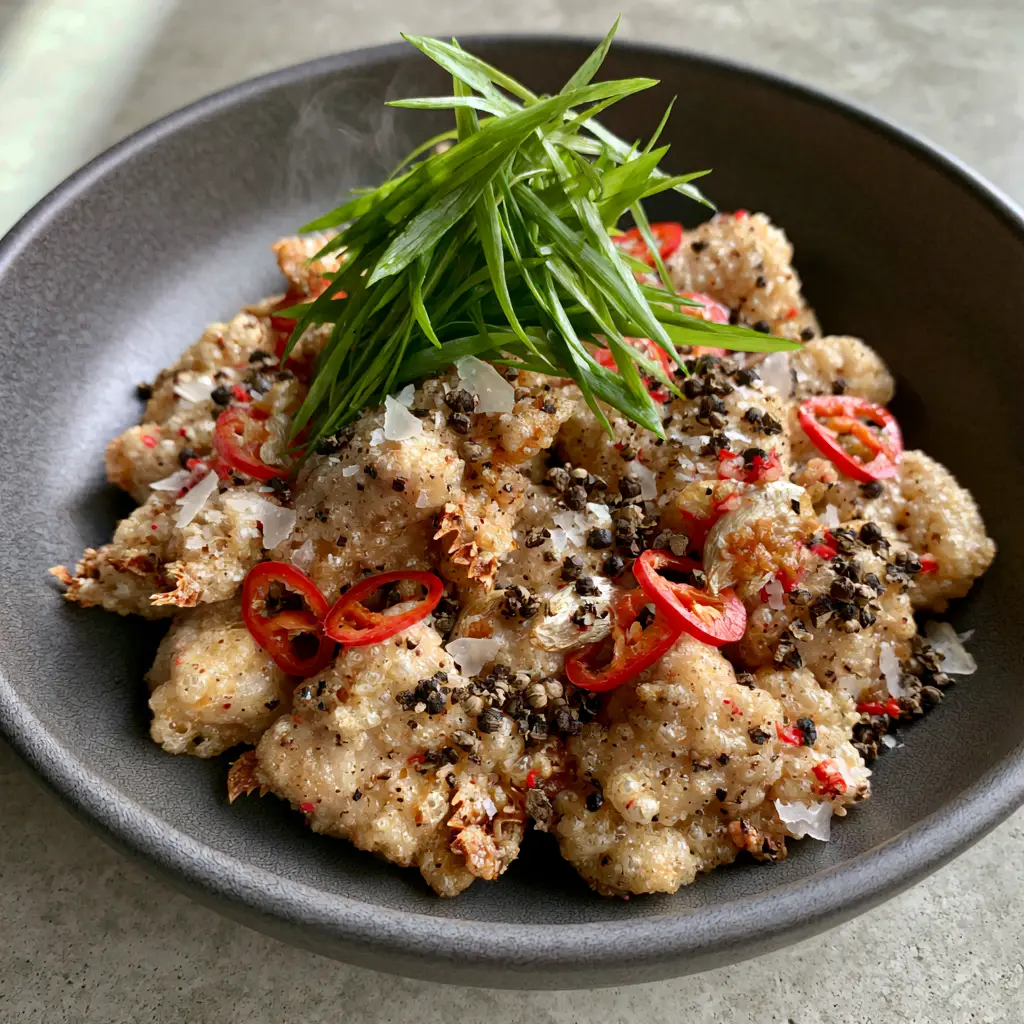
Why This Crispy Salt and Pepper Pork Works Every Time
- The Ultra-Bubbly Starch Coating: By using a specific blend of starches and a leavening agent, we create a batter that puffs into an airy, light-gold shell rather than a heavy, dense breading.
- Shatter-Crisp Jagged Edges: Our double-fry technique ensures those tiny protrusions of starch become incredibly crisp, providing maximum surface area for seasoning.
- High-Impact Aromatics: The combination of flash-fried silvered garlic, fresh red bird’s eye chilies, and a mountain of scallions provides a pungent, spicy contrast to the rich pork shoulder.
- Precision Seasoning: We move beyond fine table salt, using large flakes of Maldon sea salt and coarse, unevenly cracked black peppercorns for a multi-dimensional flavor profile.
The Anatomy of Ingredients for Professional Salt and Pepper Pork
To recreate the exact visual and textural result seen in our blueprint, every ingredient serves a forensic purpose. We aren’t just seasoning meat; we are building a structural masterpiece of flavor and crunch.
Pork Shoulder Cubes: 1.5 lbs (680g) of pork shoulder (pork butt). This cut is essential because the intramuscular fat renders slightly during the fry, keeping the interior juicy while the outside crisps. If you prefer a leaner profile, you could adapt this for ginger lime pork preparations, but for the ultimate salt and pepper pork, shoulder is king.
Potato Starch: 1 cup (125g). Potato starch has a larger granule size than cornstarch, which is the secret to those “bubbly” and “jagged” edges that define restaurant-quality textures.
Cornstarch: 0.5 cup (60g). While potato starch provides the bubbles, cornstarch adds structural rigidity, ensuring the batter stays crisp even after being tossed with the aromatics.
Baking Powder: 1 tsp (5g). This is an “invisible” foundational ingredient. It reacts with moisture to create tiny carbon dioxide bubbles in the batter, leading to that airy, blonde appearance.
Maldon Sea Salt: 2 tsp (10g). Large flakes are crucial for the visual “pop” and the bursts of salinity that don’t overwhelm the palate.
Coarse Cracked Black Peppercorns: 1 tbsp (15g). Do not use pre-ground pepper. You need unevenly cracked peppercorns for both the visual texture and the floral, spicy heat they provide.
Silvered Garlic: 6 cloves. Thinly slicing the garlic allows it to “flash-fry” into golden chips, providing a nutty crunch that integrates with the pork bites.
Red Bird’s Eye Chilies: 4-5 chilies, sliced into rings. These provide the vibrant red visual contrast and a sharp, clean heat that cuts through the richness of the fried pork.
Green Scallions: 1 large bunch, thin-bias-cut. Cutting on a steep angle creates long, elegant shards that add height and a fresh, oniony bite to the finished dish.
Neutral Frying Oil: 4 cups (960ml). Use an oil with a high smoke point, like peanut or canola, to achieve the necessary 375°F (190°C) for the second fry.
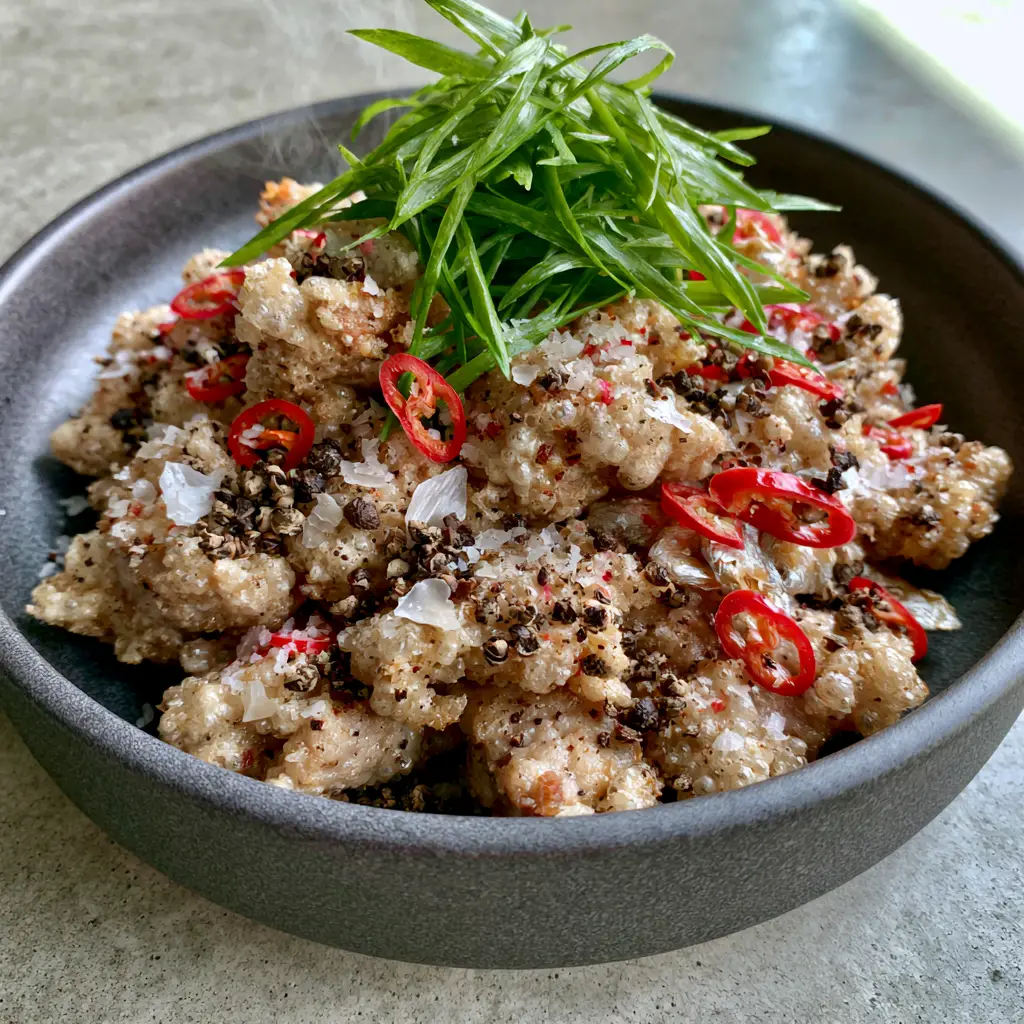
The Essential Kitchen Gear for Perfect Frying
To achieve the “extra crispy” result described in the Midjourney prompt, you need the right tools. A heavy-bottomed wok or a Dutch oven is preferred for heat retention. A spider strainer is non-negotiable for lifting the pork bites out of the oil without bringing excess fat with them.
You will also need a digital instant-read thermometer. Precision is the difference between a golden-blonde airy coating and a burnt, greasy mess. Finally, a large stainless steel mixing bowl is needed for “the toss”—the final stage where the pork, salt, pepper, and aromatics are combined in a flurry of movement to ensure even distribution without losing the crunch.
The Step-by-Step Blueprint for Salt and Pepper Pork
Preparing the Pork and Infusing Flavor
Start by trimming any excessive outer fat from the pork shoulder, but keep the internal marbling. Cut the pork into uniform 1-inch (2.5cm) cubes. In a bowl, toss the pork with a splash of Shaoxing wine and a pinch of fine salt. This foundational step ensures the meat is seasoned from the inside out, much like the preparation for Filipino tocino flavors. Let this marinate for at least 20 minutes while you prep your aromatics.
Creating the Airy Starch Slurry
In a large bowl, whisk together the potato starch, cornstarch, and baking powder. Gradually add cold water (about 1/2 cup or 120ml) until you have a thick, paste-like consistency. It should look like Elmer’s glue. This “wet-starch” method is the secret to the ultra-bubbly and airy starch coating. Add the pork cubes to this slurry and mix by hand until every piece is thickly and evenly coated.
The First Fry: Setting the Structure
Heat your oil to 325°F (165°C). Carefully drop the pork cubes into the oil one by one to prevent sticking. Fry for 3-4 minutes. At this stage, the pork will look pale and the coating will be set but not yet “extra crispy.” Remove with a spider strainer and let the pork rest on a wire rack for 5 minutes. This resting period allows internal moisture to migrate to the surface, which will then be vaporized in the second fry for maximum crunch.
The Second Fry: Achieving Golden-Blonde Perfection
Increase the oil temperature to 375°F (190°C). Return the pork to the oil in batches. Watch for the visual cues: the batter should rapidly expand, forming those jagged crispy edges and an airy, golden-blonde hue. This fry should only take 60-90 seconds. Remove and immediately place into a clean, dry bowl. The steam should be faintly visible as the pork rests.
Flash-Frying the Aromatics
In a separate small skillet or by removing all but 1 tablespoon (15ml) of oil from your wok, quickly fry the silvered garlic and red chili rings. This should take about 30 seconds until the garlic is fragrant and just beginning to turn golden. Do not let the garlic burn, or it will turn bitter and ruin the salt and pepper pork profile.
The Final Toss and Assembly
While the pork is still piping hot, add the flash-fried garlic and chilies into the bowl with the pork. Sprinkle over the Maldon sea salt and the coarse cracked black peppercorns. Add the mountain of thin-bias-cut green scallions. Toss vigorously. The residual heat from the pork will slightly wilt the scallions and bloom the aroma of the pepper, creating a sensory explosion.
Expert Tips for Success with Salt and Pepper Pork
- Keep the Water Cold: When making your starch slurry, use ice-cold water. This slows the hydration of the starch and results in a crispier, lighter fry.
- Don’t Overcrowd the Pan: Frying too many pieces at once drops the oil temperature, leading to a greasy rather than airy coating.
- Toast the Peppercorns: For the most intense flavor, toast whole peppercorns in a dry pan for 2 minutes before coarsely cracking them with a mortar and pestle.
- The “Double-Fry” is Non-Negotiable: If you only fry once, the moisture inside the pork will turn the coating soggy within minutes. The second fry is what locks in the “shatter-crisp” texture.
How to Store and Reheat Your Crispy Pork Bites
While salt and pepper pork is best enjoyed immediately while the steam is still rising, you can store leftovers in an airtight container in the refrigerator for up to 2 days. To revive the crunch, avoid the microwave at all costs. Instead, use an air fryer at 375°F (190°C) for 3-5 minutes, or a quick toss in a very hot, dry wok. If you enjoy the savory-sweet profile of pork, you might also like slow-roasted Cuban pork for your meal prep rotation.
What to Serve With Salt and Pepper Pork
This dish is a powerhouse of flavor and texture, so it pairs best with sides that offer contrast. A bowl of steamed jasmine rice is the classic choice to soak up the salty, peppery goodness. For a complete feast, consider serving it alongside a refreshing salad or even some parmesan crisps as an additional salty appetizer. If you are looking for a heavier meal, the pork bites also pair surprisingly well with a cool, creamy side like Hawaiian mac salad to balance the heat of the bird’s eye chilies.
Frequently Asked Questions
While you can reheat it in an air fryer, the initial cook is best done in oil to achieve the airy starch bubbles. A wet-starch slurry does not puff correctly in the dry heat of an air fryer.
The secret is the double-fry technique. The first fry at a lower temperature sets the structure, while the second fry at 375°F (190°C) vaporizes remaining surface moisture for a shatter-crisp finish.
It has a controllable heat. The red bird’s eye chilies provide a sharp kick, but since they are added at the end, you can easily adjust the quantity to suit your spice tolerance.
Potato starch is superior for this dish because its large granules create the signature bubbly, jagged texture. Cornstarch can be used as a secondary starch for structural rigidity, but potato starch provides the ‘airy’ quality.
This usually happens if the pork is too wet before coating or if the oil temperature is too low. Ensure you use a thick starch slurry and maintain at least 325°F during the first fry.
The Official Salt and Pepper Pork Recipe Card
Salt and Pepper Pork: The Ultimate Ultra-Crispy Restaurant Style Recipe
Ingredients
Equipment
Method
- Toss pork shoulder cubes with Shaoxing wine and a pinch of salt. Set aside for 20 minutes.
- Whisk potato starch, cornstarch, and baking powder with cold water until a thick paste forms. Coat pork cubes thoroughly.
- Fry pork at 325°F (165°C) for 3-4 minutes until pale but set. Rest for 5 minutes.
- Increase oil to 375°F (190°C) and fry for 90 seconds until golden-blonde and ultra-bubbly.
- Flash-fry garlic and chilies for 30 seconds. Toss with hot pork, Maldon salt, cracked pepper, and scallions in a matte charcoal bowl.
Notes
Ensure the oil is exactly 375°F for the second fry to achieve jagged edges.
Closing & Call to Action
Mastering the salt and pepper pork is a rite of passage for any home cook who loves the intersection of science and flavor. From the bubbly starch coating to the pungent kick of flash-fried garlic, every element of this dish is designed to impress. If you enjoyed this forensic deep-dive into crispy perfection, please leave a comment below and let me know how your jagged edges turned out! Don’t forget to share your creations and pin this recipe to your favorite boards on Pinterest so you never lose the secret to the ultimate crunch.