There is a specific kind of culinary magic that happens when high-quality balsamic vinegar meets a screaming hot stainless steel pan. This Balsamic Chicken isn’t just a meal; it is a masterclass in texture and visual contrast, designed to look as though it just stepped off the pages of a high-end food magazine.
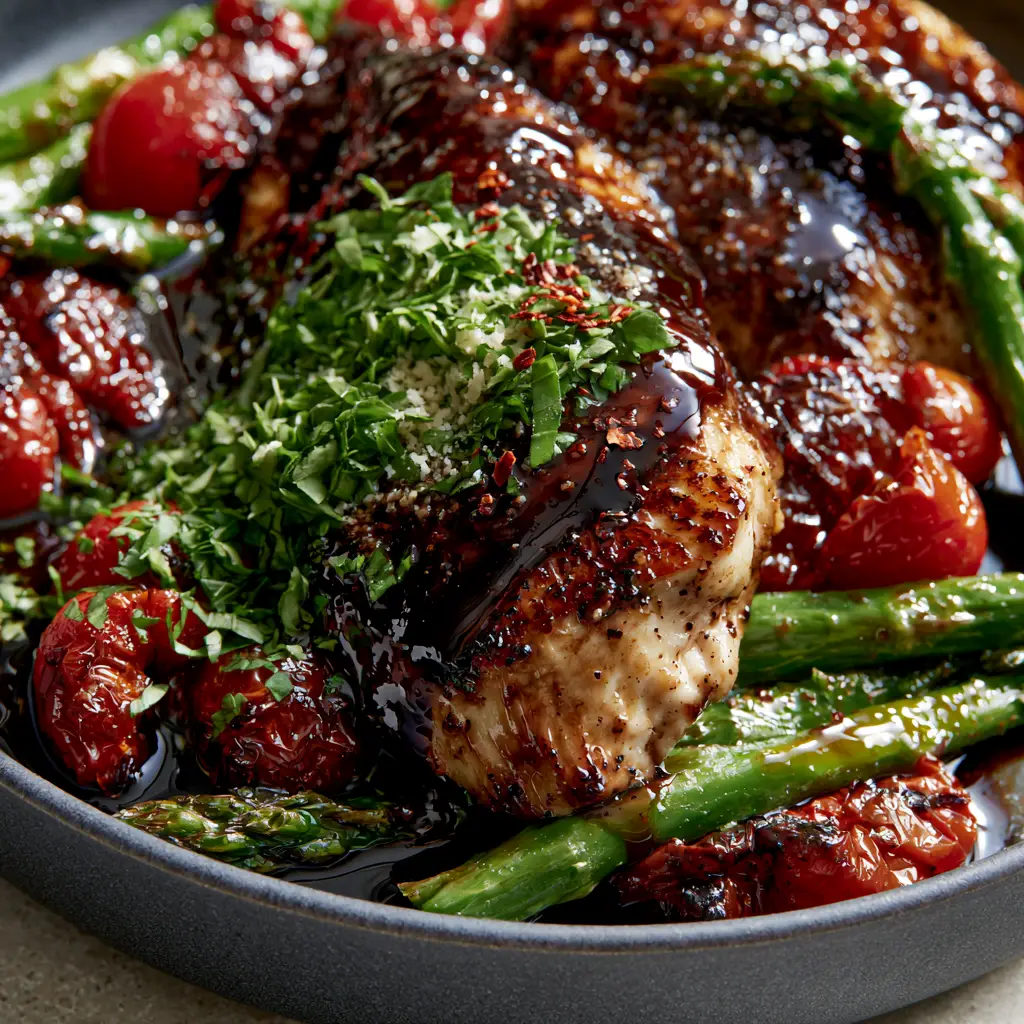
Imagine succulent, pan-seared chicken breasts coated in a thick, dark mahogany balsamic glaze that is so syrupy it reflects the light from your kitchen window. The edges are crisp and golden-brown, while the interior remains incredibly moist and tender.
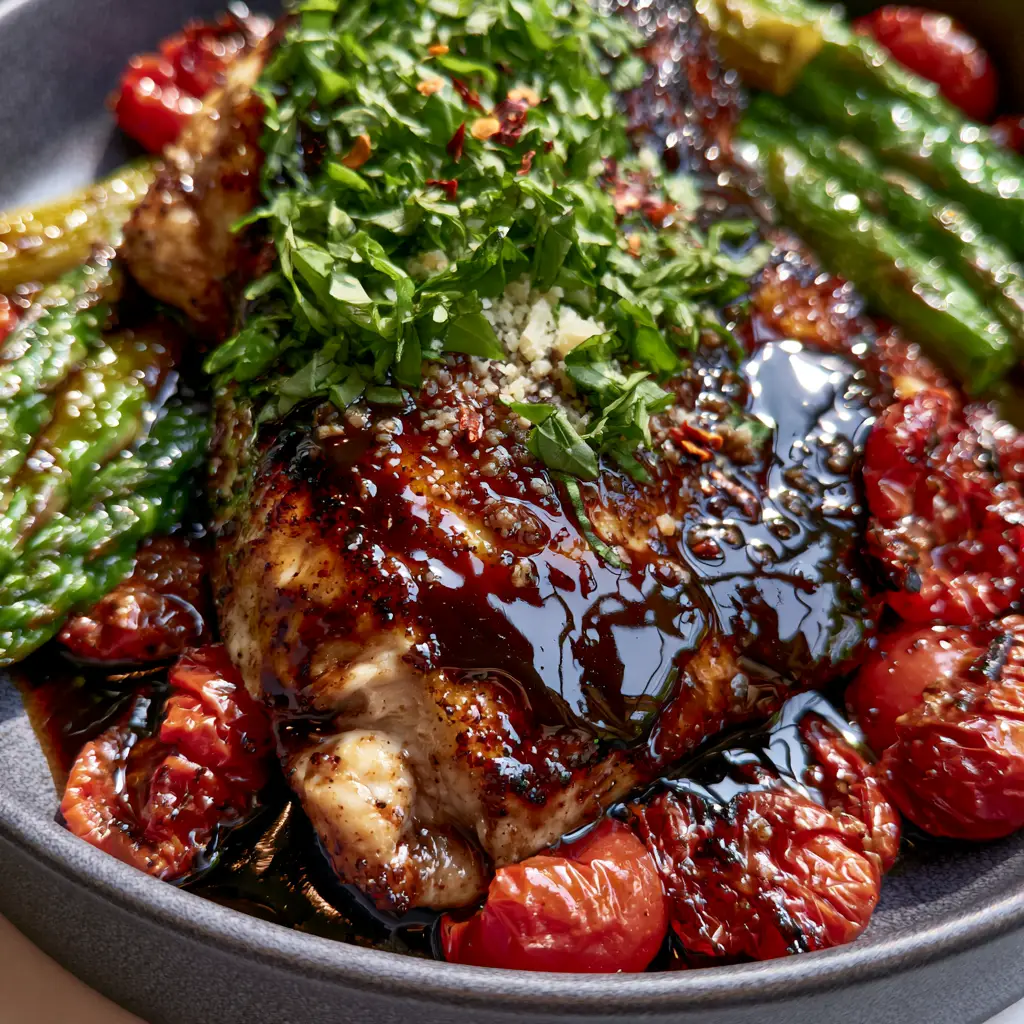
To complete the plate, we surround the protein with vibrant, blistered red cherry tomatoes that have just begun to burst, releasing their sweet juices into the sauce. Alongside them, tender-crisp green asparagus spears offer a fresh, earthy crunch, all finished with a heavy shower of bright green basil and salty parmesan.
The Visual and Culinary Appeal of This One-Pan Masterpiece
- Reflective Mahogany Glaze: The reduction process creates a syrupy, dark sauce that clings to the chicken for a professional “hero shot” finish.
- Textural Contrast: You get the crunch of the asparagus, the pop of the blistered tomatoes, and the silkiness of the balsamic reduction in every bite.
- Vibrant Color Palette: The deep reds of the tomatoes and the bright greens of the fresh basil pop against the dark grey ceramic of a modern shallow bowl.
- Restaurant Quality at Home: Using professional searing techniques ensures your chicken stays juicy while achieving that coveted golden-brown crust.
The Anatomy of Flavor: Essential Ingredients and Substitutions
Chicken Breasts: We use 2 large (approx. 500g) boneless, skinless chicken breasts. If they are particularly thick, we recommend pounding them to an even thickness to ensure uniform cooking and a perfectly flat surface for the glaze to adhere to.
Aged Balsamic Vinegar: You will need 1/2 cup (120ml) of high-quality balsamic vinegar. For the most reflective, syrupy results, look for “Aceto Balsamico di Modena” which has a naturally higher sugar content for better reduction.
Cherry Tomatoes: 1 cup (150g) of fresh red cherry tomatoes. These are non-negotiable for the visual “burst” effect; their high sugar content allows them to blister and char quickly under high heat.
Fresh Asparagus: 1 bunch (approx. 450g) of medium-thickness spears. If you can’t find asparagus, you could substitute with thin green beans, but the classic pairing of balsamic and asparagus is a culinary staple.
The “Invisible” Foundations: We utilize 2 tbsp (30ml) of high-smoke point oil (like avocado or light olive oil) for the sear, and 1 tbsp (15g) of cold unsalted butter to “mount” the sauce at the end for that glossy, professional sheen.
Fresh Herbs and Garnishes: 1/4 cup (10g) of freshly chopped basil provides the aromatic lift. We finish the dish with 2 tbsp (10g) of finely grated parmesan cheese, a pinch of red pepper flakes for heat, and a generous sprinkle of flaky sea salt.
Professional Culinary Toolkit: Equipment for Success
To achieve the visual results seen in our hero shot, you need a heavy-bottomed skillet. A 12-inch stainless steel or cast-iron pan is ideal because it retains heat effectively, allowing for the Maillard reaction to create that golden-brown crust on the chicken.
A pair of silicone-tipped tongs is essential for turning the chicken without tearing the delicate seared skin. You will also need a sharp chef’s knife for chiffonading the fresh basil into those bright green ribbons that look so striking against the dark mahogany sauce.
Finally, a digital meat thermometer is your best friend. To ensure the chicken remains “succulent and moist” as described, you must pull it from the heat exactly when it reaches an internal temperature of 165°F (74°C).
Mastering the Golden-Brown Sear on Your Chicken
The first step to a world-class Balsamic Chicken is the sear. Pat your chicken breasts bone-dry with paper towels; moisture is the enemy of a golden crust. Season both sides generously with kosher salt and cracked black pepper.
Heat your oil in the skillet over medium-high heat until it shimmers. Lay the chicken away from you into the pan. Resist the urge to move it! It needs 5-6 minutes of uninterrupted contact with the heat to develop those deep brown, caramelized edges.
Once the chicken naturally releases from the pan, flip it. You are looking for a surface that looks like burnished gold. Once flipped, cook for another 4-5 minutes until the internal temperature is nearly reached, then remove the chicken to a warm plate to rest.
How to Achieve Perfectly Blistered Cherry Tomatoes and Asparagus
In the same pan used for the chicken, toss in your trimmed asparagus spears and cherry tomatoes. There should be enough residual fat and chicken fond (the brown bits) to coat the vegetables. If not, add a tiny drizzle of oil.
Crank the heat to high. The goal is to “blister” the tomatoes, which means the skin should char and pop, releasing their concentrated juices. This usually takes about 3-4 minutes. The asparagus should turn a vibrant green with slight charred spots while remaining tender-crisp.
Once the vegetables have reached that “oily sheen” and charred appearance, remove them from the pan and set them aside with the resting chicken. This prevents them from becoming mushy while you prepare the balsamic reduction.
The Science of the Reflective Mahogany Balsamic Glaze
Now, we deglaze. Pour your 1/2 cup (120ml) of balsamic vinegar into the hot pan. Use a wooden spoon to scrape up all those flavorful brown bits from the chicken and vegetables—this is where the deep, complex flavor lives.
Add 1 tbsp (15ml) of honey or brown sugar to the vinegar. This isn’t just for sweetness; the sugar aids in the reduction process, helping the sauce reach that “syrupy and reflective” consistency seen in our photography. Simmer until the liquid has reduced by half.
The final secret: turn off the heat and whisk in a tablespoon of cold butter. This technique, known as monter au beurre, creates an emulsion that results in a glossy, thick, and velvety sauce that coats the back of a spoon—and your chicken—perfectly.
Expert Tips for a Flawless Presentation
- Rest the Meat: Never skip the 5-minute rest for the chicken. This allows the juices to redistribute, ensuring every slice is succulent rather than dry.
- Garnish at the Last Second: Add your fresh chopped basil and grated parmesan only when you are ready to serve. The residual heat from the chicken will slightly melt the cheese, but the basil should remain bright green.
- The Shallow Bowl Trick: Serve this in a dark grey matte ceramic shallow bowl as suggested. The dark background makes the mahogany sauce and red tomatoes visually “pop” for a restaurant-style experience.
- Control the Heat: If your balsamic reduction starts to smell scorched, immediately remove it from the heat and add a splash of water to slow the cooking.
What to Serve with Balsamic Chicken
While this dish is a complete meal on its own with the roasted asparagus, it pairs beautifully with other Italian-inspired sides. If you are looking for a heartier meal, serve this over a bed of creamy polenta or alongside some crockpot chicken pasta for a full-carb experience.
For a lighter option, a side of high-protein vegetarian meals like a simple quinoa salad can balance the richness of the balsamic reduction. To finish the evening, consider a refreshing frozen strawberry margarita to cleanse the palate after the deep umami flavors of the chicken.
If you love the salty kick of the parmesan garnish, you might also enjoy making a batch of homemade parmesan crisps to serve as a crunchy appetizer while the chicken sears.
Frequently Asked Questions
No, balsamic vinaigrette contains oil and other seasonings that will not reduce into a thick syrup. For this recipe, you must use a high-quality balsamic vinegar or an aged balsamic.
You need high, direct heat and a small amount of oil. Don’t crowd the pan, and let them sit undisturbed for a minute or two until the skin chars and begins to pop.
The secret is reduction and emulsion. Simmer the balsamic until it reduces by half to concentrate the sugars, then whisk in a tablespoon of cold butter at the very end (off the heat) to create a glossy, reflective sheen.
Yes, as written, this recipe is naturally gluten-free. Just ensure your balsamic vinegar does not have any added thickeners that contain gluten (though pure balsamic is always safe).
Chicken breast is very lean and overcooks quickly. Use a digital thermometer to pull the chicken as soon as it hits 165°F (74°C). The resting period is also crucial to keeping the juices inside the meat.
Storing and Reheating Your Balsamic Masterpiece
This Balsamic Chicken keeps remarkably well in an airtight container in the refrigerator for up to 3 days. To maintain the “tender-crisp” texture of the asparagus, we recommend reheating in a skillet over medium heat rather than the microwave.
If the glaze has thickened too much in the fridge, simply add a teaspoon of water or chicken broth to the pan when reheating to loosen the sauce back into its syrupy, reflective state.
The Ultimate Balsamic Chicken Recipe Card
Balsamic Chicken with Blistered Tomatoes and Roasted Asparagus
Ingredients
Equipment
Method
- Pat chicken dry and season. Heat oil in skillet. Sear chicken for 5-6 minutes per side until golden-brown and internal temp is 165°F (74°C). Remove and rest.
- Add tomatoes and asparagus to the same pan. Cook over high heat for 3-4 minutes until tomatoes blister and asparagus is tender-crisp. Remove and set aside.
- Pour balsamic and honey into pan. Simmer until reduced by half and syrupy. Whisk in cold butter for a reflective sheen.
- Return chicken and veg to pan to coat in glaze. Plate in a shallow bowl and garnish with basil, parmesan, red pepper flakes, and sea salt.
Notes
Pat the chicken completely dry before searing for the best golden-brown crust.
Closing Thoughts on This Culinary Classic
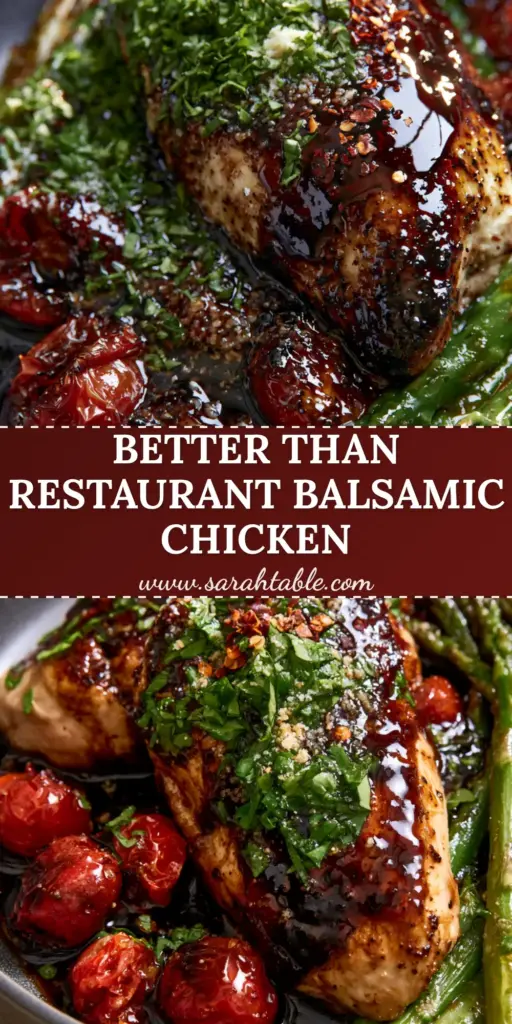
Mastering Balsamic Chicken is a rite of passage for any enthusiastic home cook. It combines simple, fresh ingredients with classic French and Italian techniques to create a dish that is far greater than the sum of its parts. The combination of the acidic reduction, the sweet burst of the tomatoes, and the savory chicken is a profile that never goes out of style.
If you enjoyed this recipe, I would love to hear from you! Please leave a comment below and let me know how your glaze turned out. Don’t forget to share your creations on Pinterest and tag me!
For more dinner inspiration, check out my recipes for Korean beef bowls or a comforting bowl of Thai red curry noodle soup. Happy cooking!