Experience the ultimate celebration of spring on a plate with this vibrant Pasta primavera. This isn’t the heavy, cream-laden dish of the 1980s; instead, we have crafted a version that focuses on the clinical precision of high-heat vegetable searing and a light, emulsified sauce.
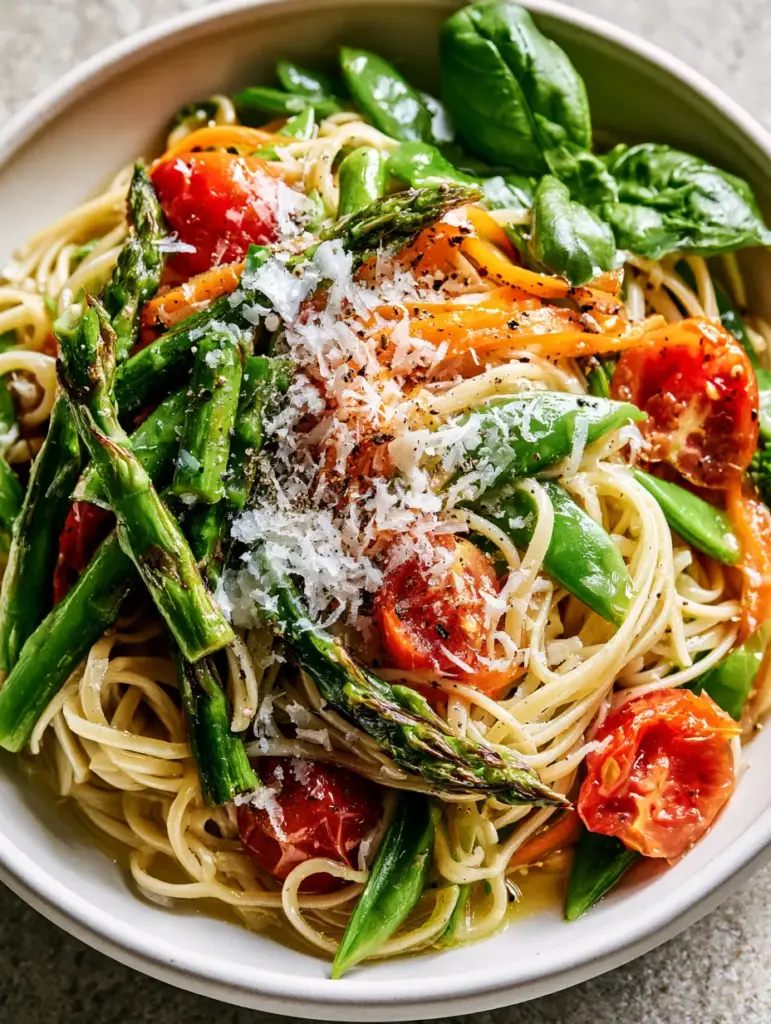
Imagine al dente linguine strands glistening under a translucent, lemon-infused garlic butter sauce that catches the soft afternoon light. Every forkful delivers a textural symphony: the snap of bright green peas, the sweetness of split cherry tomatoes, and the smoky depth of charred asparagus tips.
This 15-minute masterpiece is designed for the modern home cook who demands restaurant-quality aesthetics without hours of labor. By following our specific visual cues, you will create a dish that looks exactly like a high-end editorial photograph.
Why This Vibrant Spring Pasta Will Become Your New Signature Dish
- The 15-Minute Timeline: By multitasking the pasta boil with the vegetable sear, you achieve a complex flavor profile in less time than it takes to order takeout.
- Textural Mastery: We utilize “pan-blistering” techniques to ensure the cherry tomatoes reach that perfect “split skin” state while the carrots remain tender-crisp ribbons.
- The “Secret” Silky Sauce: No heavy cream is required; we teach you how to use starchy pasta water to create a glossy, translucent yellow emulsion that clings to every noodle.
- Visual Vibrancy: This recipe is a fantastic addition to your rotation of high-protein vegetarian meals, offering a rainbow of nutrients.
Sourcing Your Garden-Fresh Ingredients for Maximum Flavor
Linguine (Dry or Fresh): We recommend 8 oz (225g) of high-quality bronze-cut linguine. The rougher surface of bronze-cut pasta is essential for the silky lemon garlic butter to adhere properly.
Fresh Asparagus Tips: Look for 1 cup (135g) of thin to medium spears. We focus solely on the tips to ensure they char quickly without becoming woody or tough.
Cherry Tomatoes: 1 cup (150g) of bright red cherry tomatoes provides the necessary acidity. Look for taut skins that will “blister” and release their juices into the sauce.
Snap Peas: 1 cup (100g) of sugar snap peas adds a sweet, crunchy element. Ensure you remove the “string” for the most refined eating experience.
Julienned Carrots: 1 large (100g) carrot, peeled into thin ribbons. These orange ribbons mimic the shape of the linguine, creating a beautiful visual harmony in the bowl.
The Sauce Foundations: You will need 4 tbsp (56g) of unsalted butter and 3 cloves of garlic, microplaned. The butter provides the “glistening” finish seen in our recipe photos.
Acid and Herbs: The zest and juice of 1 large lemon (approx. 3 tbsp or 45ml) cuts through the richness. Finish with a handful of torn fresh emerald green basil leaves for an aromatic punch.
The Garnish Trio: Fluffy microplaned Parmesan cheese, cracked black pepper, and large sea salt flakes provide the final layer of professional seasoning.
Essential Culinary Tools for Professional Results
To achieve the specific “charred” and “glistening” results of this Pasta primavera, you need a wide, heavy-bottomed stainless steel or cast-iron skillet. These materials retain the high heat necessary to blister the tomato skins and char the asparagus tips quickly.
A microplane is also non-negotiable for this recipe. It allows you to create a “dusting” of Parmesan cheese and finely grate the garlic so it melts into the butter sauce without leaving behind pungent, raw chunks.
Mastering the 15-Minute Pan-Searing Technique
Achieving the Perfect Al Dente Linguine
Bring a large pot of heavily salted water to a rolling boil. Add your linguine and cook for 1-2 minutes less than the package directions suggest.
The pasta will finish cooking in the butter sauce, so it must be “firm to the bite” when drained. Before draining, reserve 1 cup (240ml) of the starchy pasta water—this is your liquid gold.
The High-Heat Vegetable Blitz
While the pasta cooks, heat 1 tbsp (15ml) of extra virgin olive oil in your skillet over medium-high heat. Once the oil is shimmering, add the asparagus tips and snap peas.
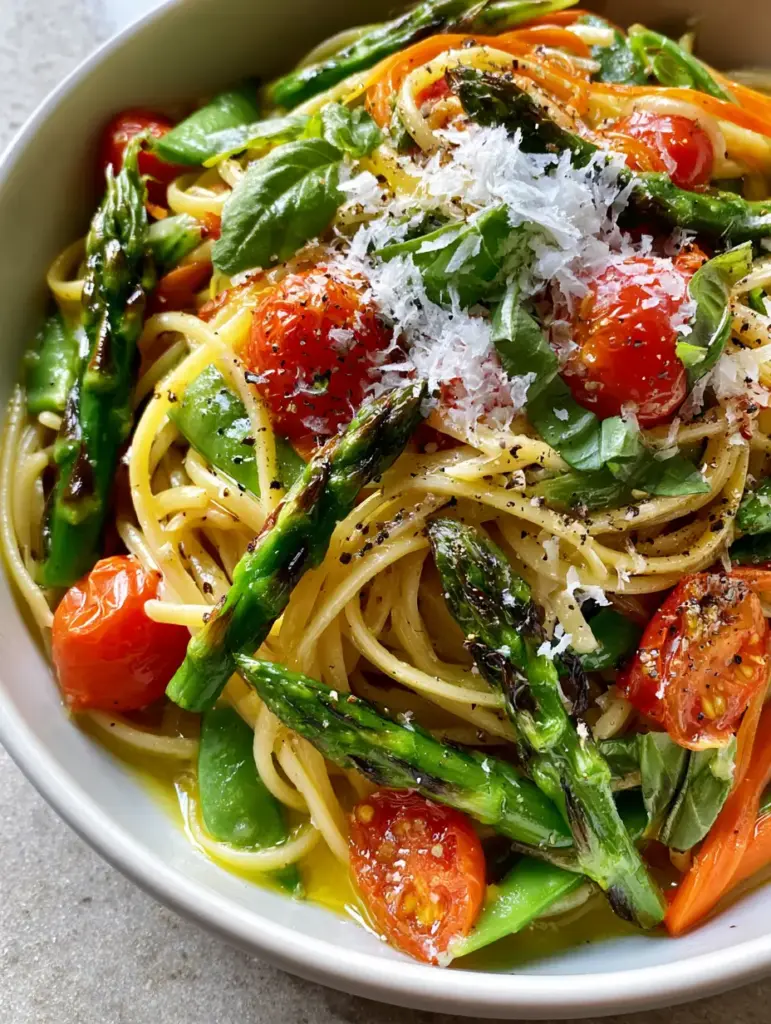
Leave them undisturbed for 2 minutes to develop those characteristic dark char marks. Toss in the cherry tomatoes and cook until the skins begin to split and shrivel slightly.
Building the Silky Lemon Garlic Butter Emulsion
Reduce the heat to medium-low and add the butter and microplaned garlic to the center of the pan. As the butter foams, add the julienned carrot ribbons.
The carrots only need 60 seconds to soften. Slowly whisk in 1/2 cup (120ml) of the reserved pasta water and the lemon juice to create a translucent, bubbling sauce.
The Final Toss and Visual Styling
Add the drained linguine directly into the skillet. Using tongs, toss the noodles vigorously for 1-2 minutes until the sauce reduces and coats each strand in a glossy yellow sheen.
Turn off the heat. Fold in the torn basil leaves, which will wilt slightly from the residual heat, releasing their essential oils.
Expert Tips for a Picture-Perfect Pasta
- Control the Moisture: If the sauce looks too thin, continue simmering for 30 seconds. If it looks “tight” or greasy, add another splash of pasta water.
- The Garlic Guard: Never add the garlic to a scorching hot pan at the beginning; it will burn and become bitter. Add it with the butter once the heat is lowered.
- Sea Salt Flakes: Use Maldon or similar sea salt flakes at the very end. The larger crystals don’t just season; they provide a visual “sparkle” that catches the light.
- Pre-Heat Your Bowls: Serving this Pasta primavera in warm matte white bowls ensures the butter sauce remains silky rather than congealing on impact.
Smart Storage and Reheating Guidelines
While this dish is best enjoyed immediately to preserve the “snap” of the vegetables, leftovers can be stored in an airtight container in the refrigerator for up to 2 days.
To reheat, avoid the microwave, which can turn the asparagus mushy. Instead, place the pasta in a small skillet with a tablespoon of water or broth over low heat until the sauce re-emulsifies.
Do not freeze this recipe. The high water content in the snap peas and tomatoes will cause the dish to become watery and lose its structural integrity upon thawing.
Delicious Pairings to Complete Your Meal
For a complete Mediterranean-inspired feast, serve this pasta alongside a batch of crunchy, homemade parmesan crisps. The salty crunch of the crisps complements the silky texture of the linguine perfectly.
If you have meat lovers at the table, a side of sliced balsamic chicken adds a lean protein boost that harmonizes with the lemon and garlic notes.
For a weekend brunch or summer evening, pair this Pasta primavera with a refreshing frozen strawberry margarita. The sweetness of the berries provides a stunning contrast to the savory, garlicky butter sauce.
Frequently Asked Questions About Spring Pasta
For this specific recipe, fresh vegetables are required. Frozen vegetables contain too much moisture, which prevents the ‘charring’ and ‘blistering’ visual effects essential to the dish’s texture and flavor profile.
Use a very hot skillet and avoid overcrowding the pan. The high heat will cause the internal moisture to expand and ‘split’ the skins (blistering) in about 2-3 minutes while keeping the tomato structurally intact.
While some modern versions use cream, the original recipe focused on a light butter and cheese emulsion. Our version uses lemon and garlic to brighten the flavors, keeping it light and seasonal.
The secret is the combination of cold unsalted butter and starchy pasta water. When whisked together over medium heat with lemon juice, the starch acts as an emulsifier, creating a glossy, silky coating for the noodles.
Julienned carrot ribbons are extremely thin and delicate. They only require about 60 seconds of residual heat to become tender. Adding them earlier would cause them to lose their vibrant orange color and snap.
The Ultimate 15-Minute Pasta Primavera Recipe
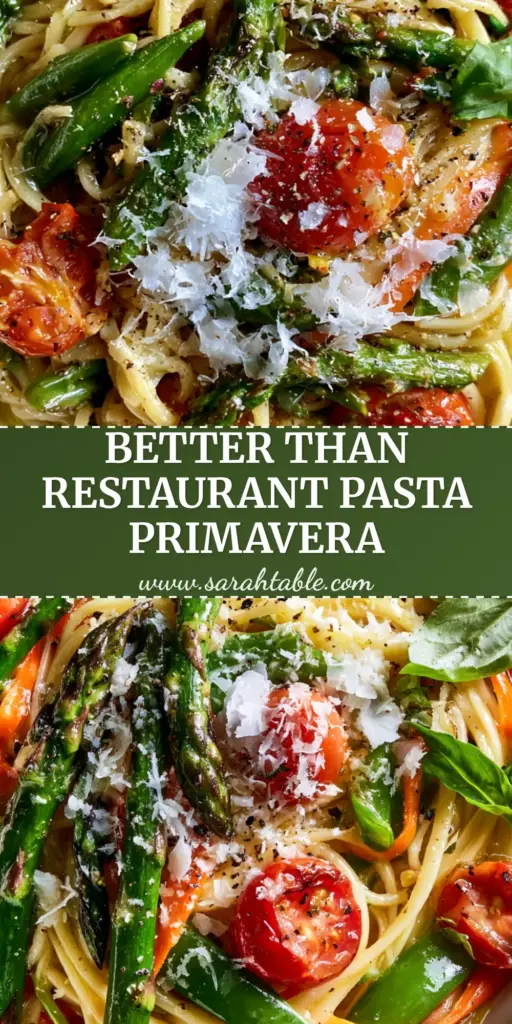
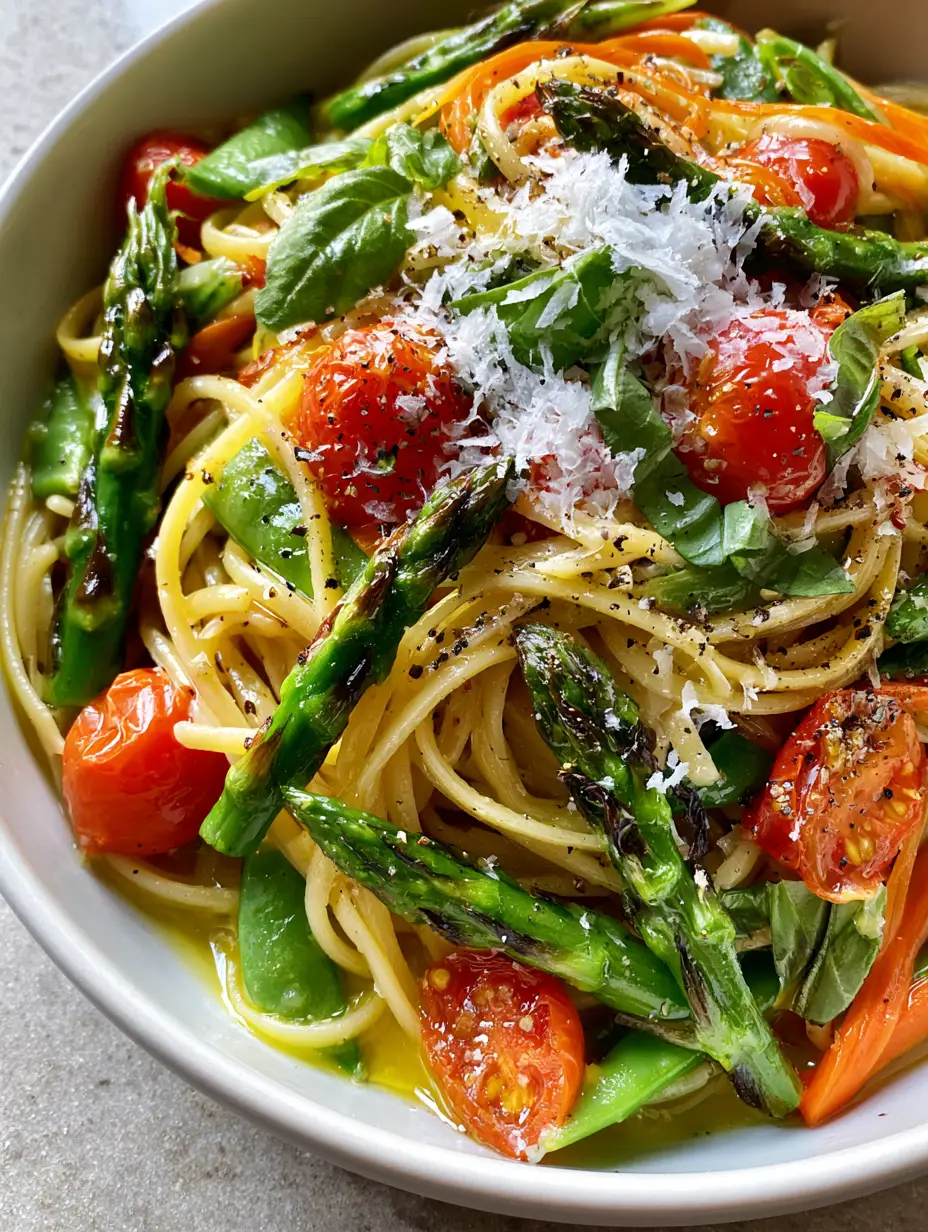
Pasta Primavera with Silky Lemon Garlic Butter and Charred Spring Vegetables
Ingredients
Equipment
Method
- Cook linguine in salted boiling water until just under al dente. Reserve 1 cup (240ml) of pasta water before draining.
- Heat oil in a large skillet over medium-high. Add asparagus and snap peas; sear for 2 minutes until char marks appear.
- Add cherry tomatoes; cook until skins split and release juices.
- Lower heat. Add butter, garlic, and carrot ribbons. Stir for 1 minute. Pour in lemon juice and 1/2 cup pasta water.
- Toss in linguine and basil. Mix vigorously until the sauce is glistening and silky. Garnish with parmesan, sea salt flakes, and cracked pepper.
Notes
Ensure the skillet is very hot before adding asparagus to get the charred visual effect.
Bring the Colors of Spring to Your Kitchen Today
This Pasta primavera is more than just a quick dinner; it is a sensory experience that celebrates the very best of seasonal produce. The combination of charred textures and a bright, citrusy sauce makes it a repeatable favorite for any occasion.
We would love to see your culinary creations! Tag us on social media and follow our boards on Pinterest for more gourmet inspiration. Don’t forget to leave a comment below with your favorite vegetable additions!