There is something inherently soul-soothing about a bowl of Thai red curry noodle soup. When you look into a deep ceramic bowl and see that vibrant, velvety orange-red broth glistening with droplets of chili oil, you know you’re in for a sensory journey. This isn’t just a quick weeknight dinner; it is a masterpiece of balance between spicy, creamy, salty, and sour notes that dance across the palate.
The visual appeal of this dish is as important as its flavor profile. Imagine glossy, translucent rice noodles peeking through a thick broth, topped with tender, perfectly poached chicken slices and the bright crunch of fresh bean sprouts. We finish the dish with a signature swirl of coconut milk and the smoky citrus punch of a charred lime wedge to elevate it from a simple meal to a restaurant-quality experience.
Whether you are a seasoned fan of Southeast Asian cuisine or looking to expand your home-cooking repertoire, this guide will show you how to achieve that iconic macro-shot look. From the paper-thin rounds of red bird’s eye chili to the meticulously crushed toasted peanuts, every element serves a purpose in creating the ultimate comfort bowl.
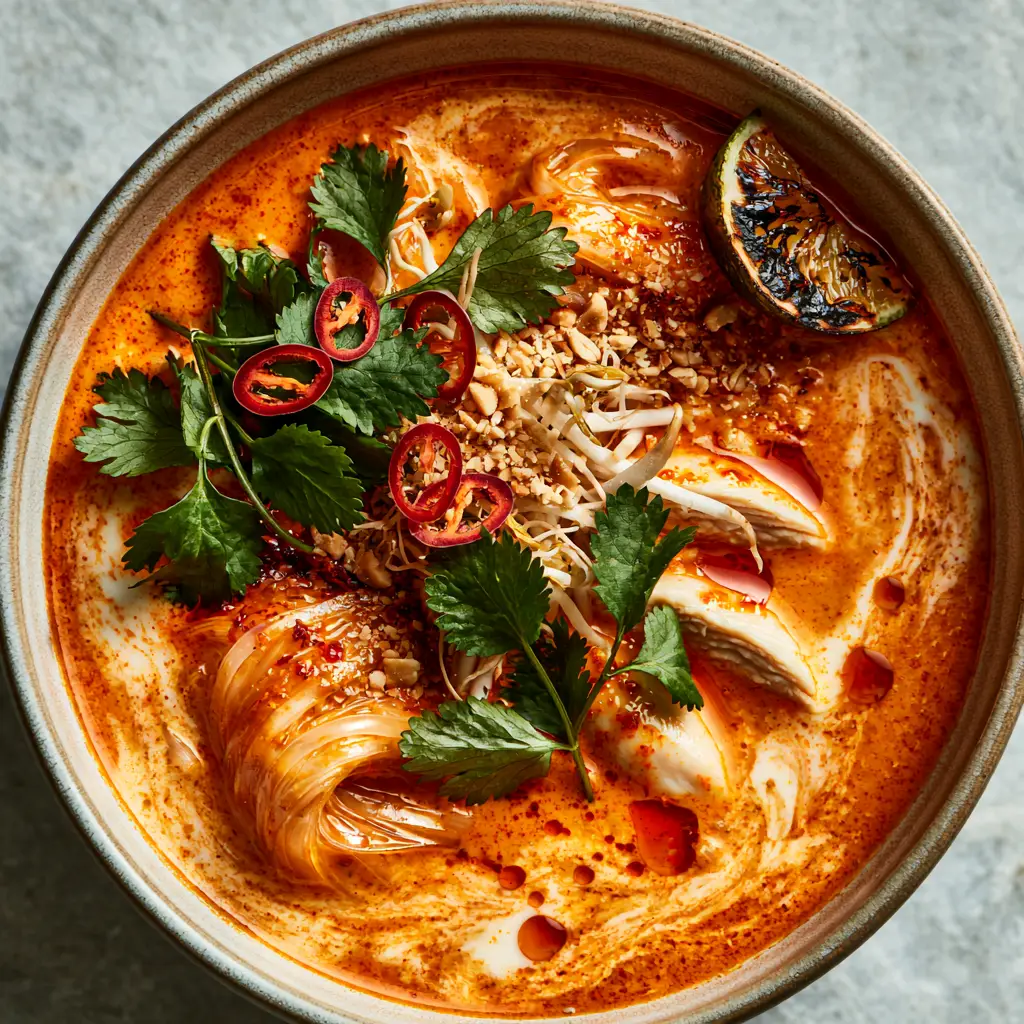
Why This Velvety Red Curry Noodle Soup Works
- Textural Contrast: The combination of slippery, translucent rice noodles against the crunch of bean sprouts and toasted peanuts creates a multi-dimensional eating experience.
- Complex Broth Base: We don’t just use paste; we “fry” the aromatics to unlock fat-soluble flavors, resulting in a thick, velvety orange-red broth.
- Visual Sophistication: The bright green cilantro and vibrant red chilis against the neutral stone background of your serving area make this a true “showstopper” dish.
- Pro-Level Garnishes: Using charred lime wedges instead of raw ones adds a depth of caramelized acidity that cuts through the rich coconut milk swirls.
Essential Components for a Vibrant Curry Base
To achieve the specific visual and flavor results of this Thai red curry noodle soup, you must select high-quality ingredients. The broth is the heart of the dish, and its texture should be thick and clinging, not watery or thin.
Thai Red Curry Paste: 3 tbsp (45g). This provides the foundational heat and color; look for brands that utilize dried red chilis, galangal, and lemongrass for an authentic, deep red hue.
Full-Fat Coconut Milk: 2 cans (800ml). We use the thick cream from the top to create those iconic white swirls and the thinner milk to build the broth’s volume.
Chicken Stock: 3 cups (720ml). A high-quality stock provides the savory backbone that supports the spicy curry notes without overpowering them.
Rice Noodles: 8 oz (225g) dried translucent rice noodles. These noodles are prized for their glossy appearance and ability to absorb the flavors of the red curry broth.
Chicken Breast: 1 lb (450g). We poach the chicken directly in the liquid to ensure the slices are tender, moist, and absorb the aromatic spices of the soup.
Fish Sauce: 2 tbsp (30ml). This is your primary salt source, adding an essential fermented umami depth that defines Southeast Asian cooking.
Palm Sugar or Brown Sugar: 1 tbsp (12g). A small amount of sweetness is required to balance the intense heat of the red bird’s eye chilis and the acidity of the lime.
Vegetable Oil: 1 tbsp (15ml). Used to bloom the curry paste, ensuring the red pigments and essential oils are fully released into the dish.
Aromatic Trinity: 2 cloves garlic, 1 inch (2.5cm) ginger, and 1 small shallot. These foundational ingredients add a fresh, pungent layer of flavor that pre-packaged pastes often lose over time.
Tools for Achieving the Perfect Macro Shot Look
Creating a dish that looks like a professional macro shot requires more than just good ingredients; you need the right tools to handle the delicate textures. A heavy-bottomed pot or Dutch oven is essential for maintaining a steady simmer, which prevents the coconut milk from curdling and keeps the broth velvety.
A sharp mandoline or a very high-quality chef’s knife is necessary for creating those paper-thin rounds of red bird’s eye chili and the finely chopped cilantro. For the charred lime wedge, a cast-iron skillet or a kitchen torch will give you that specific blackened, caramelized edge that looks so striking against the deep orange broth.
If you enjoy preparing meals with high-quality proteins like this, you might also be interested in exploring our Korean beef bowls or perhaps some balsamic chicken for your weekly meal prep. Having the right tools makes these diverse recipes much easier to execute.
Mastering the Art of the Red Curry Broth
Searing the Paste and Aromatics
Start by heating 1 tbsp (15ml) of vegetable oil in your pot over medium heat. Add the finely minced garlic, ginger, and shallots, sautéing until fragrant but not browned—about 2 minutes.
Add the red curry paste to the center of the pot. Use a wooden spoon to break it apart and fry it in the oil for 3-4 minutes. You are looking for a visual change: the oil will turn a vibrant red and the paste will become highly aromatic as the chilis “bloom.”
Building the Velvety Liquid Base
Slowly pour in one can of the coconut milk and the chicken stock. Whisk continuously to ensure the fried paste is fully incorporated into the liquid. Bring the mixture to a gentle simmer, never a rolling boil, to protect the delicate fats in the coconut milk.
Season the broth with fish sauce and palm sugar. At this stage, the broth should be a thick, velvety orange-red. Taste it—it should be a balance of salt, spice, and a hint of sweet creaminess.
Poaching the Chicken to Perfection
Submerge the whole chicken breasts into the simmering broth. Covering the pot helps maintain a consistent temperature. Poach for 12-15 minutes, or until the internal temperature reaches 165°F (74°C).
Remove the chicken and let it rest for 5 minutes before slicing it into thin, elegant pieces. By poaching the chicken in the curry liquid, the meat remains glossy and tender, matching the aesthetic of the translucent noodles perfectly.
Assembling the Perfect Thai Noodle Bowl
Preparing the Translucent Rice Noodles
While the chicken rests, cook your rice noodles in a separate pot of boiling water according to package instructions—usually 4-6 minutes. Drain and rinse under cold water immediately to stop the cooking process and maintain that glossy, translucent look.
If you prefer a different kind of carbohydrate for breakfast, you might enjoy our brown butter pecan pancakes, but for dinner, these rice noodles are the gold standard for carrying heavy curry sauces.
The Final Garnish and Styling
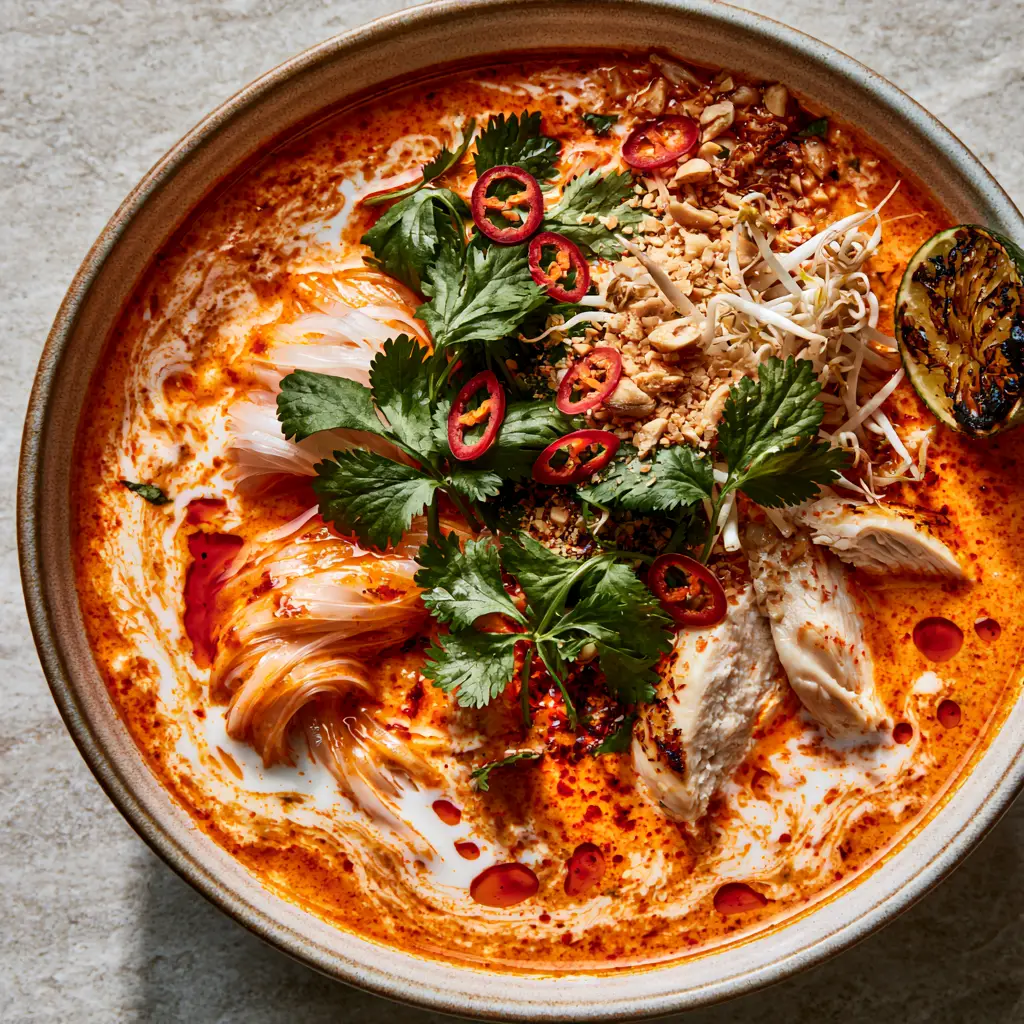
Divide the noodles into deep ceramic bowls. Ladle the hot red curry broth over the noodles, ensuring they are well-submerged. Place the poached chicken slices neatly on one side of the bowl.
Now, create the visual bridge: take a tablespoon of the remaining coconut cream and gently swirl it into the surface of the broth. Add a handful of fresh bean sprouts for height, followed by a sprinkle of crushed toasted peanuts and the paper-thin chili rounds.
Finish with a generous bunch of fresh cilantro leaves and a drizzle of chili oil, letting the red droplets glisten on the surface. Place the charred lime wedge on the edge of the bowl to invite the diner to squeeze fresh juice over the dish just before eating.
Expert Tips for Recipe Success
- Don’t Boil the Coconut Milk: High heat can cause the coconut milk to separate, losing that velvety texture. Keep the pot at a gentle simmer for a smooth, creamy finish.
- Rinse Your Noodles: Rice noodles are very starchy. Rinsing them under cold water after boiling ensures they stay separate and translucent rather than clumping together in the bowl.
- Adjust the Heat: The bird’s eye chilis are potent. If you prefer a milder Thai red curry noodle soup, remove the seeds from the chilis before slicing them into rounds.
- Char the Limes: Use a dry, hot skillet to sear the flesh of the lime wedges for 2 minutes. This concentrates the sugars and adds a smoky dimension that balances the rich coconut swirls.
Storage, Reheating, and Make-Ahead Advice
This soup is best served fresh to maintain the texture of the noodles and the crispness of the sprouts. However, if you have leftovers, store the broth and the noodles in separate containers. The noodles will continue to absorb liquid if left in the soup, turning mushy over time.
To reheat, bring the broth to a simmer on the stove and then add the noodles and chicken just long enough to warm through. The garnishes—cilantro, sprouts, and peanuts—should always be added fresh just before serving to maintain the dish’s visual integrity.
What to Serve With Thai Red Curry Noodle Soup
Because this soup is quite rich and spicy, it pairs beautifully with refreshing side dishes or light appetizers. If you are hosting a themed dinner, consider starting with some light vegetarian appetizers or even a crisp salad.
To balance the heat of the red curry, a cold beverage is a must. A frozen strawberry margarita offers a fruity contrast, or for a non-alcoholic option, a thick chocolate milkshake can help coat the palate after the spicy bird’s eye chilis.
Frequently Asked Questions
Yes! Substitute the chicken for firm tofu, use vegetable stock instead of chicken stock, and replace fish sauce with a vegan ‘no-fish’ sauce or extra soy sauce.
Reserve 2-3 tablespoons of the thick coconut cream from the top of a chilled can of full-fat coconut milk. Gently swirl it into the surface of the soup just before serving for that professional look.
It has a moderate heat level from the curry paste and bird’s eye chilis. You can control the spice by using less paste or removing the seeds from the fresh chilis.
Translucent rice noodles (often labeled as Pad Thai noodles or rice sticks) are ideal because they have a glossy texture and absorb the curry flavors perfectly without becoming soggy.
Charring the lime caramelizes its natural sugars, creating a deeper, smokier citrus flavor that balances the heat of the red curry paste more effectively than raw lime juice.
The Ultimate Thai Red Curry Noodle Soup Recipe
Thai Red Curry Noodle Soup with Poached Chicken and Coconut Swirls
Ingredients
Equipment
Method
- Sauté minced garlic, ginger, and shallot in oil, then add red curry paste and fry until the oil turns red and aromatic.
- Whisk in coconut milk and chicken stock, then season with fish sauce and sugar. Simmer gently.
- Place chicken breasts in the simmering broth and cook until the internal temperature reaches 165°F (74°C). Sliced into thin pieces.
- Cook rice noodles in a separate pot until translucent and tender, then rinse with cold water.
- Place noodles in bowls, pour over the red curry broth, add chicken, and finish with coconut swirls, bean sprouts, peanuts, chilis, cilantro, and charred lime.
Notes
Always rinse rice noodles in cold water to prevent sticking.
Bring the Flavors of Thailand to Your Kitchen
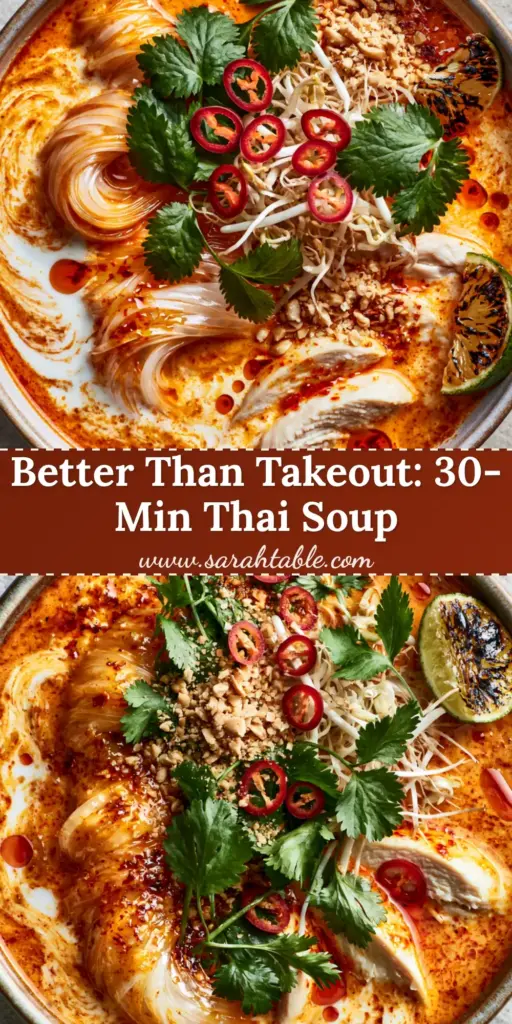
Making a restaurant-quality Thai red curry noodle soup is all about the details—the swirls of coconut milk, the glisten of chili oil, and the perfect poach on the chicken. This dish offers a comforting yet exotic escape that you can easily recreate in your own home. The balance of creamy, spicy, and fresh elements makes it a perennial favorite for any occasion.
If you enjoyed this recipe, please leave a comment below and let us know how your broth turned out! Don’t forget to share your beautiful bowl photos on Pinterest and tag us. For more inspired meal ideas, check out our collection of breakfast recipes to start your day just as deliciously as you’ll end it with this soup.